


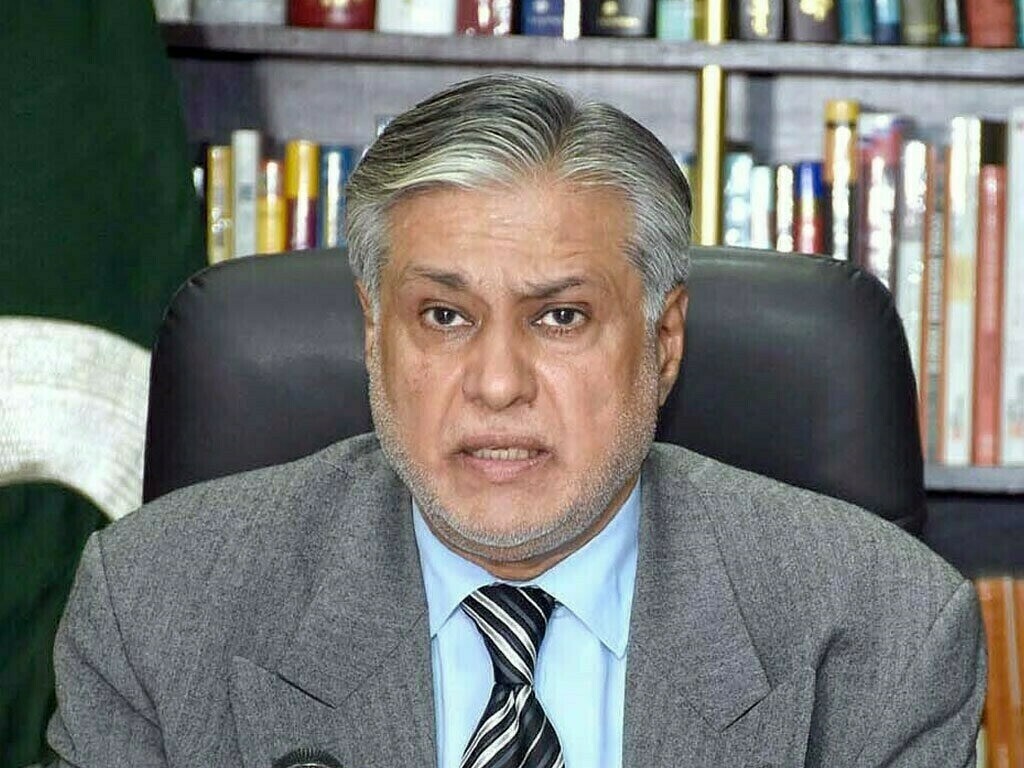
ISLAMABAD: Pakistan on Tuesday renewed its political, moral and diplomatic support for the people of Indian Illegally Occupied Jammu and Kashmir (IIOJK), as the country marked the 79th Kashmir Black Day with a solidarity walk in Islamabad, calling upon the international community to secure a just and peaceful settlement of the long-standing dispute.
Deputy Prime Minister and Foreign Minister Senator Mohammad Ishaq Dar, addressing participants of the Kashmir Solidarity Walk at D-Chowk, paid tribute to the courage and sacrifices of the Kashmiri people and urged the international community to play a meaningful role in alleviating their suffering and ensuring their inalienable right to self-determination.
The walk along Constitution Avenue was attended by officials of the Ministry of Foreign Affairs, led by Foreign Secretary Asim Iftikhar Ahmad, who reaffirmed Pakistan’s solidarity with the Kashmiri people on the solemn occasion.
In his message marking Kashmir Black Day, Dar recalled October 27, 1947, when Indian forces landed in Srinagar, describing the event as the beginning of a prolonged and tragic chapter in the history of Jammu and Kashmir. He said that nearly eight decades later, the dispute remained unresolved, while the people of the occupied territory continued to await the exercise of their right to determine their own future.
The deputy prime minister said generations of Kashmiris had endured severe hardships, including restrictions on fundamental freedoms and persistent human rights concerns, but had remained committed to their aspirations for justice, dignity and peace.
He urged that relevant United Nations Security Council (UNSC) resolutions remained central to Pakistan’s position on resolving the dispute, maintaining that a lasting settlement must reflect the will of the Kashmiri people.
He also called for sustained international engagement to advance a peaceful resolution.
Dar expressed concern over developments following India’s unilateral measures of August 5, 2019, stating that subsequent legislative and administrative changes, restrictions on freedoms, demographic and political measures, and the continued detention of Kashmiri political leaders and activists had intensified insecurity and alienation in the territory.
He said these developments had raised serious questions concerning international law and applicable human rights standards. International attention to the situation, including concerns documented by United Nations bodies and human rights organisations, remained important, he added.
Dar maintained that the Kashmiri people’s continued pursuit of their fundamental rights underscored the importance of addressing the dispute through peaceful means rather than allowing their grievances to remain unresolved.
Pakistan, he reaffirmed, would continue to raise the Kashmir issue at relevant international forums and extend political, moral, diplomatic and legal support to the Kashmiri people in their struggle for self-determination.
He urged the international community to move beyond expressions of concern and contribute meaningfully towards protecting fundamental rights and facilitating a just, peaceful and lasting settlement of the Jammu and Kashmir dispute in accordance with relevant UN Security Council resolutions.
On the 79th Kashmir Black Day, officials of the Ministry of Foreign Affairs, led by Foreign Secretary, participated in a solidarity walk on Constitution Avenue, Islamabad, reaffirming Pakistan’s unwavering solidarity with the people of Indian Illegally Occupied Jammu and Kashmir (IIOJK).
The participants of the walk urged the international community to play its due role in alleviating the suffering of the Kashmiri people and ensuring the realisation of their inalienable right to self-determination.
Copyright Business Recorder, 2026


















Comments