


What waiting costs us
- Economy had been paying since the day long march was announced
Political uncertainty from long marches and protests costs Pakistan trillions annually, far beyond shutdown days, impacting investment and GDP. Only political solutions can provide the stability needed.
- Three distinct ways political uncertainty harms the economy.
- Pakistan's estimated annual economic losses from uncertainty.
- Proposed parliamentary dialogue for lasting political stability.
Pakistan was recently in the middle of another long march. Yet the most expensive part of the march may not be the march itself. It may be the weeks of waiting around it. Consider the timeline. In August, PTI announced a long march on Islamabad for September 27. A couple of days before that date, the party postponed it to October 4.
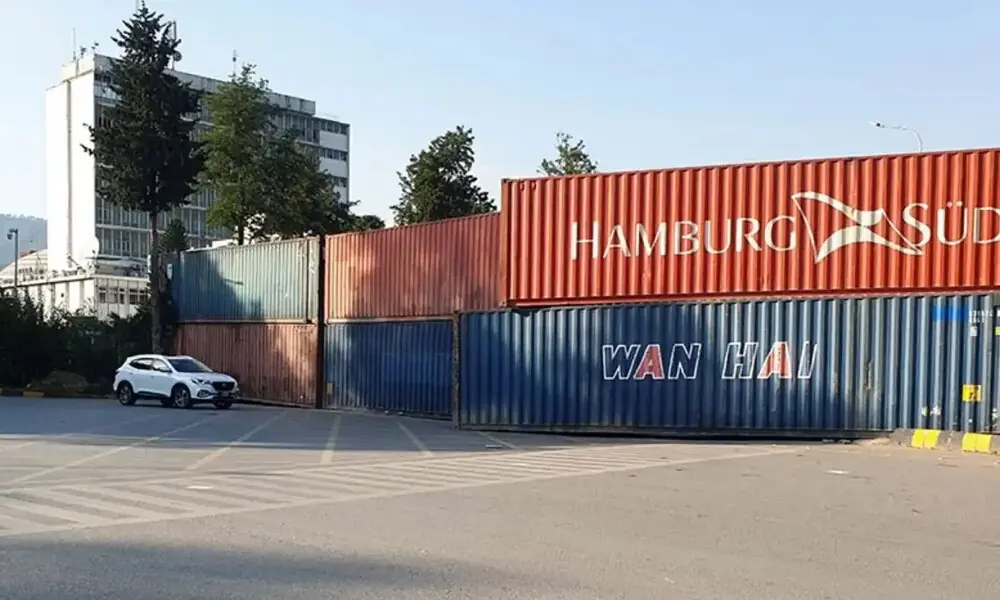
The government held two rounds of talks with the opposition at Parliament House, and the second ended in a “deadlock”. The march then began from Lakki Marwat, not Peshawar, and its caravan camped in Karak. The government said the march will not be allowed to enter Islamabad.
Although the proclamation of emergency and governor’s rule has stopped the march in its tracks, yet it was roughly six weeks of “will they, won’t they?” The march had not reached the capital, yet the economy had been paying since the day it was announced. Most of the debate centres on the cost of a shutdown day, when roads close and markets shut. The finance minister estimated the daily losses at Rs120 billion. That is an important number, but it counts only one kind of cost.
Political uncertainty costs us in three different ways. The first is the number of days of shutdown. Roads are blocked, shops close, daily-wage workers go home without pay, and trucks stand still. This is the visible bill.
The second is threat days. These are days when nothing has happened yet, but everyone is preparing. Containers move onto highways, police and Rangers deploy, trucks reroute, and exporters hold shipments because they can’t guarantee delivery dates. Families postpone travel, and businesses postpone meetings. The march hasn’t arrived, but the economy is already partially closed.
The third, and the largest, is delay costs. A businessman who was going to open a new factory line waits “until things settle”. A foreign investor waits for the next quarter. A bank waits before approving the loan. None of this shows up as a dramatic loss on any single day. But money not invested this year means jobs that do not exist next year.
What the world has learned: This is not guesswork. Researchers worldwide have measured it. The most widely cited global study is by Aisen and Veiga, published in the European Journal of Political Economy. It covers 169 countries from 1960 to 2004 and finds that each additional cabinet change per year reduces annual real GDP per capita growth by 2.39 percentage points. Most of the damage stems from lower productivity: instability makes the whole economy work less efficiently.
Baker, Bloom and Davis built the well-known Economic Policy Uncertainty index from newspaper coverage. They found that a rise in uncertainty of the magnitude the US experienced after 2008 foreshadows declines of about six percent in gross investment, 1.2 percent in industrial production and 0.35 percent in employment. The lesson is simple: when people don’t know what tomorrow brings, they stop investing today.
Studies in Bangladesh found that a one percent increase in Hartal [strike] interruptions faced by firms was associated with a 1.17 percent rise in production costs. In Nepal, general strikes cost, on average, 1.4 percent of annual gross output and reduced growth by 0.6 to 2.2 percentage points during the study period.
Pakistan’s evidence points in the same direction, showing that political instability and policy uncertainty erode investor confidence and reduce overall investment. In 2014, the Supreme Court was told that the Dharna[sit-in] had cost about Rs547 billion. In 2024, one estimate put the cost of a single disrupted day at around Rs190 billion.
Let me put the bill in plain terms. Pakistan’s economy reached Rs126.9 trillion last year, which means the country produces roughly Rs348 billion a day. The government’s Rs120 billion estimate for a shutdown day would amount to about a third of the nation’s daily output. That figure is plausible for a complete national shutdown, but marches typically close only a few cities and routes, not the entire country. I use Rs120 billion as the upper end and Rs40 billion as a more cautious lower estimate.
Now consider a typical year in Pakistani politics. Assume about 10 shutdown days, which is modest given our history of Dharnas, marches and blockades. At Rs40–120 billion a day, that totals Rs400 billion to Rs1.2 trillion.
Assume about 60 threat days, during which containers are up, and decisions are on hold. This year alone, the period from the August announcement to today already exceeds 40 days. Each threat day costs between Rs5 and 10 billion, covering security deployment, rerouted transport, delayed shipments, and lost business hours. At that rate, 60 days amount to Rs300–600 billion.
Finally, the cost of delay. Total investment last year was 14.38 percent of GDP, about Rs18 trillion. If recurring uncertainty holds back just 1 to 3 percent of that investment, which is far less than global studies suggest, then between Rs180 and Rs550 billion of investment is not undertaken each year.
Add up the three components: shutdown days, threat days and delayed investment. The sum is roughly Rs0.9–2.3 trillion a year, or about 0.7–1.8 percent of GDP. Spread across the year, that equates to Rs2.4–6.4 billion lost every day, whether anyone is on the road.
To gauge the scale, compare it with the state’s development expenditure, which remained at 2.3 percent of GDP. The cost of political uncertainty is roughly one-third to four-fifths of what Pakistan spends on development. We are building with one hand and demolishing with the other.
In 2019, writing about the Azadi March, I estimated that strikes and marches could cost Pakistan up to two percent of GDP a year. At the time, I borrowed that figure from our neighbours’ experience. Seven years and several marches later, a bottom-up count arrives at almost the same figure. The cost was real then, and it remains real now.
Delaying tactics on every side make this worse. A postponed march is not a cancelled cost; it is a cost spread over more days. Each postponement adds another week of containers and cautious investors. Each “deadlocked” round of talks tells businesses to wait a little longer. Each “next strategy will be announced on” date resets the uncertainty clock. Both sides treat time as a free bargaining chip. It is not. Every day the uncertainty persists, the economy pays rent.
No economic policy can fix this, because the problem is not economic. The cost stems from uncertainty, and only politics can provide certainty. That means the solution must lie where politics is supposed to happen – in Parliament.
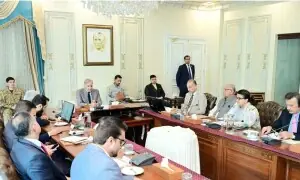
The talks at Parliament House are the right forum, but they are being misused: opened under the pressure of a march and abandoned when the pressure passes. Make them stand, not episodic. The Speaker of the National Assembly and the Chairman of the Senate should convene a permanent parliamentary dialogue between the government and the opposition. It should meet on a fixed calendar, march or no march, with a 30-day deadline to agree on two things. First, a common code for protest in the capital: venues, timings and routes that apply equally to every party, so that a march no longer means closing highways. Second, a short list of economic decisions both sides will protect from political cycles, such as the IMF programme, energy pricing and investment commitments, so investors stop waiting for politics to settle.
Court orders already in place should be complied with as an institutional duty, not traded as concessions. That removes one recurring trigger for protest without either side losing face.
Pakistan does not need one side to win this round. It needs the next round to be cheaper. This is certainly the cheapest stimulus package this country can afford, and only politicians can deliver it.
The writer is an Associate Professor at COMSATS University Islamabad and can be reached at [email protected]




















Comments