


From pilot to policy: how “Digital Eye” helped shape FBR’s production-monitoring framework
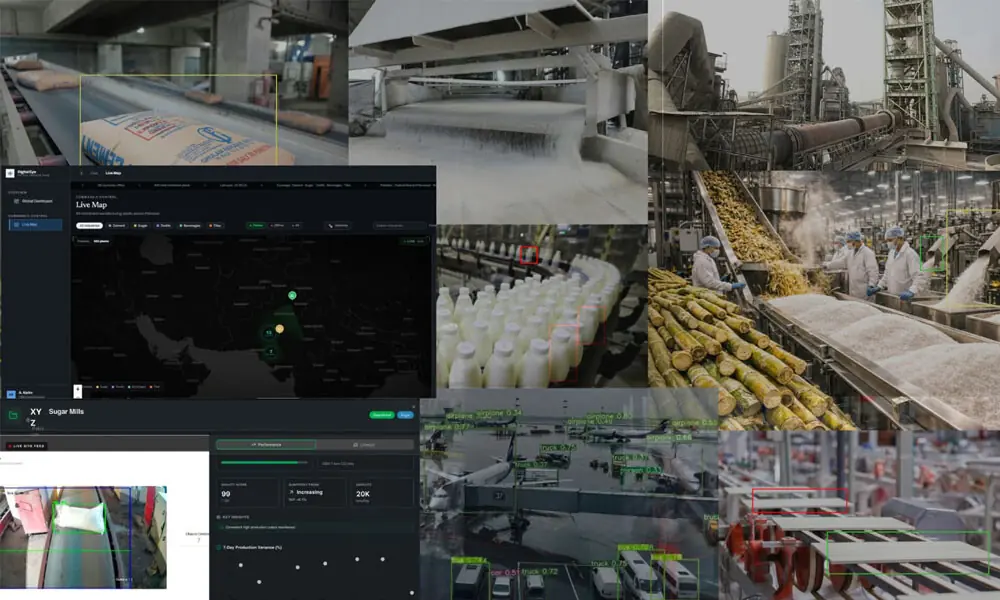
The Federal Board of Revenue (FBR) is expanding production monitoring across Pakistan’s manufacturing sector, authorising new private technology providers and bringing additional industries within the country’s digital taxcompliance framework.
The latest expansion, formalised through SRO 1751 of 2026, includes the leather, paper and paperboard industries. The FBR has authorised ISSM Labelling Solutions, a subsidiary of wAI Industries, along with Obsidian Technologies, Tollink Pakistan and Authentik to install, operate and maintain monitoring systems in designated sectors.
The authorised vendors will deploy Internet Protocol (IP) cameras and Network Video Recorders (NVRs) at specified production lines. The systems will record manufacturing activity in real time, with footage retained for at least two months. The resulting data will enable tax authorities to compare observed production activity with figures reported by manufacturers in their sales tax returns. Discrepancies may lead to verification, audit or other enforcement action in accordance with applicable rules and the records and explanations provided by businesses.
But the current rollout represents more than a new regulatory notification. It is the latest stage in a technology journey that began approximately three years ago with a UKgovernment-supported pilot focused on the cement industry. The pilot and the resulting product were known as Digital Eye; the approach later became part of federal policy.
From rigid stamps to computer vision
The pilot was developed by wAIIndustries. It was initiated in response to limitations associated with conventional product-stamping and marking solutions used to monitor production and tax compliance.
Physical stamps and similar mechanisms can be difficult to apply consistently in challenging production environments. A solution designed for one industry may not transfer easily to another, while fixed hardware-based systems can be expensive, difficult to customise and poorly suited to the differing layouts and operating conditions of modern production lines.
The pilot introduced a different approach: using computer vision to observe and count production activity. Rather than relying solely on a physical mark or a rigid hardware configuration, the system was designed to interpret activity on the production line and provide a more adaptable method of monitoring output.
The project was supported through the REMIT programme, which helped fund the development of a customised technology solution for a public-sector tax-administration challenge. The Digital Eye pilot was presented as an early—and potentially unprecedented— example of a taxation authority using computer vision to monitor industrial production at scale.
Following a year-long pilot and successful deployment in cement, the approach began attracting wider government attention. In this year’s budget speech, the Finance Minister said that improved monitoring had helped save the government approximately Rs60 billion in the cement and sugar sectors.
From cement pilot to wider adoption
The reported results of the cement and sugar deployments, combined with the system’s comparatively low cost and flexibility, helped create the case for broader adoption. Computer vision can be adapted to different production environments and may be better positioned than purely hardware-based systems to identify unusual activity or attempts to interfere with monitoring equipment.
The technology was subsequently extended to additional industries, including tiles. The FBR is now opening the framework to a broader group of technology companies, allowing new providers to enter the market after completing proof-of-concept evaluations conducted by the Board.
The authorisation of Obsidian Technologies, Tollink Pakistan and Authentik signals a shift from a single-provider model toward a wider group of technology providers. It also creates the possibility of more specialised solutions for industries whose production methods, machinery and compliance risks differ significantly from one another.
Building a local technology ecosystem
The expansion forms part of wider tax-administration reforms focused on improving the accuracy of sales tax declarations and strengthening revenue mobilisation. It is also consistent with measures discussed in Pakistan’s engagement with the International Monetary Fund, including production monitoring, digital invoicing and stronger taxpayer audits.
The initiative also illustrates how public-sector technology programmes and international partnerships can contribute to the development of domestic capabilities in artificial intelligence, computer vision and industrial monitoring.
The FBR’s production-monitoring framework is separate from the Track and Trace System. While production monitoring uses cameras and NVRs to observe manufacturing activity, Track and Trace relies on tax stamps, identifying marks and related mechanisms to monitor products and establish their authenticity.
The long-term impact of the expanded system remains to be demonstrated across the newly designated industries. Its success will depend on consistent implementation, the accurate identification of genuine compliance gaps, fair consideration of business records and explanations, and robust safeguards for confidential commercial information.
Under the current arrangement, monitoring equipment is limited to IP cameras and NVRs. Recordings remain the property of the FBR and must be treated as confidential, with disclosure restricted in accordance with the Board’s directions
If implemented effectively, the expansion could turn a targeted cement-industry pilot into a scalable national framework—linking local artificial-intelligence capabilities with a more data-driven approach to tax administration and industrial compliance.
























Comments