


Wall St declines as oil spikes after Trump rejects Iran peace proposal
- Dow Jones Industrial Average fell 384.11 points
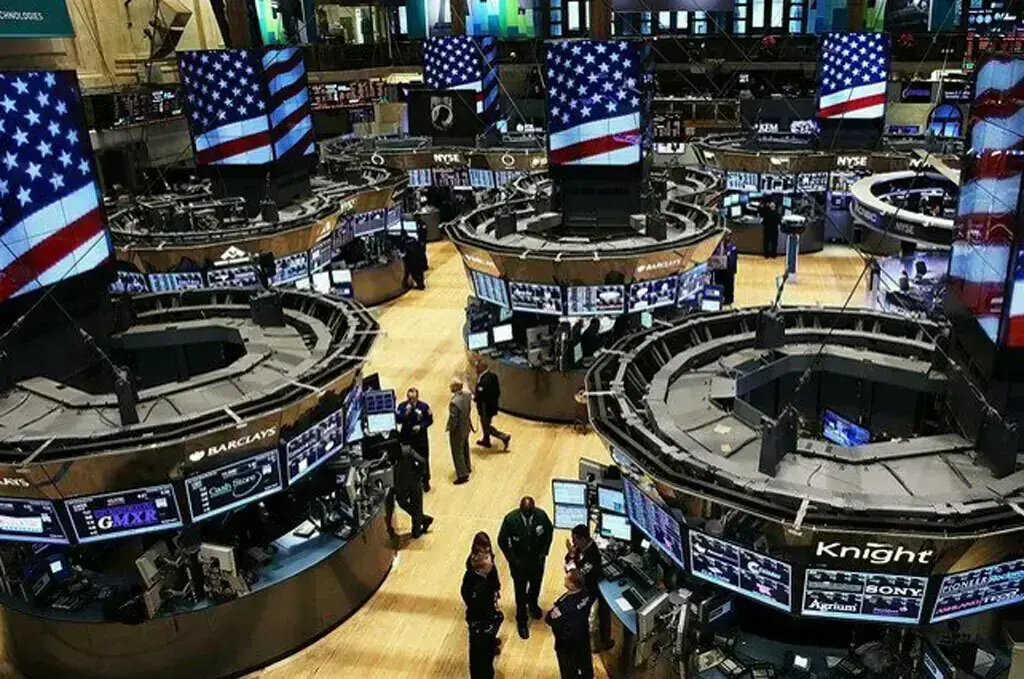
Wall Street’s main indexes fell on Monday after President Donald Trump rejected an Iranian proposal to end the conflict, leading to a spike in crude prices that revived inflation worries and drove Treasury yields higher.
Limiting declines was Nvidia’s 2.1% gain after the chip giant announced a $150 billion share repurchase authorization, making it the company’s biggest ever increase in share buybacks on record.
Iran announced a peace proposal at last week’s United Nations General Assembly in New York, saying it had been relayed to the United States through Qatari mediators. While Trump said on Saturday he had rejected the offer, he told Axios on Sunday that he expected US negotiators to continue talks this week.
Crude prices jumped 3% to around $107-a-barrel and weighed on Treasuries, sending longer-dated yields to fresh multi-decade highs.
“Energy has been the one consistent upward pressure on inflation, and anything that continues to put pressure on inflation is going to be something that motivates the Fed to raise rates,” Art Hogan, chief market strategist at B. Riley Wealth.
At 11:50 a.m. ET, the Dow Jones Industrial Average fell 384.11 points, or 0.74%, to 51,446.37, the S&P 500 lost 64.36 points, or 0.83%, to 7,679.05 and the Nasdaq Composite lost 268.66 points, or 0.99%, to 26,800.06.
Communication Services fell 1.9% and led sectoral declines on the S&P 500, with Meta easing 4.3% from last week’s 13% jump.
Investors got some relief on the trade front following the conclusion of the Sino-US summit last week where the trade partners agreed to cut tariffs imposed on $60 billion worth of goods imported from each other. The countries also agreed to a two-month extension of their trade truce through to January 10.
As the week progresses, the spotlight will be on a slew of crucial economic indicators at a time when traders are pricing in a 70% chance that the Federal Reserve will hike interest rates by at least 25 basis points back-to-back in October, the CME Group’s FedWatch Tool showed.
“Any historical instance of the Fed hiking into a short-term supply shock has always ended poorly. And the Fed is being impatient. They shouldn’t have hiked in September. They could potentially make the same mistake in October,” said Thomas Hayes, chairman at Great Hill Capital.
Investors are now awaiting August’s Personal Consumption Expenditures report on Wednesday and September’s nonfarm payrolls report on Friday for clues on the Federal Reserve’s monetary policy path.
Policymakers Michelle Bowman, Lisa Cook and Thomas Barkin are due to speak later on Monday and could reiterate the hawkish shift in policy at the central bank since the previous meeting.
Tesla dipped 3.2% after brokerage J.P.Morgan lowered its price target on the stock, citing weak deliveries in the third quarter.
Declining issues outnumbered advancers by a 4.23-to-1 ratio on the NYSE and by a 3.15-to-1 ratio on the Nasdaq.
The S&P 500 posted three new 52-week highs and 26 new lows while the Nasdaq Composite recorded 26 new highs and 197 new lows.


















Comments