


Drill now, drown later
UN Secretary-General Guterres criticizes Big Oil for treating the atmosphere as an 'open sewer,' highlighting profit disparities and the global impact of reversed climate efforts by major economies.
- UN Secretary-General's blunt criticism of Big Oil.
- Disparity between Big Oil profits and climate adaptation funds.
- US administration's "drill, baby, drill" energy policy.
- Climate vulnerability of low-emission nations like Pakistan.
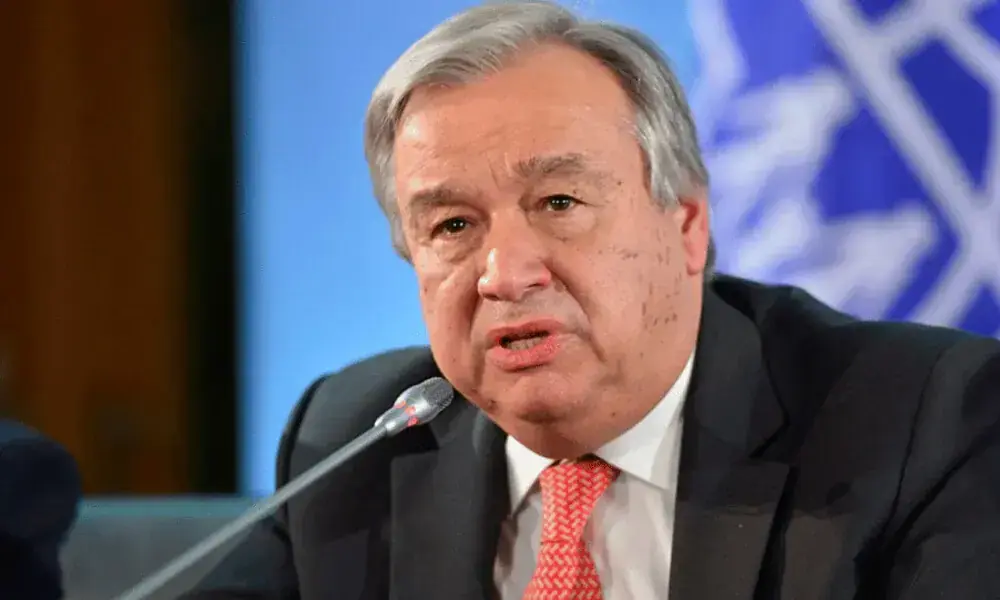
EDITORIAL: UN Secretary-General Antonio Guterres’ accusation that Big Oil has treated the atmosphere as an “open sewer” may be unusually blunt diplomatic language, but the underlying charge is becoming increasingly difficult to dismiss. His comparison is particularly striking at a time when the consequences of global warming are becoming harder to separate from everyday economic life. Yet the international effort to reduce dependence on fossil fuels has simultaneously encountered a powerful reversal, led by a US administration that has quite literally made “drill, baby, drill” part of its governing philosophy.
That reversal matters far beyond the United States. Washington has withdrawn from the Paris Agreement, reopened vast areas to oil and gas development, accelerated drilling approvals and explicitly made expanded fossil-fuel production part of its energy strategy. Whatever progress developed economies had begun making towards a cleaner energy transition is inevitably harder to sustain when the world’s largest economy is using its political and economic weight to move forcefully in the opposite direction. The signal to producers and investors is equally important: fossil fuels have acquired a powerful new political sponsor just when climate science is demanding faster movement away from them.
Guterres also draws attention to the uncomfortable economics of the climate crisis. According to the figures he cited, five major Western oil companies have accumulated nearly half a trillion dollars in profits since Russia invaded Ukraine, while only $34 billion has been mobilised to help developing countries adapt to a warming planet. That disparity goes directly to the unresolved question of climate justice. Countries with the least fiscal space to protect themselves from extreme weather are frequently those that contributed the least to creating the problem.
Pakistan sits painfully close to the centre of that contradiction. Its contribution to global greenhouse-gas emissions remains below one percent, yet its exposure to floods, extreme heat, drought, glacial instability and other climate-related hazards is severe. The country has already discovered that a small carbon footprint provides no protection when the climate system responds to cumulative global emissions. Nor does moral responsibility pay for destroyed homes, damaged crops, disrupted infrastructure or the enormous cost of building resilience against the next disaster.
There is, however, an awkward reality that Pakistan cannot escape either. Its economy remains dependent on fossil fuels, directly and indirectly, while energy security and affordability remain persistent constraints on growth. Developing countries cannot simply switch off conventional energy sources because wealthier economies have spent generations using them to industrialise. A disorderly transition would impose costs that Pakistan, already struggling with fiscal and external vulnerabilities, is poorly equipped to absorb.
That makes the climate argument more complicated; but also more urgent. Pakistan must accelerate renewable energy, improve energy efficiency and reduce unnecessary dependence on imported fuels wherever economically feasible. At the same time, developed economies that accumulated prosperity during the fossil-fuel era have a much greater responsibility to finance adaptation and help poorer countries make the transition without sacrificing development. Climate finance cannot remain the ceremonial accompaniment to increasingly alarming climate conferences.
Guterres is therefore right to direct attention towards both the polluters and the profits. The world already knows where continued dependence on fossil fuels is leading. What remains uncertain is whether governments possess the political will to change direction before adaptation itself becomes prohibitively expensive.
For countries such as Pakistan, “drill, baby, drill” slogan carries a particularly grim footnote: somebody else may drill, but everybody gets the climate.
Copyright Business Recorder, 2026



















Comments