


How a Pakistani rescue became a Hollywood Thriller – and what it took to get there
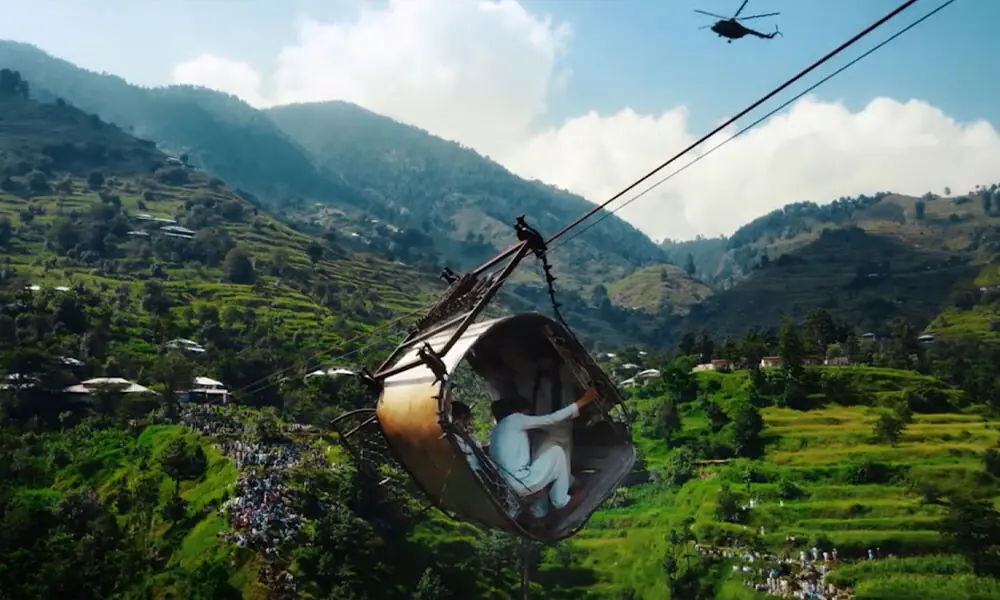
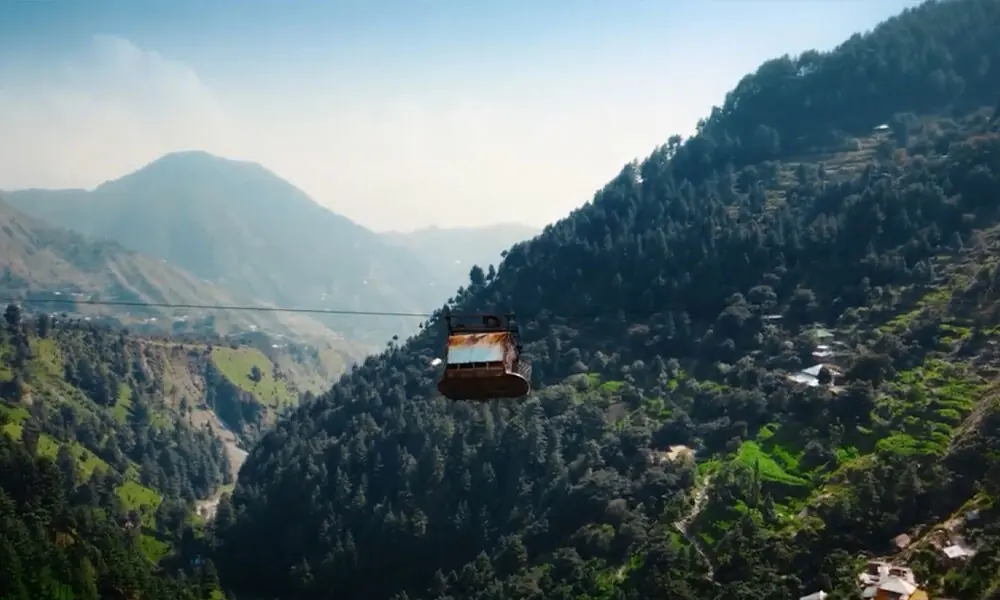
- In August 2023, a cable car carrying eight people – six of them schoolboys on their way to class – snapped two of its three supporting cables and hung for 14 hours, 900 feet above a ravine in Battagram
Filmmaker Mohammed Ali Naqvi's "Hanging by a Wire" chronicles a dramatic Pakistani cable car rescue, deliberately framing it as a thriller to portray Pakistanis as heroes, not victims, using real footage and ethical reconstructions.
- Filmmaker's choice to portray Pakistanis as action heroes.
- Integration of real footage from citizen journalists.
- Ethical approach to subject consent and compensation.
- The film's journey from self-funding to Universal backing.
“When you take Pakistanis and frame them as action heroes rather than victims, that is an act of subversion… that burden of explanation, making ourselves legible, and continuously explaining context – that is a disservice to us… I’m not going to do a social justice poverty porn for you.”
In August 2023, a cable car carrying eight people – six of them schoolboys on their way to class – snapped two of its three supporting cables and hung for 14 hours, 900 feet above a ravine in Battagram. It wasn’t just Pakistan watching the incident unfold – it was the world.
Like many, filmmaker Mohammed Ali Naqvi watched it live, but from a different vantage point: as material. “By the time nightfall happened, and things looked really bleak, in the most unlikeliest of fashions, the boys, one by one, began to become rescued,” he said in our interview. “So I was convinced by that time, by the end of it: this is a movie.”
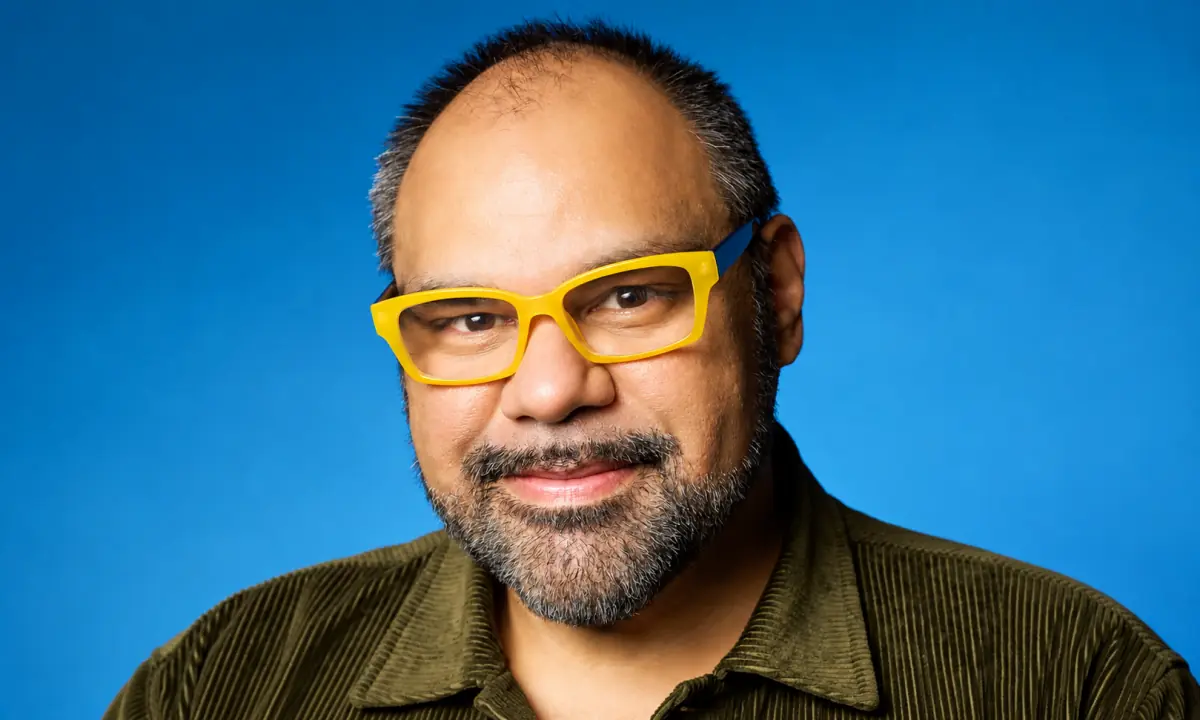
Hanging by a Wire is, by any measure, one of the more commercially ambitious releases a Pakistani story has had in years – and getting there involved a set of creative, ethical, and financial decisions that Naqvi walked me through in detail.
“This is a Hollywood ending”
Naqvi’s instinct that the rescue was cinematic, rather than journalistic, came from the story’s structure as much as its stakes. “It was such a Pakistani story to me,” he says, “because you have these different people in these different factions, and they don’t necessarily all get along…they all had to put their differences aside, all join hands, and ultimately they all had a hand in saving these kids. And that’s very much a Hollywood ending.”
Naqvi spoke of the community’s response in the moment: “They didn’t call the police. They started putting their own stories on social media and trying to get the word out… and it worked.”
Crucially, much of the film’s most striking footage – including the widely shared drone shots of the boys suspended in the cable car – isn’t reconstruction at all. “Many people think, when I was showing that to them, that that was recreations,” Naqvi says. “That’s not recreation. That’s actual real footage.”
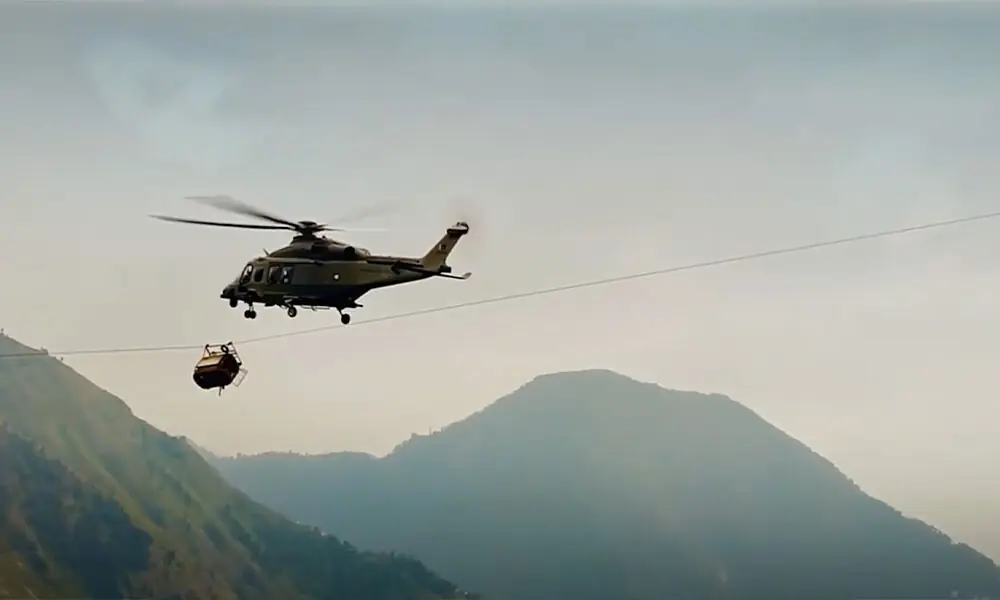
It came from a jewellery shop owner in the community, Faisal Mumtaz, who happened to be a drone enthusiast and fed footage to the world as the crisis unfolded, alongside Ek Rahgeer, who Naqvi highlighted when speaking of the archival footage at his disposal, a citizen-journalist and YouTuber who covered a lot of the ground and the rescue operation.
Not a “purist documentary”
Naqvi is explicit that the thriller framing was not incidental to the film’s commercial prospects, though he resists the idea that it was purely a market calculation either. “If I was being honest to what the story and subject was, it intrinsically lended itself to that,” he says. “Otherwise, why would so many people all over the world be glued to it?”
What he’s more pointed about is what the framing let him avoid. “What I didn’t want to do was make just another story that’s centred around trauma victimhood,” he says. “I deliberately chose the Hollywood lens, because that to me was an act of subversion. When you take Pakistanis and frame them as action heroes rather than victims, that is an act of subversion… that burden of explanation, making ourselves legible, and continuously explaining context – that is a disservice to us.”
He points to one detail he chose not to explain: the district police chief who appears in the film, a woman in a hijab, whose presence he leaves unremarked. “I don’t actually tell you anything more about it… Otherwise, that burden of explanation, making ourselves legible, and to continuously explain context, that is a disservice to us. And I deliberately did not want to do that… It is taking away our agency and dignity as humans.”
That choice, he acknowledges, cost him some critical goodwill: “I think maybe that might have been some of the pushback or criticism I did get – that I didn’t make the film that some critics wanted me to make, which is a film that was more traditional, purist documentary that went into problems and discussions of infrastructure, of class hierarchy. That’s a documentary. That’s definitely not the film I wanted to make,” he asserted. “I’m not going to do a social justice poverty porn for you.”
On whether working with a major studio forced any compromise on that vision, Naqvi says he was largely shielded – partly by the nature of the deal, and partly, in his telling, by the team around him. “I’ve been really blessed that I’ve never had to really compromise,” he remarked, crediting his producing partner Bilal Sami and a slate of supportive executive producers. He also notes a structural point: “This is a documentary, and it’s still a bigger-budget documentary, but it’s not like a fiction budget, where maybe more controls might come into play.”
What the reconstructions actually are
Naqvi says the reconstructions were confined mainly to the overnight rescue-camp footage, where less archive material existed, and were built as “coverage” around what he calls his “hero A” footage – real material – rather than replacing it. “All the recreations were done using the actual subjects themselves,” he says. “Number one, they’re not just telling me about their memory of what happened that day; they’re showing me.”
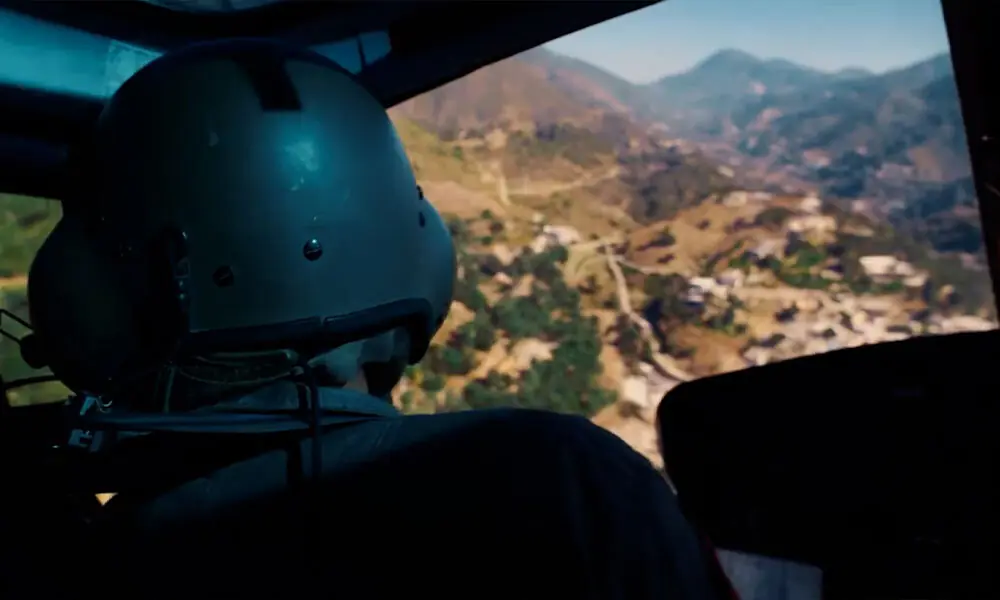
They were filmed in November 2025 – roughly two years after the incident – in a studio, using a built cable car set “one foot off the ground” and only after what Naqvi describes as sustained relationship building rather than a single consent conversation. “I would not have done any of the reconstructions or anything like that without their consent and without their comfort,” he says.
Asked whether any of the boys pushed back on how a scene was staged, he says the direction largely came from them: “I think they adjusted their own blocking and everything themselves. If anything, I took my lead from them… your job is to really just listen.” The sessions were done, he added, “in witness of their parents.”
And on the question of trauma, he explicitly rejects a Western therapeutic framework as the right intervention. “To impose therapy from a Western construct would actually be doing them a disservice,” he states, describing the community as patriarchal and conservative, where outside intervention around emotional wellbeing “they would kind of interpret as weakness.”
On compensation, Naqvi draws a firm line dictated by documentary ethics rather than choice: “you do have to adhere to some journalistic precedent – you can’t actually pay them for a performance,” he says, since that would compromise the reality of their testimony. There is no profit participation for the boys or other subjects. Instead, the production has funnelled support through a Seattle-based nonprofit, One Good Act, formed by Pakistani-American diaspora professionals, which is raising money for the boys’ higher education, business grants for rescue workers and survivors, a small medical dispensary for the village, and – longer-term, contingent on government cooperation – a feasibility study for a safe, permanent bridge or cable car to replace the one in the film.
The financing chain
The path from a self-funded development process to a Universal-backed theatrical release ran through several distinct stages. Naqvi financed the earliest work himself, alongside Bilal Sami, a Lahore-based filmmaker who came on as producing partner “from the get-go,” and Khalid Waseem, his longtime ground producer based in Rawalpindi. The first outside support came in 2024 from Concordia Studios, through a fellowship for filmmakers “from marginalised backgrounds,” which funded Naqvi’s initial filming and the “sizzle” reel used to court financiers.
Principal photography began in March 2025. Two months later, at Cannes Docs Week, Naqvi’s team previewed footage to buyers at the American Pavilion – “We had half our funding already in place; We needed to get the remaining gap financing,” he says. That preview is what connected the project to Universal: “They really loved how I chose to make an action film. It happens to be a documentary, but really it’s an action film.”
What success looks like
Asked how he’ll measure whether the film succeeded, Naqvi put the advocacy outcomes first. “If we are somehow in some small way able to impact the lives of these boys, these rescuers, then I think that would make me happy.” Beyond that, he points to a specific and slightly unusual marker of crossover appeal: “This is one of the few films that I have ever made that my parents or my aunties and uncles would watch, actually, and be interested in watching. That, to me, is a huge success.”
His larger claim is about genre range rather than any single film’s box office. “Pakistani cinema can be more than just hard-hitting rough news,” he proclaims. “We should make horror films, we should make comedies… we should be afforded that too.”
He named a cohort of filmmakers he sees already pushing in that direction: Saim Sadiq’s Joyland, Sarmad Khoosat’s Lali, Usman Riaz’s animated The Glassworker, Seemab Gul’s Ghost School and Sandstorm, and Mehreen Jabbar’s long career in diaspora romantic comedy – while pointing to a structural obstacle bigger than any one filmmaker’s ambition: regional politics affecting whether South Asian content gets carried on global streaming platforms at all.
“It’s not just censorship in the region… if we had a more vibrant audience and numbers, for a global streamer to take us more seriously, then we can at least begin… taking some of those regional powers to task.”
Hanging by a Wire is expected to be on streamers on Paramount Plus on October 28th, all across North America, UK, Australia, France, Germany, and a few other places. And then, Pakistan and the wider Middle East toward the end of the year.



















Comments
Comments are closed for this article.