


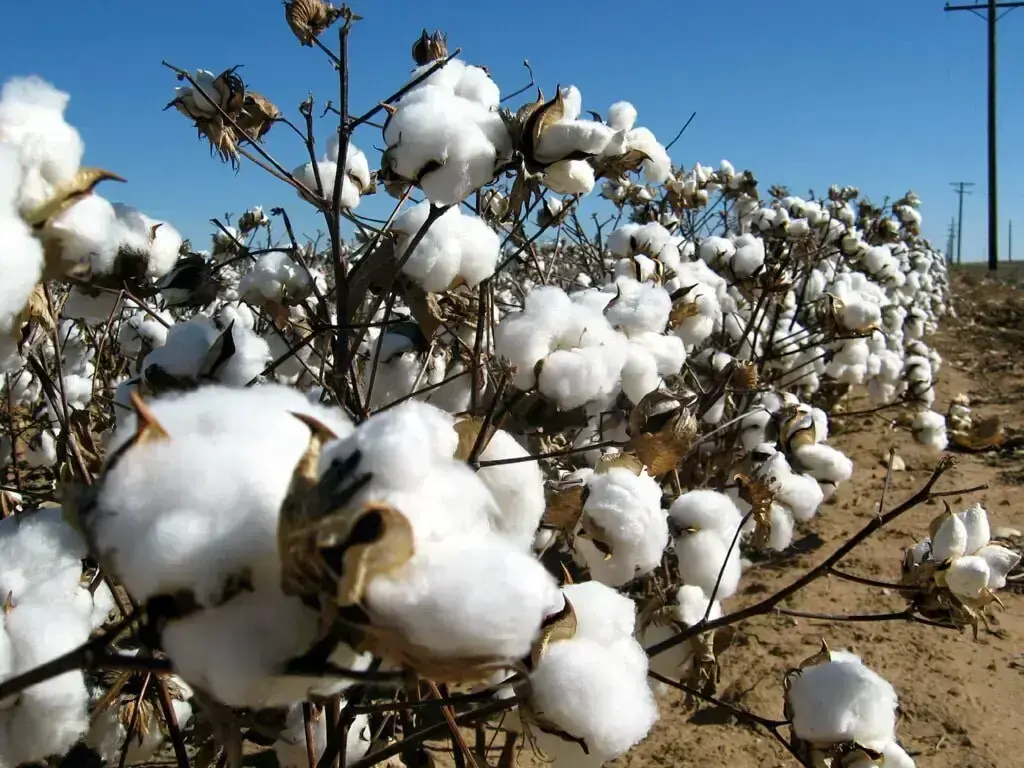
KARACHI: Cotton prices across the country’s markets have steadied after a recent upward trend, with trading volume also showing marked improvement, dealers reported. The spot rate climbed by six hundred rupees per maund, signalling a positive shift in market sentiment. New York cotton futures, meanwhile, continued to see fluctuations, though the domestic market remained largely insulated from that volatility.
Industry sources said the supply of seed cotton, or phutti, remains comparatively low, while ginners still owe thousands of bales in pending deliveries, a factor analysts believe will keep prices steady in the near term.
In related developments, the Federal Board of Revenue announced it will pay out one hundred and twenty six billion rupees in refunds to industries, a decision welcomed across business circles. That relief, however, comes against the backdrop of soaring energy prices, which industry leaders say are taking a heavy toll. A sharp rise in transport and other associated costs has pushed production expenses higher, adding further pressure on manufacturers already struggling with tight margins.
Data released separately showed textile exports slipped on a month on month basis in August, even as they posted growth when measured year on year. The ginning sector, meanwhile, remains under acute strain, with numerous factories forced to close and large numbers of workers left jobless as a result. Ehsanul Haq, commenting on the crisis, said the shutdown of ginning units has dealt a severe blow to the livelihoods of those employed in the sector.
Sources further revealed that the area under cotton cultivation continues its downward slide nationwide. For the 2026-27 season, cultivated acreage dropped by eleven percent in Sindh and eighteen percent in Punjab, a decline experts warn could pose serious challenges for future cotton output. Speaking on the broader crisis facing the industry, S. M. Tanveer noted that Faisalabad, once celebrated as the Manchester of Pakistan for its thriving textile trade, has now become what he described as a graveyard of textile mills, a stark illustration of the sector’s continuing decline.
Cotton prices in the local market remained stable over the past week following an earlier rise, as textile mills continued to show strong buying interest while a simultaneous increase in phutti (seed cotton) prices and a relative fall in supply kept the market firm. The upward trend in New York cotton prices has also spilled over into the domestic market, reinforcing the bullish sentiment.
Compounding the situation, the ongoing conflict involving Iran, the United States and Israel has delayed the arrival of imported cotton shipments. The All Pakistan Textile Mills Association (APTMA) has raised concerns that demurrage charges on containers of imported cotton sitting at ports are mounting steadily as a result.
Industry stakeholders also point to the sharp rise in energy prices as a major drag on the sector, with the resulting spike in transport and freight costs pushing up the overall cost of production. Adding to these pressures, what industry leaders describe as unfavourable government policy is deepening the crisis facing the textile sector and other industries. High energy costs, elevated taxation and rising interest rates have made it increasingly difficult to keep operations running, forcing many units to function only partially or shut down altogether. Cloth looms in particular have been hit hard, with a growing number ceasing operations.
Speaking on the situation, industry leader S. M. Tanveer said that Faisalabad, once known as the “Manchester of Pakistan,” has now turned into a graveyard of textile mills. He warned that unless these issues are addressed seriously, industries across the country will collapse, triggering a sharp rise in unemployment. On a more positive note, he welcomed the Federal Board of Revenue’s (FBR) announcement of Rs. 126 billion in refunds to industries.
In terms of prices, cotton in Sindh and Punjab is currently trading between Rs. 19,400 and Rs. 19,600 per maund, while phutti is selling at Rs. 8,700 to Rs. 9,900 per 40 kg. In Balochistan, cotton prices range from Rs. 19,400 to Rs. 19,500 per maund, with phutti trading between Rs. 8,900 and Rs. 9,500.
The Spot Rate Committee of the Karachi Cotton Association increased the spot rate by Rs 6,00 per maund and closed it at Rs 19,400 per maund.
Karachi Cotton Brokers Forum Chairman Naseem Usman said that international cotton prices are showing an upward trend. New York cotton futures fluctuated during the week, ranging between 82.38 and 89 American cents per pound.
According to the US Department of Agriculture’s (USDA) weekly export and sales report, 73,900 bales were sold for the 2026-27 marketing year. Pakistan topped the list of buyers, purchasing 19,400 bales, followed by Vietnam in second place with 17,500 bales and Mexico in third place with 11,900 bales.
For the 2027-28 marketing year, 2,500 bales were sold, all of which were bought by Mexico.
Meanwhile, cotton exports for the week stood at 177,800 bales. Vietnam remained the top importer, receiving 50,300 bales, followed by India in second place with 47,000 bales and Pakistan in third place with 17,600 bales.
Pakistan’s textile exports witnessed a decline on a month-on-month basis in August, even as they registered growth compared to the same month last year, according to the latest trade data.
Exports had stood at 1.833 billion dollars in July this year, the opening month of the current fiscal year, before falling by 12.71 percent in August to touch 1.60 billion dollars. On a year-on-year basis, however, textile exports in August 2026 rose by 4.76 percent, as the export volume in August last year had stood at 1.53 billion dollars.
Industry sources say Pakistan’s ginning sector is passing through a critical phase, hit by a sharp decline in cotton production, outdated technology, rising production costs and an unstable market. The recent surge in cotton prices has placed additional strain on the textile industry, and ginning factories are now struggling to stay afloat. Many have already scaled back their workforce and cut staff salaries, pushing thousands of families into financial hardship.
Cotton growers, meanwhile, are contending with mounting challenges of their own. The cost of seeds, fertilizers, pesticides, electricity and other agricultural inputs has risen sharply, eroding the profitability of cotton cultivation. Analysts warn that this is discouraging farmers from growing cotton, further weakening the crop’s already fragile supply chain.
Experts caution that the fallout from these challenges will not be confined to farmers and industrialists alone. Ordinary consumers, they say, will end up bearing the brunt through higher prices for textile products, shrinking employment opportunities and slower economic growth.
They have urged the federal government to treat the issue as a priority and take timely steps to revive cotton production, extend support to farmers and modernize the ginning industry, warning that urgent policy intervention is needed to halt further decline and secure sustainable growth in the country’s key textile sector.
Cotton once helped build Pakistan’s industrial economy. It supported millions of farmers, supplied a growing textile industry and generated vital export earnings.
Today, that foundation is weakening. With the close of the 2026-27 sowing season, cotton acreage has declined by about 18 per cent in Punjab and 11 per cent in Sindh, with only a marginal increase in Balochistan. Production is unlikely to move far beyond last year’s roughly 5.5 million bales, against domestic requirements of around 14 million. Pakistan once produced nearly 15 million bales.
But the real story is not simply that Pakistan is growing less cotton. We are creating too little value from the cotton we grow and increasingly from the cotton we import. The cotton crisis is therefore a test of productivity, water use, industrial competitiveness, foreign exchange and economic policymaking.
And the farmer is not the cause of this failure. He is responding to the incentives, risks and returns created by policy. If Pakistan wants to revive cotton, it must do more than persuade farmers to plant it again. It must make cotton profitable to grow, efficient to process and valuable to export, from seed and soil to bale, factory and fashion.
A decade of plans, a decade of decline: Pakistan does not lack cotton strategies. It lacks the capability for sustained implementation. The federal cabinet approved the first Cotton Vision in 2006. Since then, public institutions, international organisations and industry stakeholders have produced more than a dozen studies and strategies. A 2018 government report set an ambition of 25 million bales by 2025, with productivity rising to 1,200 kilograms per hectare.
Institutional uncertainty has contributed to the problem. The Pakistan Central Cotton Committee has faced repeated restructuring proposals at precisely the time the sector needed continuity.
There is a deeper weakness still. Pakistan has repeatedly struggled to embed technical expertise within domestic institutions with the authority, continuity and accountability to implement reform. Expertise arrives in reports and consultancy assignments, but rarely becomes embedded in the institutions responsible for reform. Another strategy will not revive cotton unless its institutions can endure beyond a budget cycle or change of administration.
Why farmers are leaving cotton: Cotton carries risks, pests, weather, input costs, quality variation, and uncertain prices. Competing crops can offer more predictable returns and established marketing arrangements.
Copyright Business Recorder, 2026



















Comments