


Rare earth minerals: Pakistan’s economy
Pakistan's vast, underexplored critical mineral resources offer a significant opportunity to diversify its economy, attract investment, and participate in global high-tech supply chains amidst rising global demand.
- Global demand for critical minerals and their strategic importance.
- Pakistan's underexplored mineral potential and economic opportunities.
- Challenges in developing Pakistan's mineral sector and attracting investment.
- Strategies for Pakistan to maximize value from its mineral resources.
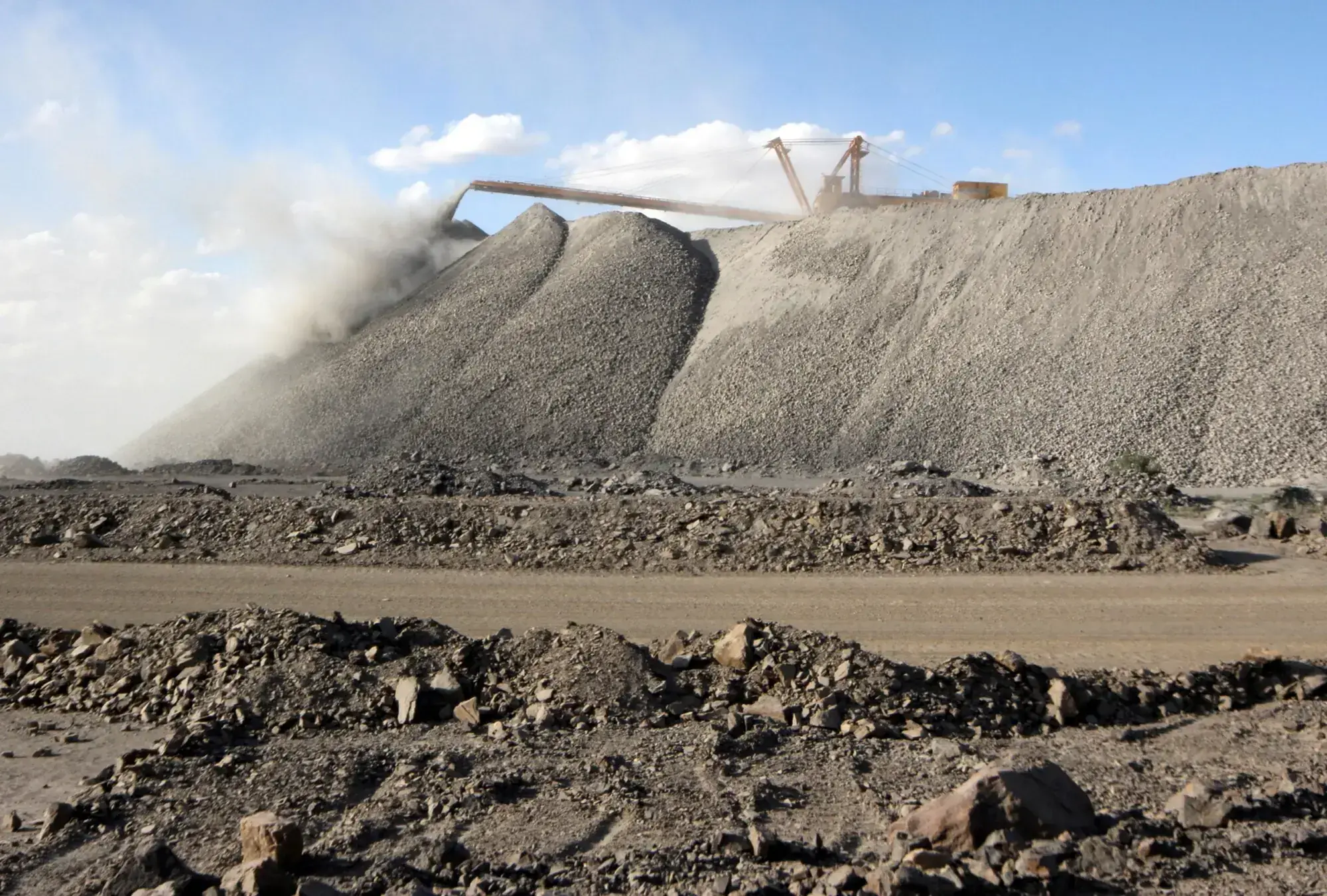
The global race for critical minerals is reshaping trade, technology, and industrial policy. Can Pakistan convert its mineral potential into a new source of exports, investment, and economic growth?
The global economy is entering a new era of resource competition. For much of the twentieth century, oil defined economic power and geopolitical influence. Today, a different category of resources is attracting increasing attention from governments, investors, and multinational corporations. Rare earth and critical minerals, once discussed mainly within geological and mining circles, have become essential components of the technologies driving the twenty-first-century economy.
Electric vehicles, renewable energy systems, semiconductors, advanced manufacturing, and artificial intelligence all depend on a reliable supply of critical minerals. As countries accelerate their transitions toward cleaner energy and digital technologies, demand for these resources is rising rapidly. Consequently, securing access to critical minerals has become an important economic and strategic priority for many nations.
For Pakistan, this development arrives at a particularly significant moment. The country continues to face recurring balance-of-payments pressures, a narrow export base, and the persistent challenge of attracting long-term productive investment. While economic discussions often focus on textiles, agriculture, remittances, and information technology, a growing number of policymakers and investors are turning their attention toward Pakistan’s mineral resources as a potential source of future growth.
Recent developments suggest that this interest is more than speculative. The Pakistan Minerals Investment Forum (PMIF) attracted investors, mining companies, financial institutions, and policymakers from around the world, highlighting the growing international interest in Pakistan’s mineral sector. Discussions at the forum focused not only on copper and gold but also on critical minerals that are increasingly viewed as strategic assets in the global economy.
The importance of these minerals extends far beyond mining. According to the International Energy Agency (IEA), the global transition toward electric mobility and renewable energy is expected to significantly increase demand for several critical minerals over the coming decades. These resources are no longer merely commodities; they have become inputs for industries that are expected to shape future economic growth.
China currently dominates much of the global critical minerals processing industry, prompting countries such as the United States, Canada, Australia, Japan, and members of the European Union to diversify supply chains and secure alternative sources. This shift has created opportunities for countries with commercially viable mineral deposits to attract investment and strengthen their positions within global production networks.
Pakistan possesses substantial geological resources. Deposits of copper, gold, chromites, iron ore, gemstones, and other strategic minerals are found across various regions of the country. Yet much of this potential remains underexplored and underutilized. While the country has historically relied on traditional sectors for export earnings, minerals offer an opportunity to broaden the economic base and reduce dependence on a limited number of industries.
Among the most prominent examples is the Reko Diq project in Balochistan. Widely regarded as one of the world’s largest undeveloped copper-gold deposits, the project has attracted considerable international attention. Estimates suggest that Reko Diq could generate tens of billions of dollars in economic value over its operational life while attracting substantial foreign investment and supporting related industries.
However, the significance of critical minerals should not be measured solely through the lens of extraction. The more important economic question concerns how these resources can contribute to broader development objectives. Export earnings matter, but so do industrial upgrading, technological capability, employment generation, and participation in higher-value segments of global supply chains.
This distinction is particularly important for Pakistan. The country has often exported raw or minimally processed commodities while importing higher-value manufactured products. Such patterns limit the economic benefits derived from natural resources. Countries that have successfully leveraged mineral wealth have generally invested in processing, refining, technological development, and industrial ecosystems that generate greater value than extraction alone.
The experience of countries such as Australia and Canada illustrates this point. Their success has been driven not merely by geological abundance but by strong institutions, regulatory certainty, technological innovation, and investments in human capital. Mineral resources created opportunities, but policy choices determined outcomes.
Pakistan faces several challenges in this regard. Geological exploration remains incomplete in many areas, infrastructure constraints continue to increase operational costs, and regulatory uncertainty has occasionally discouraged investment. Environmental considerations also require careful attention, particularly as global investors increasingly evaluate projects through environmental, social, and governance standards.
Equally important is ensuring that local communities benefit from resource development. Economic transformation cannot be measured solely by export statistics or investment inflows. Employment opportunities, infrastructure improvements, education, and local economic development must form part of the broader equation if mineral wealth is to contribute meaningfully to long-term prosperity.
Yet despite these challenges, the timing may be favourable. The global search for critical minerals is intensifying. Governments and corporations are seeking reliable partners, diversified supply chains, and new sources of strategic resources. Countries capable of providing stable investment environments and long-term development visions are likely to benefit from this shift.
For Pakistan, critical minerals represent more than a mining opportunity. They offer a chance to participate in industries that are expected to define future economic growth. The conversation is therefore not simply about what lies beneath the ground. It is about whether Pakistan can position itself within the evolving architecture of the global economy.
For decades, the country’s growth story has centred on agriculture, textiles, and remittances. Critical minerals introduce a new chapter to that discussion. They will not solve Pakistan’s economic challenges overnight, nor can they substitute for broader reforms. Nevertheless, they offer an opportunity to diversify exports, attract investment, strengthen industrial capacity, and engage with emerging global supply chains.
Whether rare earth elements and critical minerals ultimately transform Pakistan’s economy remains uncertain. What is certain, however, is that the industries shaping the future increasingly depend on these resources. As the world competes for the materials powering electric vehicles, renewable energy technologies, semiconductors, and artificial intelligence, Pakistan’s mineral wealth is attracting renewed attention. The challenge now is not discovering opportunity, but determining how best to use it.
Copyright Business Recorder, 2026
The writer is affiliated with the School of Management, Jiangsu University, Zhenjiang, Jiangsu P.R. China, and the Department of Agribusiness and Entrepreneurship Development, MNS-University of Agriculture, Multan, Pakistan


















Comments