


Pakistan’s missing export machine
Pakistan's recurring economic crises stem from its failure to develop a robust export economy, prioritizing domestic protection over global competitiveness, unlike successful Asian peers.
- Pakistan's low export-to-GDP ratio compared to other Asian nations.
- The "anti-export bias" created by protectionist policies and import restrictions.
- Insufficient investment and lack of export-oriented foreign direct investment.
- The IT sector's success as a model for future export growth.
- Five practical changes needed to boost Pakistan's export performance.
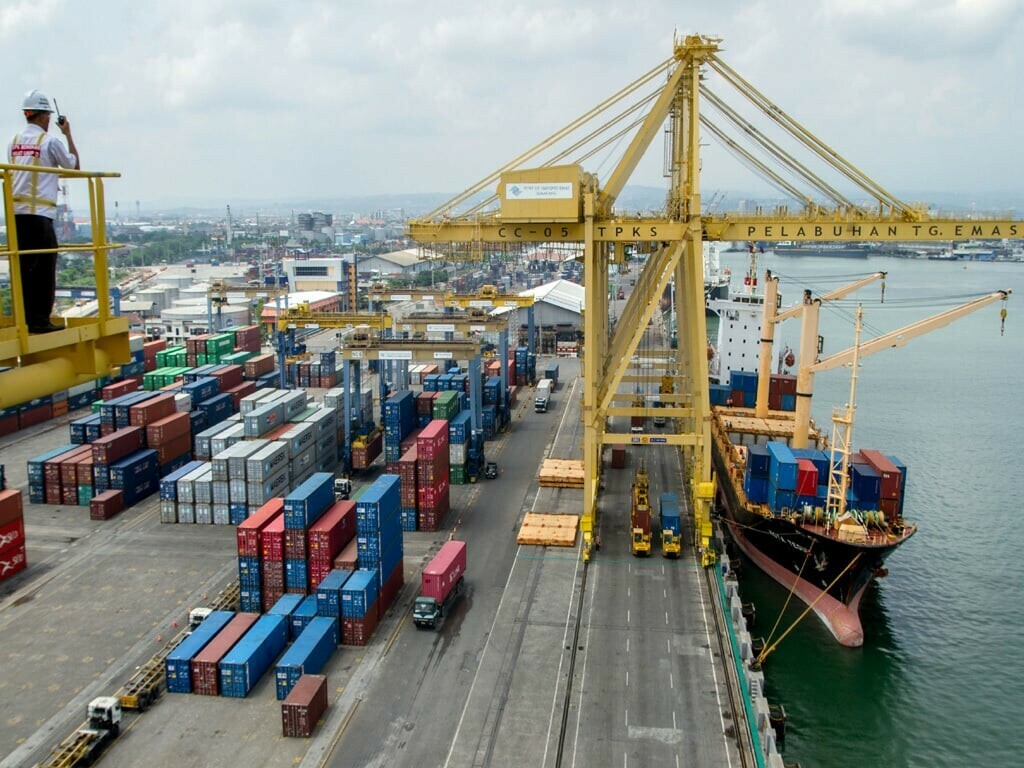
Pakistan’s recurring balance of payments crises are usually described as a shortage of dollars. That diagnosis mistakes the symptom for the disease. The country’s fundamental problem is that, after more than six decades of industrialisation plans, tariff protection, subsidised credit, export packages and repeated currency devaluations, it still does not produce enough goods and services that the rest of the world wants to buy.
In 1960, exports of goods and services from the territory of present day Pakistan were equivalent to approximately 7.2% of GDP. The ratio rose to 7.6% in 1970, 9.6% in 2000 and 12.6% in 2010, before falling back to about 10.4% in 2024. Pakistan’s nominal economy increased enormously, but its relationship with the global economy changed remarkably little. More than six decades after the 1960s, exports still account for only about one tenth of national output.
The contrast with Asia’s successful exporters is stark. In 2024, Pakistan exported approximately $38 billion of goods and services, against $47 billion from Bangladesh, $301 billion from Malaysia and $429 billion from Vietnam. Exports represented 71% of Malaysian GDP and 90% of Vietnam’s, compared with Pakistan’s 10%. Bangladesh’s ratio had also fallen to approximately 10%, reflecting its recent economic and external difficulties, but it still exported about $271 per person against only $154 from Pakistan.
These countries did not follow a single formula. Malaysia used foreign direct investment to build electronics and electrical equipment clusters around Penang and other industrial centres. Vietnam combined the Doi Moi reforms, WTO membership, extensive trade agreements and multinational investment to integrate itself into global manufacturing. Bangladesh concentrated heavily on ready-made garments, using bonded warehouses, duty free imported inputs, back-to-back letters of credit and a large female workforce to become a leading supplier to Western markets.
Pakistan did none of these consistently. It attempted to promote exports while preserving an economic system designed around protection of the domestic market. The result was not an export led economy but a protected economy that exported whatever remained competitive despite the system surrounding it.
The usual explanations in terms of expensive energy, an overvalued currency, insufficient subsidies and weak global demand are not wrong, but they are incomplete. Pakistan’s export stagnation is fundamentally a political economy problem. A business can invest in technology, quality, worker training and international distribution, or it can seek tariffs, tax concessions, subsidised finance and regulatory protection at home. The first strategy is difficult, uncertain and slow. The second often provides safer and faster returns. Rational firms respond to the incentives they face.
Protection does more than weaken competition. It also raises the cost of imported machinery, components, chemicals and technology used by exporters. Modern exports depend on imports to a certain degree. Vietnam imports components for electronics assembly, Bangladesh imports machinery and textile inputs, and Malaysian firms operate inside cross border supply chains. Pakistan, by contrast, repeatedly responds to foreign exchange shortages by restricting imports, delaying letters of credit and imposing additional duties. These measures compress demand temporarily but also close the supply lines of the firms expected to earn the dollars.
The World Bank has described this as an anti-export bias. Pakistan’s cascading tariffs and protection of finished goods make domestic sales relatively more profitable, discourage foreign companies from using Pakistan as an export base and keep exports concentrated in textiles, rice and a limited number of traditional products.
Macroeconomic instability reinforces the bias. Governments have periodically supported an artificially strong rupee to make imports cheaper and contain inflation. Imports rise, exports lose competitiveness and reserves fall. The eventual correction brings sharp devaluation, high interest rates and import restrictions. Exporters receive a cheaper currency but lose predictable access to inputs, energy and working capital. A devaluation may produce a temporary increase in rupee earnings, it cannot however create internationally competitive firms.
Pakistan also invests far too little. Gross capital formation was approximately 13% of GDP in 2024, compared with 22% in Malaysia and more than 30% in both Vietnam and Bangladesh. Pakistan is effectively attempting to generate East Asian export growth with less than half Vietnam’s investment rate. Factories, equipment, ports, testing laboratories, skills and supplier networks cannot emerge without sustained capital accumulation.
Nor has Pakistan attracted sufficient export oriented FDI. Net foreign direct investment amounted to only about 0.7% of GDP in 2024, against 3.7% in Malaysia and 4.2% in Vietnam. Much of Pakistan’s foreign investment has served the domestic market, infrastructure with guaranteed returns or natural resource projects. Vietnam attracted global manufacturers and made their supplier networks part of its export machine. Foreign owned firms now account for approximately 73% of Vietnamese exports. Its trade agreements cover markets representing almost 90% of global GDP.
External assistance also reduced the pressure to change. Geopolitical aid, remittances, borrowing, deposits from friendly countries and repeated IMF programmes supplied foreign exchange when the export model failed. These inflows were often necessary, but they allowed Pakistan to stabilise without transforming its economy. Vietnam had to export to finance development. Bangladesh made garments central to employment and foreign exchange generation. Whereas Pakistan repeatedly postpone reforms until the next crisis.
Yet one part of Pakistan’s export economy has begun to escape this trap. Recorded IT and IT-enabled services exports increased from approximately $2.1 billion in FY2021 to $3.2 billion in FY2024, $3.8 billion in FY2025 and a record $4.6 billion in FY2026. The sector has more than doubled in five years, growing at a compound annual rate of roughly 17%. Software development, freelancing, business process outsourcing, cloud services, digital marketing and remote professional work now provide one of Pakistan’s largest sources of services export earnings.
IT has succeeded partly because it can route around the failures of the physical economy. A developer in Lahore does not need a port, industrial estate or imported production line to serve a client in Dubai, London or New York. Digital exports require relatively little physical capital and generate high domestic value added. Applied artificial intelligence enlarges the opportunity. Pakistani firms can build AI-enabled banking, healthcare, cybersecurity, logistics and business service applications using existing global models without financing frontier model development themselves.
But low physical capital does not mean no investment. The required capital has changed form. It consists of advanced skills, reliable internet access, cloud computing, international payments, cybersecurity, intellectual property, management and customer relationships. Pakistan’s IT industry remains weighted towards freelancing and low- to mid-value outsourcing. Generative AI is already automating routine coding, content creation, call centre work and data entry. Unless Pakistan moves from inexpensive labour to specialised expertise, AI-enabled delivery and proprietary products, technology may disrupt part of the advantage it has created.
What, then, would make exports take off? Pakistan needs five practical changes, implemented together rather than announced as another disconnected package.
First, it must eliminate the anti-export bias. Genuine exporters should import verified inputs without paying duties and sales taxes upfront. Tax refunds should be automatic within seven working days, while tariffs on protected finished goods should decline according to a published five-year schedule. Every subsidy, concession and protective tariff should expire unless the beneficiary demonstrates additional exports, productivity, investment or technology transfer. Public support must purchase performance rather than permanent privilege.
Second, Pakistan needs a credible ten-year export competitiveness framework covering the exchange rate, taxation, energy, import access and foreign currency rules. The rupee should remain market based. Verified exporters should never be denied production inputs because of economy-wide import controls. Tax and foreign exchange arrangements should not change with every budget. Exporters invest when they can predict the rules, not when they receive another temporary concession.
Third, Pakistan must target export-oriented FDI rather than celebrate every foreign investment equally. A professional team should approach perhaps 100 carefully selected global companies in electronics, engineering, pharmaceuticals, medical technology, agribusiness and digital services. Export zones must provide electricity, water, customs, laboratories, digital connectivity and enforceable contracts before investors arrive. Incentives should be conditional on exports, training, local suppliers and technology transfer, not simply on announced investment.
Fourth, the country should organise a limited number of export missions around sectors with demonstrated potential. These could include value added and technical textiles, IT, AI and business services, processed food and agribusiness, engineering goods, pharmaceuticals and medical products and Pakistan’s established surgical and sports goods clusters to begin with. Each mission should address the complete constraint set from skills and standards to finance, energy and market access while withdrawing support from firms that fail to deliver. Successful freelancers should be helped to form companies, technology firms to specialise, and specialised firms to build globally scalable products.
Fifth, Pakistan needs a permanent National Export Delivery System. Responsibility is currently scattered across the finance and commerce ministries, the revenue authorities, the State Bank, energy institutions, regulators and provincial governments. A professional delivery unit should maintain a single exporter portal, assign every unresolved case to a named official, publish a quarterly performance dashboard and escalate conflicts to a National Export Council. It should measure not only total exports but export oriented FDI, new products and markets, export value per worker, the number of firms exporting more than $1 million annually, and the time required for refunds and approvals.
The objective should be to raise exports of goods and services from roughly 10% of GDP to at least 20% within five years and 30% within a decade. This requires a political compact ensuring that access to imported inputs, a market based exchange rate, performance linked industrial policy and the principal export objectives survive changes of government.
Pakistan needs to change the calculation confronting every entrepreneur, whether it is more profitable to export, invest and raise productivity or to seek protection, property and influence. Malaysia, Vietnam and Bangladesh built export engines suited to their circumstances. Pakistan built a system of intermittent support surrounded by permanent disincentives. Its next export strategy should therefore be judged by one question. Does it reward firms for selling competitively to the world or compensate them for remaining protected at home? Until the answer changes, Pakistan will continue to manage shortages of dollars rather than build the machine that earns them.
The writer is a senior international banker with degrees in economics and political science from University of Pennsylvania and Brown University










Comments