


Bridging the AI divide for smallholder farmers
AI offers significant potential for Pakistan's agriculture, but its success hinges on inclusive policies ensuring smallholders benefit, preventing increased inequality and maximizing national productivity.
- The digital divide in AI adoption among Pakistani farmers.
- Government policies and infrastructure for inclusive AI integration.
- AI's potential for national food security and export competitiveness.
- Complementing agricultural extension services with AI tools.
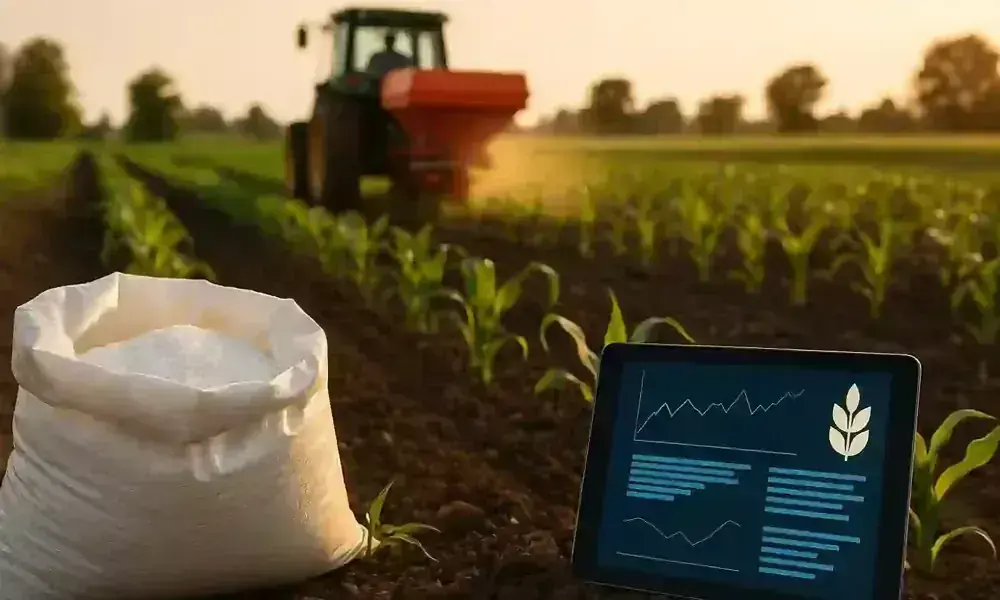
Every crop season begins with a familiar calculation for Pakistan’s farmers. Will fertilizer prices rise again? Will diesel remain affordable? Will rainfall arrive on time? Can market prices cover production costs? For millions of smallholders, farming has become an increasingly uncertain business, shaped as much by economic pressures as by weather.
Artificial intelligence is now being presented as a practical tool to reduce some of that uncertainty. AI-powered weather forecasting, satellite imagery, pest detection, soil analysis and digital advisory platforms can help farmers make better decisions about irrigation, fertilizer application and harvesting. In countries that have invested heavily in digital agriculture, these technologies are improving productivity while reducing waste and production costs.
Pakistan has also begun embracing digital agriculture. Public institutions, private companies and agritech startups are introducing mobile applications, remote sensing technologies and data-driven advisory services designed to support farmers. These developments reflect a growing recognition that technology must become part of the country’s agricultural future.
Yet technology alone cannot solve agriculture’s problems. More importantly, not every farmer has an equal opportunity to benefit from it.
Large commercial farms are generally better equipped to adopt digital technologies. They have greater financial resources, better internet connectivity, access to skilled labour and stronger links with agricultural service providers. Investing in AI-based tools represents a business decision that may improve efficiency, reduce costs and increase profitability over time.
The situation is very different for Pakistan’s millions of smallholders. Many continue to struggle with limited access to formal credit, quality extension services and reliable market information. Smartphone ownership has increased significantly across rural Pakistan, but owning a phone is only the first step. Using digital advisory platforms requires internet access, digital literacy and confidence in technology, resources that remain unevenly distributed across farming communities.
This emerging digital divide deserves far greater attention than it currently receives. Discussions about artificial intelligence often focus on technological capability, while overlooking the economic and social conditions that determine who can actually use these innovations. If AI adoption remains concentrated among larger producers, the productivity gap between commercial farms and smallholders may widen further.
That outcome would have consequences beyond individual farmers. Smallholders account for a substantial share of Pakistan’s agricultural production and support millions of rural livelihoods. Excluding them from technological progress would limit productivity gains across the entire agricultural sector while reinforcing existing income inequalities.
The challenge is particularly important as Pakistan seeks to strengthen its agricultural exports. International buyers increasingly demand traceability, quality assurance and sustainable production practices. AI can support these objectives by helping farmers monitor crop conditions, optimize input use and improve compliance with export standards. These advantages could enhance the competitiveness of produce such as mangoes, citrus, rice and other high-value crops.
However, export competitiveness cannot depend solely on a relatively small number of technologically advanced farms. Sustainable growth requires broader improvements in productivity across the farming sector. Digital transformation will succeed only if smaller producers are able to participate rather than remain spectators.
Government policy therefore becomes as important as technology itself. Investments in artificial intelligence should be matched by investments in rural connectivity, agricultural extension services and farmer training. Digital tools are most effective when farmers understand how recommendations are generated and how they fit local farming conditions. Trust cannot be downloaded through an application: it is built through demonstration, education and consistent support.
Language is another overlooked barrier. Many digital platforms continue to rely heavily on English, limiting accessibility for large sections of the farming community. Advisory services that communicate in Urdu and regional languages are more likely to gain acceptance, particularly when recommendations reflect local cropping systems rather than generic international models.
Artificial intelligence should not become another symbol of unequal development. Its value lies not in sophisticated algorithms alone, but in its ability to improve everyday decisions on farms of every size. Whether Pakistan achieves that objective will depend less on technological innovation than on the policies designed to make innovation accessible.
A more inclusive approach begins with recognizing that artificial intelligence is only one component of agricultural modernization. Farmers first need reliable mobile networks, affordable internet access and electricity before digital advisory platforms can become part of routine decision-making. Rural infrastructure may lack the appeal of cutting-edge technology, but it remains the foundation upon which digital agriculture depends.
Equally important is strengthening agricultural extension services. Pakistan’s extension system has long struggled with limited resources and uneven outreach. Rather than replacing extension officers, AI should complement their work. Field staff equipped with digital tools can interpret satellite images, verify AI-generated recommendations and translate technical information into practical advice suited to local conditions. Technology is most effective when it supports human expertise rather than attempting to replace it.
The private sector also has an important role to play. Pakistan’s growing agritech ecosystem has demonstrated that digital innovation can address longstanding problems in agriculture. Mobile applications that provide weather forecasts, market prices and pest alerts are already helping some farmers make more informed decisions. Financial institutions are beginning to explore digital credit assessment, while insurance companies are examining satellite data to improve crop insurance products. These innovations illustrate that AI has commercial value beyond crop production alone.
However, commercial success should not come at the expense of accessibility. If digital services remain affordable only for larger producers, they will reinforce existing disparities instead of expanding opportunity. Business models that involve farmer cooperatives, input suppliers, commodity buyers and microfinance institutions could help spread costs and make AI-powered services accessible to smaller farms. Public-private partnerships may prove particularly valuable in reaching remote communities where private investment alone is unlikely to be sufficient.
There is another reason for ensuring that AI reaches smallholders: national food security. Pakistan’s agricultural future depends not only on improving yields but also on building resilience against increasingly frequent climate shocks. Heatwaves, floods, prolonged dry spells and emerging pest outbreaks are becoming more common, making farming decisions more complex than they were a generation ago. AI can analyse weather patterns, identify disease risks and provide early warnings that allow farmers to respond before losses become severe. Such information becomes even more valuable as climate uncertainty grows.
The same applies to export competitiveness. International markets increasingly reward producers who can demonstrate traceability, sustainability and compliance with quality standards. Digital record-keeping, remote monitoring and data-driven farm management can strengthen Pakistan’s position in high-value agricultural markets. Yet export success will remain limited if only a small segment of producers can meet these expectations. Bringing smallholders into the digital economy is therefore not simply a question of equity; it is an economic necessity.
None of this suggests that artificial intelligence is a cure for every problem confronting Pakistani agriculture. Structural issues such as fragmented landholdings, water scarcity, weak research-extension linkages and inconsistent policy support cannot be solved through algorithms alone. Expecting technology to compensate for decades of under-investment would be unrealistic. But dismissing AI because it is not a complete solution would be equally shortsighted.
The real opportunity lies in combining technological innovation with practical public policy. Investments in rural connectivity, digital literacy, agricultural research and extension services will determine whether AI becomes a widely shared resource or a tool available only to a privileged minority. Success should not be measured by the number of pilot projects launched or mobile applications downloaded, but by whether farmers across different regions and income groups are able to make better decisions, reduce losses and improve their livelihoods.
Pakistan has often been slow to adopt technological change, only to find itself catching up under greater pressure later. Artificial intelligence offers an opportunity to avoid repeating that pattern. The question is no longer whether AI will influence agriculture. It already is. The more important question is whether policymakers, businesses and development institutions can ensure that its benefits extend beyond a relatively small group of well-resourced farms.
If artificial intelligence is to become part of Pakistan’s agricultural future, it must be designed around the realities of those who produce most of the country’s food. A digital transformation that leaves millions of smallholders behind would not only deepen rural inequality but also limit the productivity gains the technology promises. Ensuring that innovation reaches every farm, rather than only the largest ones, will ultimately determine whether AI strengthens Pakistan’s agricultural economy or simply mirrors its existing divides.
The writer is affiliated with the School of Management, Jiangsu University, Zhenjiang, Jiangsu, P.R. China, and the Department of Agribusiness and Entrepreneurship Development, MNS-University of Agriculture, Multan, Pakistan
The author is affiliated with ILM College Habibabad, Okara; Agricultural &dairy farm vendor, Okara.

















Comments