


Thought leadership: real or self-styled?
The article critiques modern leadership labels, arguing true leadership is holistic and requires fundamental qualities. It defines a "thought leader" as an influential expert providing deep insights, who must first embody basic leadership traits.
- Critique of various modern leadership labels.
- Fundamental qualities essential for any effective leader.
- Defining characteristics and influence of a true thought leader.
- Examples of prominent thought leaders, past and present.
After every few years management gurus, scientists and practitioners come up with some “new” fancy jargon, cliché or a coinage. This I believe is done to remain relevant and meaningful to the dynamics of change happening in every sphere of life.
Upon closer examination it is either old wine in new bottle or a cocktail of over-lapping concepts that tastes the same but appears new and appealing.
Over the last decade or so, we have seen how the concept of leadership has been broken down into several layers of recognition.
A ‘simple leader’ of the past, with all the related skills and virtues attending that persona, is now required to seek recognition through the hair-splitting of leadership concepts. Consequently, we have situational, transformational, servant, parental, and humble leadership. What beats all these fine distinctions, however, is the leadership termed ‘authentic.’ What?
There can be unauthentic persons but how can anyone be a non-authentic leader? This one feature must disrobe him/her of any leadership position held. This is in my view managerial blasphemy, proving bankruptcy of managerial ability to develop sound alternative concept or thought.
Leadership, conceptually, is not medical science, where more and more of less and less leads to ‘specialisation’. While a doctor may start as a general surgeon, they require specialized education and clinical experience to qualify as a specialist, such as a cardiac surgeon, an ENT surgeon, a liver surgeon, or a nephrologist.
Leadership, on the contrary, is a wholesome concept; being IT specialist does not lend the person to be addressed as a ‘leader’. Leadership requires more than specialisation.
Much before this division and hair splitting, there are some primary requirements which must be met to be called a ‘leader’.
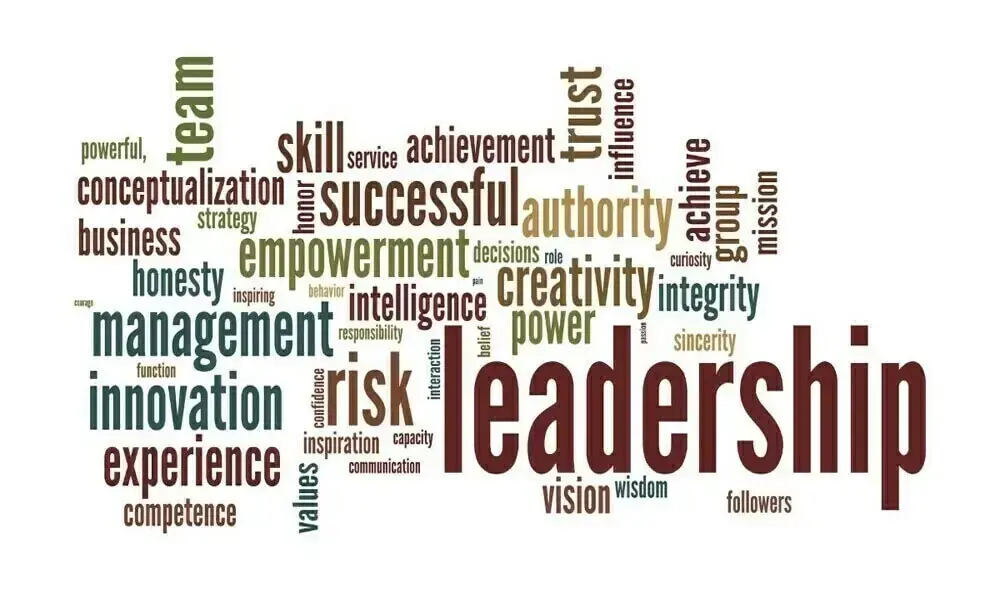
All leaders need to have certain basic qualities in their personality like abilities to draw a vision, strategies and have sound communication skills, a minimum standard of technical proficiency of the relevant industry and be possessed of ability to collect the right people (human resources) and organise them towards the achievement of the goals and objectives and, above all, have in possession and display a very deep sense of integrity and honesty.
Besides these minimum, there are several other characteristics and ingredients that go towards the making of a leader.
Hence adding any prefix to the word ‘leader’ is to confirm, firstly, the presence of all qualities required to be called a leader. A thought leader, hence, is a concept like other branches of leadership traits, where it pre-supposes that the basic criteria of leadership standards stand ticked.
As an example, if in the economy there are say 25 pharmaceutical companies operating, each of them would have a CEO/MD, who by sheer positional power are ‘leaders’ in their own right. But not all of them can be classified as ‘thought leaders’.
As a society, mostly we are generous and hence have this propensity streak of bestowing unbelievable titles and accolades upon people. Doing the necessary is no outstanding performance. This is done with wanton indiscrimination. Those who may not have performed or may have done the bare minimum necessarily required to be done are recognised with civil awards.
So who is a thought leader?
Many thoughtless individuals who never ventured into the difficult task of ‘thinking’ are introduced as ‘thought leaders’. For readers easy discernment of this predicament of who qualifies as a thought leader. Compare US Presidents Donald Trump and JFK. The former thinks after the event; the latter was a genuine thought leader.
A thought leader is someone who is widely recognised as an authority or a specialist (expert) who provides to society at large deep insights coupled with forward-looking ideas that serve as a bait of inspiration to influence others in a specific field or industry. Such individuals are possessed of abilities to thinking in their area of interest with a view to creating a body of knowledge or thoughts based upon experience and practice.
Thought leaders in specific industries/fields offer solutions that are new to issues of cobweb complexities. They are usually respected and well regarded for their analyses and judgments. And, possibly and more importantly, thought leaders are essentially great communicators; they are clear headed, hence possess the quality to articulate their thoughts with clarity and conciseness.
Having ‘thought’ on issues that could be of value is one thing but to be able to wire them across the industry is different. The thought leader is someone who is willing to state and defend his/her opinion.
Thought leaders walk their talk. Noble thoughts cannot be backed by ignoble behaviour. They must remain strong adherents to their thoughts. Consistency is their virtue. This is a pre-requisite. In the political arena, I find only Jinnah and Z.A. Bhutto as thought leaders and to a lesser degree, Benazir Bhutto. Thought leaders ought to be genuine, truthful, authentic and empowering.
The detractors of Z.A. Bhutto may find him a little short on some of these traits, but even history cannot deny him the credit for having aroused the political consciousness of the masses, just as our founder did in rallying the Muslims of India toward a common objective. Both sold well their narratives.
Thought leaders are attentive listeners. While they can eloquently express, they are mostly active lender of their ears. Their skill lies in being able to sift through the mine(s) of data and arrive at workable/doable solutions. They do not impose but exhibit enormous patience with their audience to gain their confidence.
Thought leaders’ focus of attention zeros in on a defined parameter, which usually is short and not too widened area. This allows them attention of the specific audience.
A thought leader from the aviation industry would have none or limited appeal to those outside the sphere of avionics; however, an HR thought leader may have larger audiences that cuts across industries and disciplines. Human resource peculiarities are normally common amongst many different set of enterprises.
In any organisation, there are ‘thought leaders who could be recognisable on the ladder of corporate hierarchy or they could be obscure to the management but not to co-workers. We find many individuals who are on de facto basis real thought leaders, to whom colleagues are willing to go to seek and learn.
Thought leaders develop for themselves over a period of time their credibility through public appearances or by way of posting credible content on various social media sites; many do so by running vlogs or their own channels. Thought leaders are invited to seminars and conferences, which gives them both the trust of their followers and greater visibility.
Popular thought leaders today include Bill Gates in the IT and communications industry, Mark Zuckerberg in the social media sphere, and Simon Sinek in the field of inspirational leadership, who authored the bestselling book Start With Why. Historically, Confucius is recognized for promoting moral standards, family duty, and harmony; Karl Marx for his critical theories against capitalism; and Martin Luther King Jr. for his peaceful activism for racial equality. I have deliberately avoided thought leaders from the arena of religion, where there are many outstanding ones.
In conclusion, it needs to be reiterated that every single thought leader must necessarily possess all the traits, characteristics, skills and abilities that a Leader, must have to firstly qualify as a ‘leader’, and thence only he/she can graduate to being a ‘thought leader’. To call or refer to someone as ‘thought leader’ mustn’t be an act of charity or self-deception; it must meet the litmus test of having in the persona the basics of leadership.
Copyright Business Recorder, 2026
The writer is a Senior Banker & Freelance Contributor



















Comments