


The Afghan challenge
A UN report highlights the evolving terrorist threat to Pakistan from TTP, supported by Afghanistan. Pakistan must engage the Afghan Taliban while demanding concrete action against militant groups and fostering regional cooperation.
- Evolving terrorist threat to Pakistan from TTP and allied groups.
- Afghan Taliban's potential to restrain the Tehreek-i-Taliban Pakistan.
- Pakistan's calibrated strategy of pressure and engagement with Kabul.

EDITORIAL: The latest UN Security Council-mandated report presents a deeply troubling picture of the evolving terrorist threat to Pakistan, particularly the continued presence and support enjoyed by the Tehreek-i-Taliban Pakistan (TTP) in Afghanistan.
The reported links among the TTP, Al-Qaeda, Islamic State-Khorasan (ISIL-K) and the Baloch Liberation Army (BLA) make the challenge even more complex. Pakistan cannot afford to underestimate this increasingly interconnected militant ecosystem.
At the same time, the report’s finding that the Afghan Taliban have relocated around 2,000 TTP fighters and their families away from Pakistan’s border, and that Taliban supreme leader Hibatullah Akhundzada has warned the TTP leadership against attacks on Pakistan, deserves attention. These steps are clearly insufficient if the TTP’s command, training, and logistical infrastructure remain intact.
Yet they suggest that Kabul may have some capacity — and perhaps some willingness — to restrain the terrorist group. Pakistan therefore needs to keep the door open to negotiations with the Afghan Taliban while maintaining firm security and diplomatic pressure.
Dialogue should not be mistaken for weakness or concession. Rather, it can provide Islamabad with a channel through which to demand concrete and verifiable action against terrorist groups operating from Afghan territory.
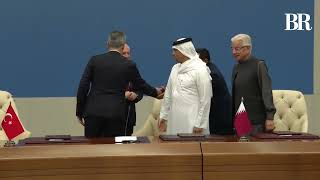
There is already a useful regional framework on which to build. Senior officials from Pakistan, Afghanistan and China held informal trilateral talks in the Chinese city of Urumqi from April 1 to 7, 2026, with China facilitating efforts to reduce tensions following military clashes earlier in the year.
Islamabad pressed Kabul to take verifiable measures against the TTP and dismantle its safe havens, while Beijing is believed to have raised its own concerns about the East Turkestan Islamic Movement (ETIM) operating in the region.
Although the talks were exploratory and produced no major breakthrough, the participants reportedly agreed in principle to avoid actions that could further escalate tensions, and to explore a more comprehensive framework.
This channel should not be allowed to wither. China has a direct security interest in Afghanistan because of concerns about ETIM, while Pakistan faces the TTP and other militant organisations. Afghanistan itself confronts the growing threat posed by ISIL-K. These overlapping security concerns provide a basis for regional cooperation, even where political differences remain substantial.
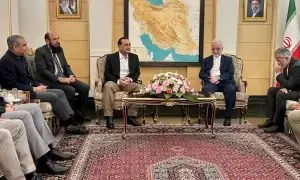
A broader regional approach could also bring in Iran and the Central Asian states, which have their own concerns about terrorism, extremism and instability emanating from Afghanistan. Such engagement could create stronger incentives for the Afghan Taliban to prevent their territory from being used to plan, facilitate or launch attacks against neighbouring countries.
The UN report should therefore be viewed not only as a warning but also as an opportunity. Islamabad needs to keep the diplomatic door open to Kabul while making clear that meaningful engagement depends on measurable action against the TTP.
The objective should be neither confrontation for its own sake nor dialogue without conditions, but a calibrated strategy of pressure and engagement aimed at preventing Afghanistan from remaining a source of insecurity for the region.
Copyright Business Recorder, 2026



















Comments