


MoC has no plan to deal with expected new restrictions on Iran
Pakistan's Ministry of Commerce has no concrete plan for new US sanctions on Iran, which could severely impact its significant informal trade and exports, despite recent bilateral efforts.
- Upcoming US sanctions targeting trade with Iran.
- Pakistan's $800 million annual informal trade with Iran.
- Recent agreements to boost formal Pakistan-Iran trade.
- Security concerns affecting cross-border trade routes.
ISLAMABAD: The Ministry of Commerce (MoC) has reportedly not prepared any concrete plan to deal with the expected fallout of fresh US restrictions on Iran, despite the potential impact on Pakistan’s informal trade and exports to the neighbouring country.
Background discussions with officials indicate that Islamabad is closely monitoring the developing situation though the implementation of operation Economic D-Day announced by US Treasury Secretary Scott Bessent on 24 August, envisaging the imposition of prohibitive secondary sanctions on countries engaged in trade with Iran, has not yet begun.
Officially, Pakistan’s exports to Iran are almost negligible, while unofficial trade is estimated at around USD 800 million annually, with bilateral trade taking place through informal channels or barter arrangements.
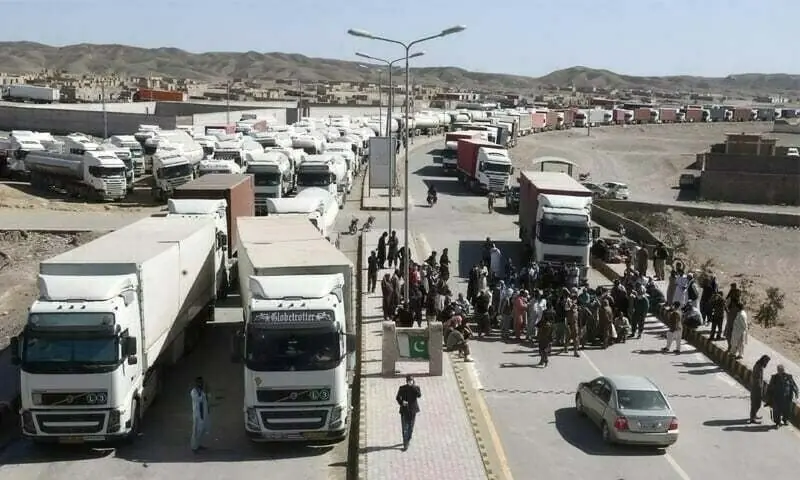
Rice exports to Iran are mainly routed through the Gabd Border Crossing Point (BCP), while mango consignments generally pass through the Taftan BCP.
According to official data, around 1,209 trucks carrying rice exports crossed through Gabd during June-July 2026, while approximately 1,121 trucks carrying mangoes were sent through Taftan during the same period.
Officials also highlighted the precarious security situation in Balochistan, particularly along the Quetta-Taftan route. Despite cargo vehicles travelling in Frontier Corps (FC) convoys, attacks on cargo vehicles continue to pose a major challenge to bilateral trade.
For formal trade, Pakistan has granted waiver from the requirement of financial instruments for imports from Iran and cargo under CARS via the Iran corridor.
Exports of certain essential items, including food, medicines and tents to Iran, as well as rice exports to CARS/Azerbaijan through the Iran land route, have been exempted from the financial-instrument requirement for three months.
The issue assumes greater significance following the 10th meeting of the Pak-Iran Joint Trade Committee, which was co-chaired by the Federal Minister for Commerce and Iran’s Minister for Industry, Mine and Trade in Islamabad from August 3-5, 2026.
The meeting discussed a wide range of areas of bilateral cooperation, including trade, customs, transportation and other trade-related matters.
The customs authorities of both countries agreed to implement all necessary arrangements for the management of road transit of goods under TIR Carnets as well as through the online TIR (E-TIR) system.
Both sides also agreed to ensure 24/7 customs operations at all customs border crossing points along the Pakistan-Iran border to facilitate trade and reduce delays.
Pakistan and Iran further agreed to take measures to enhance the operational capacity of the Gabd-Rimdan and Taftan-Mirjaveh border crossings.
The two sides also agreed to enhance railway connectivity and air-cargo operations.
Officials said the implementation of these measures could help facilitate formal bilateral trade. However, the possible tightening of US sanctions on Iran could create complications for Pakistan’s trade through the Iran corridor, particularly for exporters and traders’ dependent on border markets.
With Pakistan’s formal exports to Iran already limited and a sizeable volume of trade taking place informally, officials stressed the need for Islamabad to closely assess the potential implications of any new US measures and prepare a contingency strategy.
Copyright Business Recorder, 2026















Comments