


A test of Indian democracy
An editorial criticizes excessive police force against youth protests in India, sparked by exam irregularities and broader frustrations, highlighting the need for accountability and addressing legitimate grievances.
- Amnesty International's report on police force.
- Underlying causes of youth frustration and protests.
- Call for independent investigation into police actions.
- Democratic tolerance for dissent and accountability.
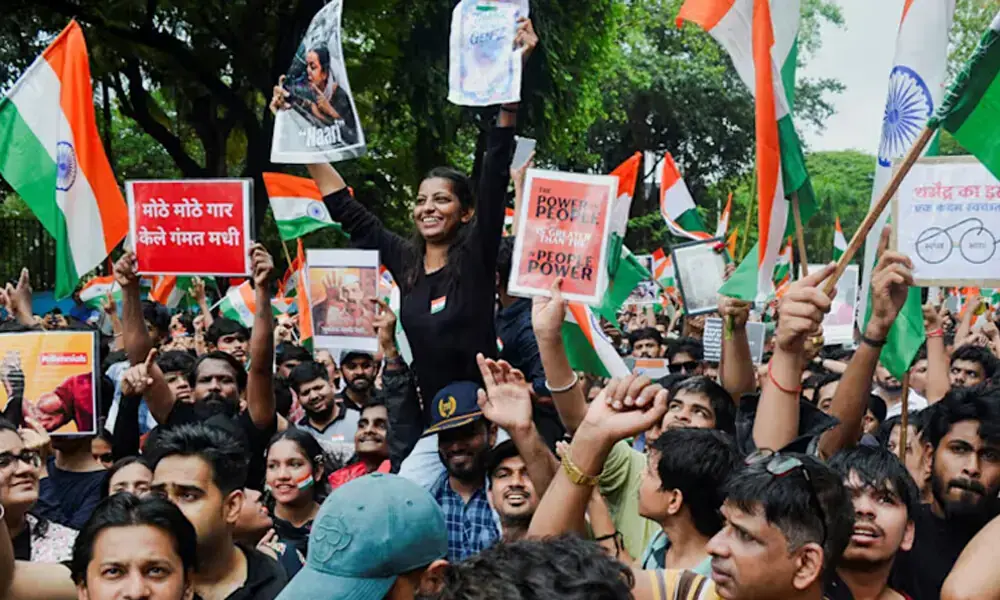
EDITORIAL: The reported excessive use of police force against recent youth-led protests in India calls into sharp focus the limits of state power and the protection of democratic freedoms.
According to a fresh Amnesty International report, police used pellet guns, tear gas, batons, grenades and electric shock devices during demonstrations sparked by irregularities in the national medical entrance examination.
What began as anger over an examination issue widened into a broader expression of frustration among young people over unemployment, limited opportunities and the pressures confronting them in an increasingly difficult economic and social environment.
In any democracy, public protest is a legitimate means of expressing grievances. Young people whose educational and professional futures may be affected by leaks or irregularities in a major entrance examination have every reason to demand answers and accountability. Their frustration should not, in itself, be regarded as a threat to public order.
At the same time, any violence or attacks on public property or security personnel has to be dealt with according to law. The more serious question, however, is whether the response of the authorities was proportionate. Police have a duty to maintain order and protect citizens, but that duty cannot amount to a licence for indiscriminate or excessive resort to force.
The reported deployment of pellet guns and other potentially dangerous weapons against crowds is particularly disturbing. The use of lethal force, even though no one was killed, warrants a thorough and impartial examination.
As is often the case after clashes between protesters and law enforcement, there are sharply conflicting accounts of what exactly happened.
The police maintain that force was used only after protesters turned violent and that security personnel suffered serious injuries. But Amnesty International says its assessment of witness testimony and visual evidence points to the use of force in ways that breached international standards as well as domestic policing guidelines. Neither account should simply be accepted or rejected on political grounds.
The facts need to be established through an investigation that is independent, credible and transparent. The Supreme Court’s decision to establish a panel to examine violence by both protesters and police should therefore be welcome. The officials found to have exceeded their authority should be held to account, so should the protesters proven to have committed violence. The rule of law cannot operate selectively.
There is also a larger lesson here. Governments ignore legitimate public grievances at their own peril. Concerns about examination integrity, unemployment and diminishing opportunities are not abstract political issues for India’s youth; they affect families and shape the prospects of an entire generation.
Use of force may disperse a crowd, but it cannot address the grievances that brought people onto the streets in the first place.
The strength of a democracy is reflected not in its ability to silence dissent, but in its capacity to tolerate criticism and respond to it with restraint. India as one of the world’s largest democracies – actually, an electoral autocracy under Prime Minister Narendra Modi – should have little to fear from peaceful youth protest. What is needed now is transparency, accountability and a serious effort to address the concerns that gave rise to the demonstrations.
Young citizens demanding a fairer future should be heard, not treated as adversaries.
Copyright Business Recorder, 2026








Comments