


Trilateral defence accord reshaping regional security landscape: experts
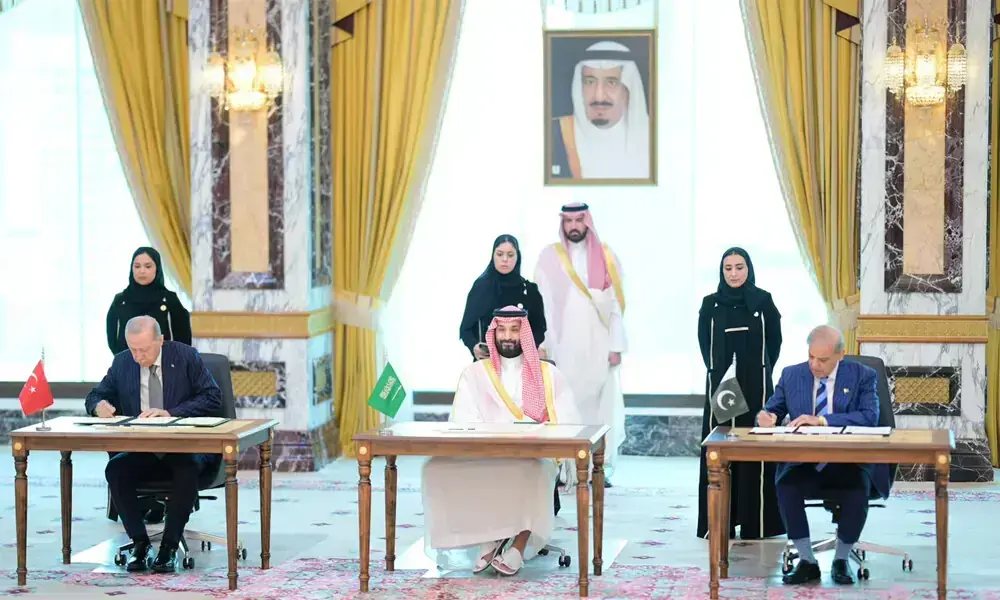
KARACHI: The strategic and geopolitical implications of the Makkah Joint Defence Agreement came under discussion at a seminar held here on Thursday.
Diplomats, academics and security analysts examined its potential impact on regional deterrence, collective security and the evolving balance of power in the Middle East.
The seminar was organised by the Press Information Department (PID), Karachi, under the leadership of Director General (Public Relations) Irum Tanweer.
It brought together diplomats, researchers, academics and media professionals to assess the emerging security architecture and the accord’s broader regional and international implications.
Opening the session, PID Karachi Information Officer Noor Ali said the accord represented an important development in cooperation among Muslim countries, rooted in longstanding bonds of solidarity and shared interests.
He said the strength of a strategic alliance depended not only on military capabilities and resources but also on unity of purpose, common interests and collective political resolve.
Former ambassador G.R. Baluch, Director of the Global and Regional Studies Center at the Institute of Business Management (IoBM), said the changing geopolitical environment required Muslim countries to strengthen mechanisms for consultation, coordination and collective security.
”The Makkah Joint Defence Agreement can be viewed in the context of a broader effort to strengthen strategic cooperation and respond collectively to emerging regional challenges,” he said.
Baluch said closer relations between Pakistan, Saudi Arabia and other Muslim countries carried significant strategic and diplomatic importance, but the effectiveness of any defence arrangement would ultimately depend on sustained political commitment, institutional coordination and practical implementation.
He said greater coordination among Muslim states could give them a stronger voice in regional and international affairs while contributing to stability and deterrence amid an increasingly multipolar world.
Dr. Sidra Ahmed, assistant professor of International Relations at the Bahria University, Karachi Campus, said the accord should also be viewed against the backdrop of changing security dynamics and the evolving system of alliances in the Muslim world.
‘‘The Accord has the potential to strengthen strategic coordination,” she said, while stressing that its long-term impact would depend on how effectively member states institutionalized cooperation while balancing their national interests and foreign policy priorities.
Participants discussed the accord’s possible implications for regional deterrence, collective defence, Pakistan-Saudi Arabia relations, the Middle East’s shifting balance of power and the broader geopolitical order.
The discussion also examined practical challenges related to defence cooperation, diplomatic coordination and the role of Muslim countries in an increasingly multipolar international system.
Concluding the seminar, PID Director General (Public Relations) Irum Tanweer said the department would continue to provide platforms for informed and balanced discussion on issues of national, regional and international importance.
‘‘The strength of any strategic partnership ultimately rests upon mutual trust, sustained engagement and a shared commitment to peace and stability,” she said.
Tanweer said Pakistan valued its fraternal relations with Muslim countries and would continue to support initiatives aimed at promoting regional security, cooperation and collective prosperity.
The seminar concluded with a vote of thanks, with participants underscoring the importance of sustained diplomatic engagement, strategic dialogue and collective efforts to promote peace, stability and security in the region.
Copyright Business Recorder, 2026






















Comments