


KP CM calls on PTI supporters to participate in ‘long march’ on 27th
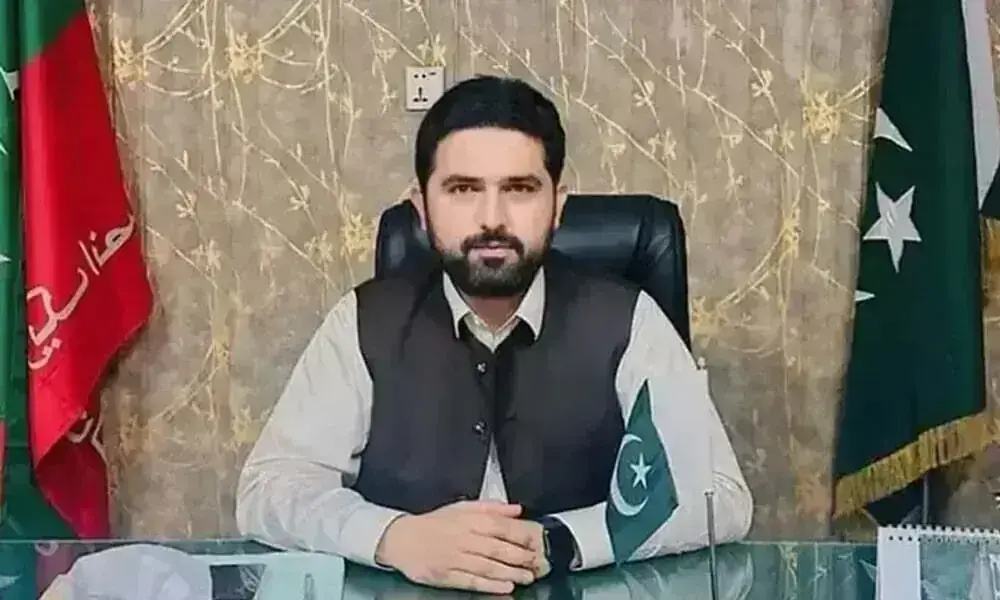
PESHAWAR: Chief Minister Khyber Pakhtunkhwa Muhammad Sohail Afridi has called on PTI workers to make comprehensive preparations for long march September 27, stating that he would personally lead the march and would return after achieving their objective.
He was addressing the participants of the Street Movement in Hangu at Bazaar Chowk and Abu Baker Siddique Chowk on Saturday. Provincial president PTI KP Junaid Akbar Khan, Provincial Ministers Shafi Jan and Meena Khan Afridi, and other provincial and local leaders also participated in the Street Movement.
The Chief Minister thanked the people and party workers for their large-scale participation in the Street Movement and said that 27 September was a firm and non-negotiable date and the long march would take place as scheduled.
He said, “This time, there is no turning back. We will return victorious on 27 September. I will lead you, so be prepared. This time, we are not turning back.”
Sohail Afridi said that the Supreme Court’s three-member bench had directed that Imran Khan be provided treatment at Shifa International Hospital, but the decision had not been implemented. He said the courts had allowed two days for the treatment to be arranged, yet those who considered themselves above the Constitution and the law had failed to comply with the judicial order.
The Chief Minister alleged that the government and administration had disregarded the decision of the three-member bench, thereby undermining the authority of the judiciary. He said the conduct of the so-called “untouchables” had once again demonstrated that certain powerful individuals considered themselves beyond constitutional and legal accountability.
He questioned the selective enforcement of judicial orders, saying that when an order was issued against PTI or its workers by a court, the FIA or any other institution, it was implemented within hours and police would arrive within minutes. He said the failure to implement the order concerning Imran Khan’s treatment reflected a fundamentally unequal application of the law.
The Chief Minister said that if the courts could not bring the powerful and the so-called “untouchables” before the law, they should not be used to punish the vulnerable. He further argued that if powerful individuals could not be held accountable, the judiciary should also consider releasing those weaker citizens who had been imprisoned. “There cannot be one law for the weak and another for the powerful in the same country,” he said, adding that the central objective of Imran Khan’s struggle for “real freedom” was equal application of the law to all citizens.
Sohail Afridi called upon the judiciary to uphold justice, saying that the nation stood with the courts in their pursuit of justice. He urged the judiciary to consider the direction in which the country was heading, pointing to the difficulties faced by farmers, the movement of industrial capital out of the country and the economic pressures confronting ordinary citizens. He said that if the decision was to protect the powerful at all costs, “we reject that decision.”
The Chief Minister described Imran Khan as a symbol of national unity and said he was the only leader capable of restoring public confidence in state institutions and their standing. He said opponents remained fearful even of Imran Khan’s name and image.
“Imran Khan will return, and peace will return. There was peace from 2018 to 2022,” Sohail Afridi said, maintaining that misguided policies being formulated behind closed doors were now resulting in the loss of innocent lives.
“We reject every policy that fills the pockets of a few while innocent people pay with their blood,” he said. The Chief Minister said that state belongs to its people and clarified that the people wanted Imran Khan.
He said Pakistan’s public debt had reached Rs97 trillion while ordinary citizens were bearing the brunt of economic hardship. He further said that current government policies were pushing the country deeper into crisis, with industrialists moving capital abroad while ordinary people struggled with inflation and deteriorating economic conditions.
Sohail Afridi said Imran Khan had placed considerable hope in the country’s youth, noting that young people constituted approximately 90 percent of participants in PTI rallies and protests. He described the youth as the movement’s principal source of strength and said the powerful elite were most apprehensive of a politically conscious younger generation. “The youth have to decide the country’s future. They must stand up for their own future,” he said, urging young people to participate fully in the 27 September long march. The Chief Minister also alleged that PTI workers and women were being subjected to continued repression.
Referring to the Muridke incident, he said that innocent PTI workers had been shot and several had been martyred, while Imran Khan’s sisters had also been subjected to disrespect and mistreatment. He said that the opposition had exhausted its so-called “women card”, adding that political association with Imran Khan went beyond conventional politics and was rooted in an intense commitment to his leadership.
The Chief Minister called upon PTI workers and supporters to participate in large numbers in the long march towards Islamabad on 27 September. He said that, instead of the previously announced target of 2 million participants, the movement would now seek to bring 4 million people to Islamabad, with the stated objective of taking the political struggle to its logical conclusion.
Copyright Business Recorder, 2026













Comments