



BENGALURU: Most emerging Asian currencies and stocks were weaker on Tuesday as a global bond selloff drove long-dated US Treasury yields to multi-decade highs, tightening financial conditions for emerging markets and dampening appetite for riskier assets.
The yield on the US 30-year Treasury bond climbed to its highest level since 2007, while Japanese bond yields rose on concerns that elevated oil prices and US-Iran tensions could stoke inflation.
Higher global bond yields tend to pressure emerging market assets by enhancing the appeal of developed-market debt, while elevated oil prices weigh on currencies by increasing energy import costs in the region’s oil-importing economies.
Asia could face a sharper hit if rising US yields signal expectations of significantly tighter Fed policy amid slowing growth, rather than reflecting optimism over stronger US and global economic growth, Michael Wan of MUFG said.
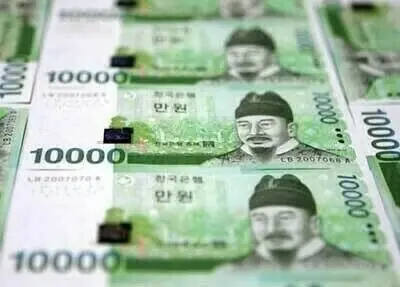
The MSCI EM currency index was little changed. The South Korean won rose 0.3 percent and the Malaysian ringgit firmed 0.2 percent, but most other regional currencies weakened.
The Taiwan dollar fell 0.3 percent and the Philippine peso lost 0.4 percent, while the Thai baht and Singapore dollar also edged lower.
Stocks in Jakarta, which have fallen about 25 percent this year, rose 1.3 percent to outperforming regional peers on Tuesday. The rupiah weakened 0.2 percent, giving up some ground after gains over the previous two weeks.
The MSCI Emerging Asia equities index fell 0.9 percent, dragged lower by losses among its top constituents. Taiwan stocks dropped 1.2 percent and were headed for their worst session in three weeks, with shares of chipmaker Taiwan Semiconductor Manufacturing falling as much as 1 percent.
South Korea’s KOSPI fell 1.6 percent and was set for its worst session in nearly two weeks, as memory chipmakers Samsung Electronics and SK Hynix slipped as much as 3.5 percent and 0.3 percent, respectively.
Elsewhere in the region, Singapore shares fell 1.2 percent, while Philippine stocks declined 0.6 percent.




















Comments