


MQM-P seeks national dialogue on new administrative units
- Says move not aimed at dividing Sindh
MQM-P Chairman Khalid Maqbool Siddiqui advocates for new administrative units across Pakistan, citing overgrown provinces and the need for equitable power and resource distribution through national dialogue.
- MQM-P's proposal for new administrative units.
- Arguments for creating smaller, more manageable provinces.
- How new units could improve public accountability.
- Constitutional permissibility of administrative changes.
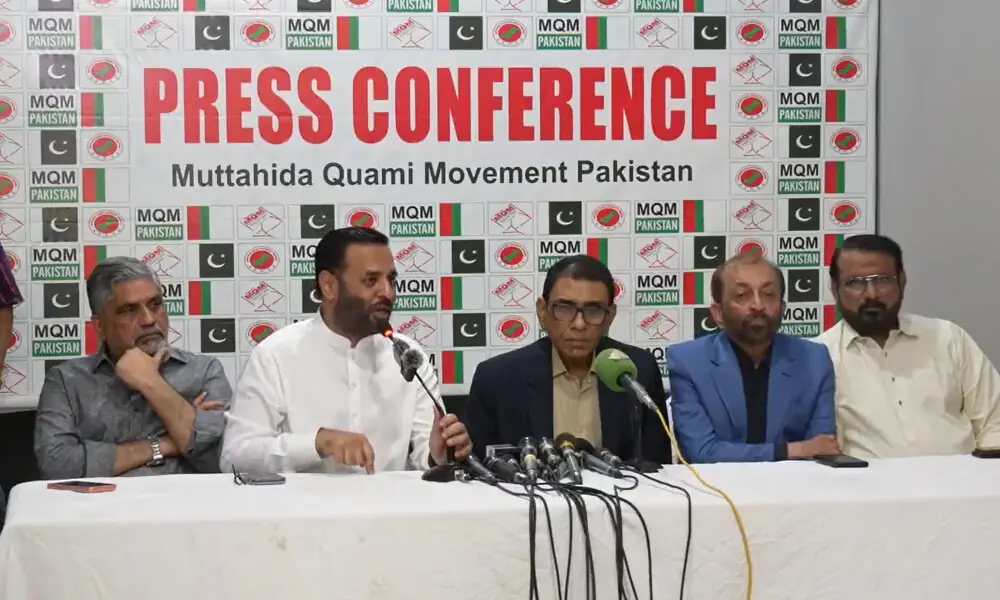

Muttahida Qaumi Movement-Pakistan (MQM-P) Chairman Khalid Maqbool Siddiqui has called for the creation of new administrative units across Pakistan, saying the move is a need of the hour and should be pursued through a national dialogue.
Addressing a press conference in Karachi alongside other party leaders, Siddiqui said Pakistan’s existing provinces were not created purely on administrative considerations and had since become too large in terms of population and territory.
He said the country had created new districts and divisions as its population grew, but had failed to establish new provinces or administrative units at the same pace.
Siddiqui stressed that MQM-P was not seeking to divide Sindh geographically, but wanted administrative units to ensure a more equitable distribution of powers, resources, and responsibilities.
“We are not demanding this only for ourselves. Wherever there is a need for new provinces or administrative units, they should be created,” he said, calling for a broad national dialogue involving political parties and people from across the country.
He said MQM-P was prepared to engage with all political parties on the issue and would continue its constitutional and legal struggle for greater devolution of power.
Siddiqui said Karachi and other areas where demands for greater administrative autonomy had emerged should be considered on the basis of population and administrative needs.
He also argued that the creation of administrative units was permissible under the Constitution, questioning why demanding them should be considered an act of treason if the Constitution itself provides for such changes.
Mustafa Kamal says smaller units can improve accountability
Federal Minister Mustafa Kamal said Pakistan needed a system in which people had greater control over their affairs and could effectively change their local leadership.
He claimed that Sindh had received around Rs22 trillion over 18 years, yet many parts of the province remained severely underdeveloped.
“This is not about division; it is a discussion about district-level administration,” Kamal said, arguing that the creation of new administrative units would benefit Sindh rather than undermine it.
He said Karachi and Hyderabad account for around 43% of Sindh’s population and argued that creating new administrative units would also give people in rural Sindh greater political and administrative empowerment.
Kamal said the condition of several areas of Sindh was worse than that of Karachi and Hyderabad, with generations of residents having come to accept poor governance as their fate.
He maintained that MQM-P was supporting calls for administrative restructuring because it believed it could strengthen public accountability.
“If there is an administrative unit, even a farmer from the province should have the power to change the chief minister,” Kamal said.
He claimed that the idea of creating new administrative units was not initiated by MQM-P, saying that Federal Interior Minister Mohsin Naqvi and the director general of Inter-Services Public Relations had also spoken about the need to reconsider the country’s provincial structure.




















Comments