


One month to prove it
Prime Minister Shehbaz Sharif has set a one-month deadline for a committee to right-size federal institutions, aiming to eliminate waste and improve efficiency amidst past failures and a need for transparency.
- The compelling case for federal government right-sizing.
- The importance of a third-party audit for verification.
- Challenges of bureaucratic resistance and political interference.
- Demands for full transparency on committee recommendations.
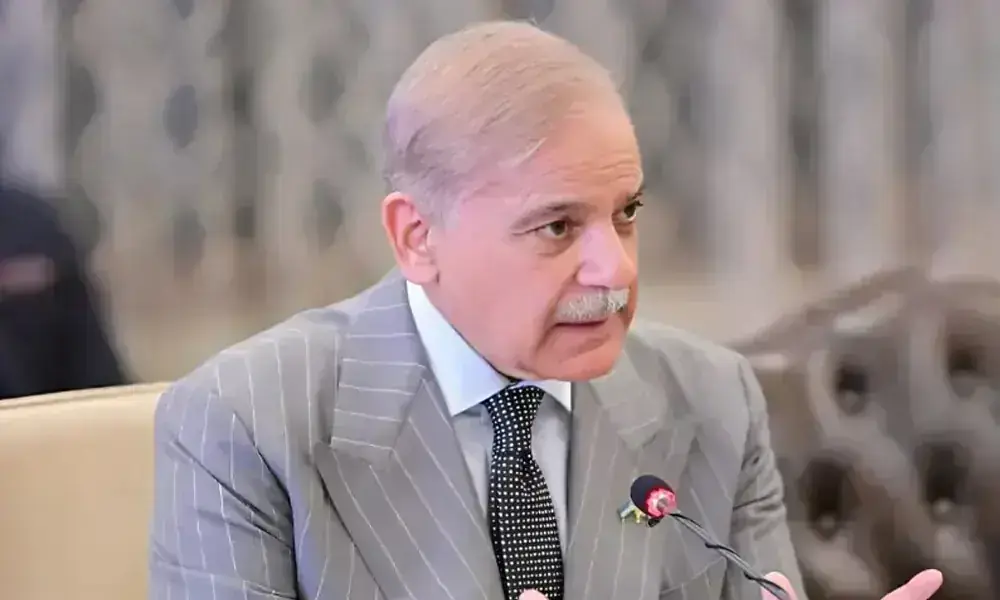
EDITORIAL: Prime Minister Shehbaz Sharif has given the Right-Sizing Committee one month to complete its remaining recommendations on eliminating unnecessary posts and restructuring federal institutions, setting the government a clear and measurable deadline. That matters because announcements about cutting waste, abolishing redundant posts and improving administrative efficiency have emerged from Islamabad many times before only to disappear into the same bureaucracy they were meant to reform.
The latest directive will therefore be judged less by its language than by what the government places before the public when that month expires.
The case for right-sizing is compelling. Pakistan’s federal government carries layers of departments, autonomous bodies, vacant posts, overlapping mandates and administrative structures that absorb scarce public money without delivering corresponding value.
At a time when taxpayers face repeated increases in levies and development spending remains constrained, every unnecessary position becomes harder to defend. A government that constantly asks citizens to make sacrifices cannot continue financing institutional excess merely because reform is politically or administratively inconvenient.
Some steps have already been taken. The Utility Stores Corporation, Pakistan Public Works Department and Pakistan Agricultural Storage and Services Corporation have been closed, while vacant posts across ministries and departments have also reportedly been abolished.
The government also claims that these measures have reduced federal civilian expenditure as a proportion of GDP. Those developments deserve acknowledgement, but they also require proper verification. Savings announced in meetings often look different once severance costs, pension liabilities, transferred functions and replacement arrangements are fully accounted for.
The prime minister’s order for a third-party audit is therefore important. Such an audit should establish how many posts have actually been eliminated, how much recurring expenditure has been removed, what liabilities remain and whether the abolished institutions’ functions have merely shifted elsewhere.
Without this level of detail, right-sizing can easily become an accounting exercise in which departments disappear from one column while their costs reappear in another. Transparency is the only safeguard against that familiar outcome.
There is also the question of performance. Cutting posts indiscriminately can weaken institutions that are already struggling, while preserving politically protected positions would defeat the entire purpose of the exercise. The review must therefore distinguish between genuine redundancy and essential capacity.
Modern technology and better training can improve productivity, as the prime minister noted, but digital systems cannot compensate for poor design, unclear authority or unqualified appointments. Reform must examine what each institution does, whether that function remains necessary and how it can be delivered at lower cost without reducing public service quality.
The government’s record gives reason for caution, of course. Similar declarations have repeatedly promised leaner administration, better-performing state-owned enterprises and lower fiscal waste.
Follow-through has usually been partial, delayed or obscured by the absence of publicly available results. Bureaucratic resistance, political patronage and weak accountability have repeatedly diluted reform once the initial announcement faded from attention. That history is precisely why the one-month deadline should now be treated as a public commitment.
When the deadline expires, the Prime Minister’s Office should release the committee’s recommendations in full, along with a ministry-wise list of posts abolished, institutions restructured, projected annual savings and implementation dates.
The third-party audit should also be published once completed. Any exclusions should be explained rather than hidden behind vague references to administrative sensitivity.
Citizens are entitled to know whether the government has actually reduced its own cost before asking them to bear further fiscal adjustment.
Right-sizing can become a meaningful reform if it is implemented consistently and protected from political interference. It can also become another headline that produces a meeting, a committee and little else.
The prime minister has chosen the deadline himself. One month from now, transparency demands that he show exactly what has been achieved.
Copyright Business Recorder, 2026





















Comments