


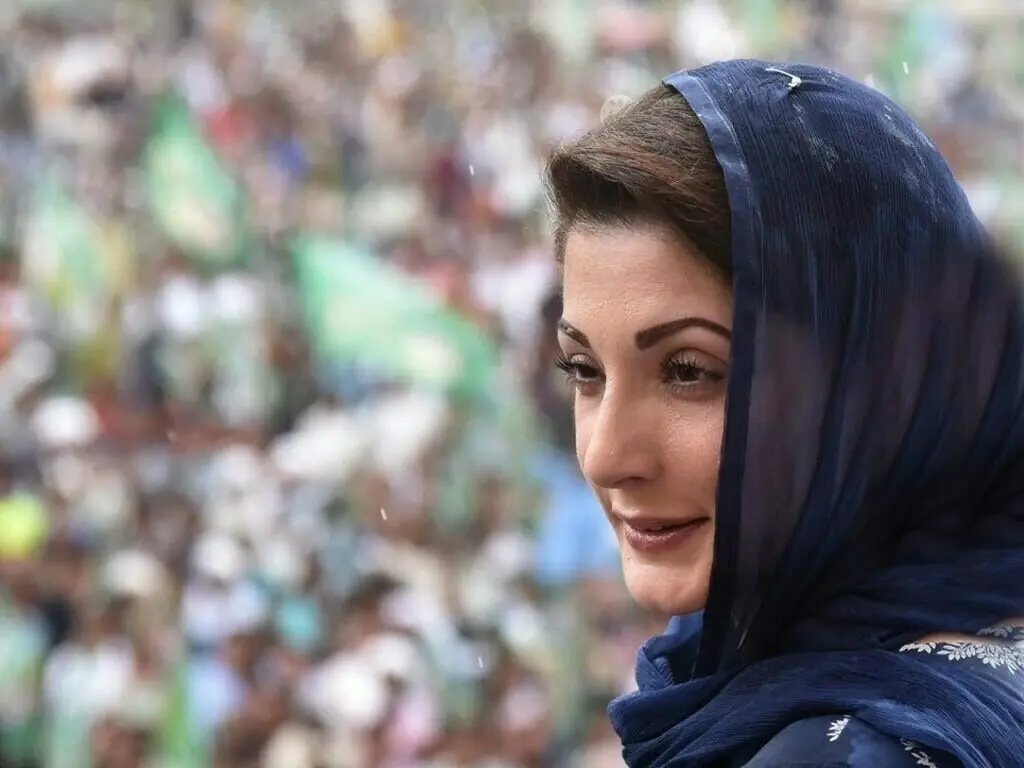

Democracy is founded on a shared journey between the people and their elected representatives. When even one voice is left behind, the true essence of democracy is diminished. At its core, democracy is about accepting and respecting the will of the people, while imposing one’s views on others runs contrary to democratic principles. Ultimately, citizens place their trust in those who address their concerns, improve their lives, and deliver the essential public services they need.
In the first phase of the Azad Jammu and Kashmir local government elections, the people voted for the Pakistan Muslim League-Nawaz (PML-N) on the basis of its performance. In recent years, Maryam Nawaz’s governance has become a notable example across Pakistan. It was with this performance in mind that the people of Kashmir expressed their confidence in her leadership during the first phase of the elections.
When compared with the chief ministers of the other provinces, Maryam Nawaz stands out for her performance. She has established her political identity through her work, which is why people in Karachi, Peshawar and Quetta are increasingly heard saying that they would like a chief minister like Maryam Nawaz.
Recently, a delegation of students from Balochistan met Punjab Education Minister Rana Sikandar Hayat and Sports Minister Faisal Khokhar, where they expressed the desire for a chief minister like Maryam Nawaz. The reason, they said, is that she has, for the first time, given genuine importance to the youth.
Whether in education or sports, Maryam Nawaz has provided young people with the opportunities and resources that are the basic responsibility of any government. Punjab possessed these resources before she assumed office, but she has been able to channel them towards the welfare of the youth. Today, students in Punjab have access to modern laptops, scholarships and electric bikes, while young athletes are making remarkable progress. These initiatives reflect her vision for empowering the younger generation.
Her two young cabinet colleagues, Sports Minister Faisal Khokhar and Education Minister Rana Sikandar Hayat, have become key partners in advancing this vision. Through innovative projects in their respective sectors, they have generated new enthusiasm among young people and provided them with opportunities to develop and showcase their abilities.
Rather than using the youth merely as part of a political agenda, Maryam Nawaz has demonstrated her commitment through practical measures. Making promises is easy, but delivering tangible relief to the public is the hallmark of a people-centred leader.
Pakistan has witnessed lofty promises in the past, including commitments to create ten million jobs and build five million houses, only for them to be dismissed later as political slogans. In contrast, Maryam Nawaz’s initiatives have not only created employment but also expanded opportunities. A prominent example is the “Suthra Punjab” programme, under which more than 150,000 jobs have reportedly been created. Likewise, through the “Asaan Karobar” programme, interest-free loans have been provided to young entrepreneurs across Punjab to help them establish new businesses.
These practical measures explain why Maryam Nawaz’s popularity among the youth continues to grow. Delivering long speeches and political rhetoric is relatively easy; translating promises into meaningful public welfare is far more challenging. That challenge is particularly difficult for those whose primary objective is to enjoy power and privilege, whereas genuine public representatives derive satisfaction from serving the people.
On one side stands Maryam Nawaz’s two-year tenure, supported by numerous development initiatives and public welfare programmes. On the other hand are political parties that have remained in power for well over a decade, with some governing continuously for nearly two decades. Yet, they have comparatively little to present as evidence of their performance. This contrast highlights the difference in priorities and the degree of commitment towards public service.
Winning public attention through political slogans and emotional speeches may be simple, but delivering results is far more demanding. Politics is another name for public service. It is best when politics remains focused on governance rather than personal rivalries. Once politics descends into personal attacks, divisions deepen and tensions escalate.
During election campaigns, vigorous debate and political contestation are natural features of a democratic system. Such engagement does not weaken democracy; rather, it strengthens democratic institutions. However, turning politics into hatred and hostility serves no constructive purpose.
Maryam Nawaz’s focus has remained on public welfare, while her political opponents have prioritised their own political objectives. Two years into her tenure as Chief Minister, her name has become widely recognized due to her style of governance and performance. Criticism and political propaganda have not diverted her attention from her central objective — public service. This commitment has become the defining feature of her political future, and that Maryam Nawaz’s narrative has emerged victorious in Azad Kashmir.
Copyright Business Recorder, 2026




















Comments