


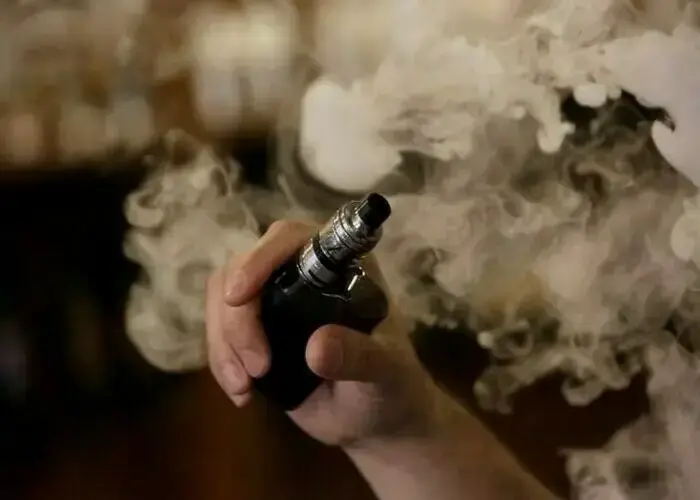
Pakistan’s public health saga is quietly registering a paradox that is largely unregulated and silently ignored. For as long as one can recall, tobacco control has been dealt with through prohibition, taxation, and warning labels.
Yet, in the crowded retail corridors of Lahore, another story has been writing itself on its own. This story is not guided by policy, nor shaped by institutional design, but by individual choice.
In my research “Vaping Voices”, I did not begin with a point to prove; instead, I began with a question: What are smokers doing when no one is watching?
We surveyed 1710 individuals across 100 vape shops in Lahore’s busiest markets. What was observed was not just a trend but a behavioural shift happening at a large scale. Among respondents with a smoking history, six in ten reported that vaping helped them reduce cigarette use, while 13% had quit entirely, many within just six months of switching.
Let that sink in. These results are a huge rival to those achieved in strategically structured cessation programmes, yet they took place without any medical professionals, prescriptions, or planned guidance. These are not mere statistics; it is a disruptive phenomenon which suggests that without formal support, people are actively seeking solutions to reduce tobacco harm.
It goes deeper than that. If the individual behaviours are changing, then why is the perception not catching up? A very small number of respondents initially believed vaping is less harmful than smoking.
However, when the question was reframed from absolute safety to relative risk, the number rose significantly. This is not confusion in fact, it is a vacuum. People are reasoning through risk but without clear signals from responsible institutions. One knows better that where the institutions are silent, other risks become stronger.
This is the dichotomy of our research: a grassroots tobacco harm reduction movement fortifying on one hand, and an unaddressed public health vulnerability on the other.
So where do we go from here and what is the role of the policy?
We do not need to erase what is already working; however, we need to shape it as per the evolving landscape. What is needed is proportionate engagement, not prohibition of any kind.
The finding does not call for silence; it demands response and action on our part. It asks whether we are willing to meet people where they have already adapted the tools they have already adopted and guide them safely forward.
Pakistan loses over 163,500 lives annually to tobacco. That number is not abstract and this fact is the result of inaction. The question now is no longer whether change is happening. It is whether we have the clarity and the courage to respond to it.
Copyright Business Recorder, 2026
The writer is a physician and public health specialist, with more than 20 years of experience in tobacco control policy, including a role as Director Technical Head of the Tobacco Control Cell, Government of Pakistan. He also founded and serves as CEO of the ENDiT Foundation in Islamabad. He’s an alumnus of KarolinskaInstitutet, Sweden, where he studied an MSc in Health Economics. His work has appeared in Tobacco Control and also in Nicotine & Tobacco Research. [email protected]. The views expressed in this article are not necessarily those of the newspaper
















Comments