


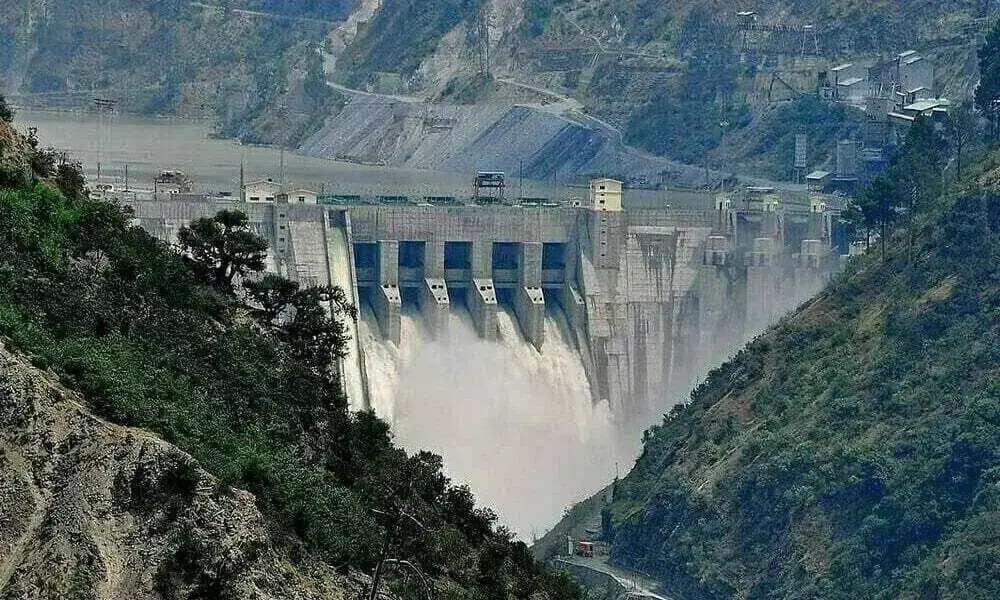
EDITORIAL: While India’s unilateral decision to place the Indus Waters Treaty (IWT) in abeyance constitutes a dangerous departure from international law and established treaty obligations, the latest Corps Commanders’ Conference reaffirmed Pakistan’s resolve to secure its rightful share of water.
For more than six decades, the treaty has stood as one of the few enduring examples of cooperation between Pakistan and India despite wars, military stand-offs and recurring political crises. The Modi government’s attempt to use water as an instrument of political pressure threatens not only bilateral relations but also regional peace and stability.
Water security is inseparable from national security. With agriculture accounting for a significant share of Pakistan’s economy and providing livelihoods to millions, any attempt to undermine the country’s water rights strikes at the heart of its economic stability, food security and social well-being. Pakistan cannot remain indifferent to measures that jeopardise the lifeline of its people. The Indus Waters Treaty is not a political understanding that can be suspended at will; it is a legally binding international agreement brokered by the World Bank and widely recognised as a model for transboundary water management. There is no provision permitting either party to unilaterally place the treaty in abeyance because of political or security disputes. India’s action therefore raises serious questions about its commitment to the sanctity of international agreements and the rules-based international order it frequently professes to uphold.
Equally troubling is New Delhi’s attempt to link the Pahalgam incident to the suspension of the treaty. While India continues to level allegations against Pakistan, such accusations cannot serve as a pretext for violating international commitments. Pakistan has consistently rejected involvement in acts of terrorism and repeatedly called for credible, transparent and impartial investigations into incidents that threaten regional peace. Treaty obligations cannot be held hostage to unsubstantiated political claims. Given this situation, Pakistan’s institutions are fully justified to take “all necessary measures” to safeguard the country’s legitimate national interests, including its water security.
The military leadership’s warning regarding hybrid warfare and disinformation also deserves serious attention. The modern battlefield increasingly extends beyond conventional military engagements to information campaigns, economic coercion and diplomatic pressure. At the same time, Pakistan has consistently demonstrated its preference for regional stability over confrontation. Its commitment to dialogue, peaceful conflict resolution and adherence to international law stands in sharp contrast to New Delhi’s unilateral actions that undermine existing agreements. Pakistan’s constructive diplomatic engagement on wider regional issues further reinforces its commitment to peace based on mutual respect and sovereign equality.
The international community must not remain a silent spectator. If legally binding treaties can be set aside unilaterally without consequence, confidence in international agreements everywhere will be eroded. The World Bank and other relevant international stakeholders should actively safeguard the treaty’s dispute-resolution mechanisms and ensure that both parties honour their obligations. Respect for treaties, dialogue and international law remains the only sustainable path towards lasting peace and stability in South Asia.
Copyright Business Recorder, 2026





















Comments