


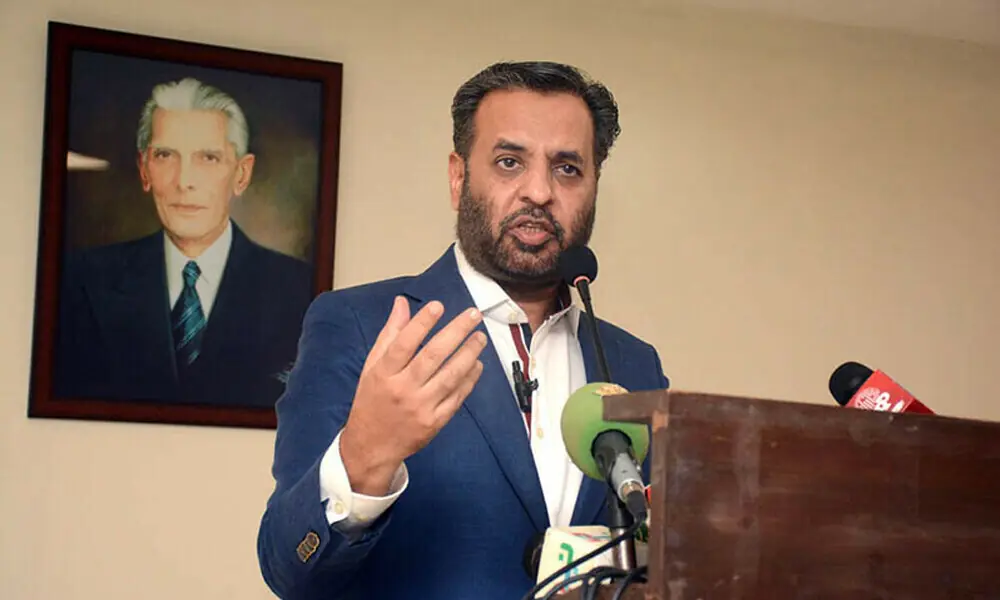

ISLAMABAD: Federal Minister for National Health Services Mustafa Kamal said that family planning is the gateway to Universal Health Coverage (UHC), stressing that Pakistan cannot achieve its maternal and child health targets, gender equality goals, or poverty reduction objectives without controlling population growth.
He made these remarks on Tuesday while addressing a national consultative meeting held to review the Draft National Population Stabilisation Program (NPSP) 2026–35, prepared with the support of the Ministry of Finance.
The event was attended by representatives from the Ministry of Finance, Planning Commission, Economic Affairs Division, United Nations agencies, international development partners, the Population Council, and other stakeholders.
Kamal said that population stabilisation is not merely a policy option but a national imperative for Pakistan’s economic survival, social development, and future prosperity. He emphasised that political commitment, inter-provincial harmony, and robust resource mobilisation are the key components required to translate the plan into tangible outcomes on the ground.
He added that Pakistan remains a signatory to the principles of the Paris Declaration, and the Draft NPSP reflects those principles as a country-owned, evidence-based, and results-driven framework, developed after careful consideration of national priorities, demographic realities, and international best practices.
The Federal Health Minister acknowledged the longstanding technical and financial support of development partners, including UNFPA, WHO, FCDO, GAVI, ADB, and the World Bank, and expressed gratitude for their continued partnership in strengthening Pakistan’s health and population sectors over the years.
On the occasion, Adnan Pasha, Advisor to the Federal Minister for Finance, presented a comprehensive demographic outlook of the country, informing participants that Pakistan’s population is on a trajectory of unprecedented growth and will reach 390 million by 2050 under the current trajectory.
He noted that the country stands at a critical demographic juncture, and under the current path, the nation will face immense pressure on its finite resources, including water, food, housing, education, and health infrastructure.
The development partners also shared their policy statements and reiterated their commitment to support the agenda of the population in Pakistan. They emphasised that the federal and provincial governments should take the lead to advance the agenda of population, by media, academia, Civil Society Organisations, INGOs/NGOs, and the private sector. The participants shared their expert views to improve population stabilisation.
Copyright Business Recorder, 2026




















Comments