


Beyond the asphalt
Karachi is undergoing a major economic revitalization through strategic infrastructure projects like the Shahrah-i-Bhutto and new financial hubs, largely funded by successful public-private partnerships.
- The successful public-private partnership model for development.
- Karachi's new Sindh International Financial Centre.
- Developing Karachi's coastline for tourism potential.
- Repositioning Karachi for long-term economic growth.
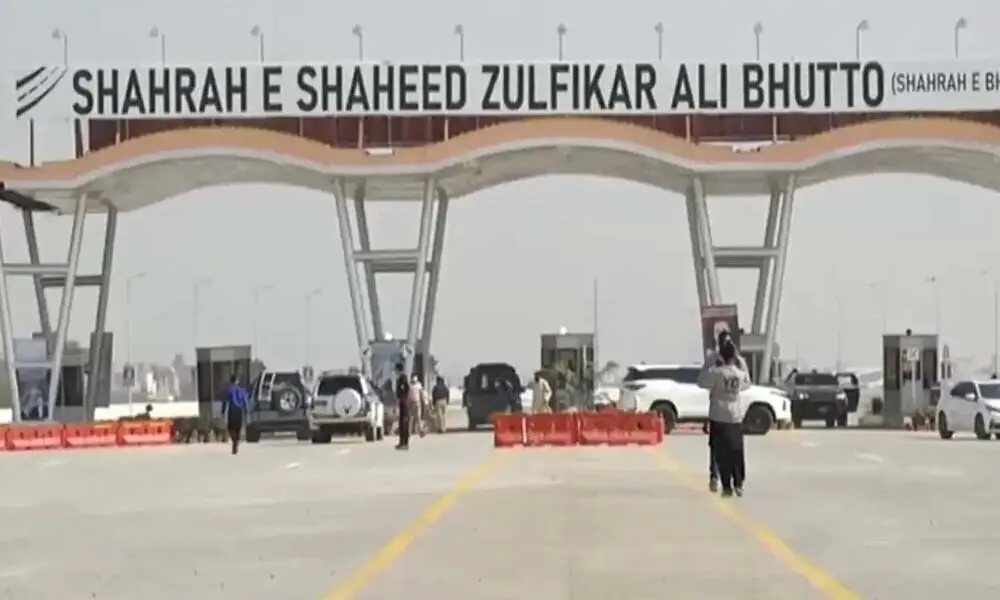

When Pakistan People’s Party Chairman Bilawal Bhutto-Zardari inaugurated the 39-kilometre Shahrah-i-Bhutto this past Friday, it signalled more than just the opening of a new transit corridor. Coupled with the ground-breaking of its critical Phase II, an elevated expressway linking the Karachi Port directly to the Shahrah-i-Bhutto, the ceremony underscored a fundamental truth of modern governance: economic revitalisation requires bold, strategic infrastructure.
For a metropolis that serves as Pakistan’s economic engine, shifting heavy port traffic onto a dedicated expressway network isn’t just about easing daily commutes; it is about fundamentally restructuring the city’s logistics framework.
The realisation of a multi-billion-rupee infrastructure project in a challenging macroeconomic climate points to the success of the Sindh government’s public-private partnership (PPP) model. Instead of entirely draining the public exchequer, the provincial government has successfully formed consortiums with the business community to finance, build, and operate these mega projects. This model, pioneered in the province and previously instrumental in initiatives ranging from regional healthcare networks to critical transit routes like the Lyari Expressway, proves that when the government shares risk and reward with private enterprises, the result is fast, efficient, large-scale public delivery.
The Shahrah-i-Bhutto stands as a testament to this, promising to reduce travel times out of the city by over an hour and significantly cutting the cost of doing business for industries reliant on port logistics. For the citizens, this means reclaiming hours lost to gridlock. Less traffic congestion in Karachi’s core will directly improve the quality of life, reducing vehicular emissions and allowing residents to spend less time idling on congested thoroughfares and more time with their families.
Yet, while roads and expressways form the arteries of an economy, the destination matters just as much as the journey. In his address, Bilawal Bhutto-Zardari laid out a vision that pivots from traditional infrastructure to the creation of dynamic, wealth-generating hubs.
Chief among these is the proposed Sindh International Financial Centre. Inspired by the highly successful Dubai International Financial Centre (DIFC), this initiative aims to provide a specialised, business-friendly regulatory zone that can attract foreign direct investment, multinational headquarters, and high-value financial services. By creating a secure and modern enclave for global capital, Karachi can reclaim its historical position as a premier financial hub of the region. For the people of Pakistan, this translates into direct economic opportunity: high-paying jobs, skills development, and the retention of local talent that might otherwise seek greener pastures abroad. This is further complemented by plans for a special defence production zone aimed at meeting both domestic needs and export demands.
Furthermore, the blueprint for Karachi’s future embraces one of its most underutilised assets: its coastline. The commitment to developing a modern, world-class corniche is a strategic move to unlock the city’s tourism potential. A thoughtfully developed coastal front does more than beautify a city; it stimulates the local economy by creating a vibrant ecosystem of hospitality, retail, and recreational industries.
Much like the transformation of waterfronts in global cities, a modern corniche will offer citizens a premier public space while positioning Karachi as an attractive destination for domestic and regional tourists. Crucially, it provides citizens with accessible, high-quality recreation options at home. Instead of travelling abroad for leisure, families across Pakistan will have a world-class public destination right here, fostering community well-being and civic pride.
When you combine the ambitious Keti Bandar seaport project which Bilawal Bhutto-Zardari also suggested might be the world’s first port built through public-private partnership, the new financial and industrial zones, and the seamless connectivity provided by the expanding expressway network, the broader strategy comes into focus. Karachi is not just being paved; it is being structurally repositioned for sustainable, long-term economic growth. The success of the PPP model has provided the blueprint. Now, it is time to build the future.
Copyright Business Recorder, 2026
The writer is the Spokesperson for the Government of Sindh and hails from Lyari. The views expressed in this article are not necessarily those of the newspaper




















Comments