


Central Asia access: Pakistan activates westward trade corridors via China, Iran
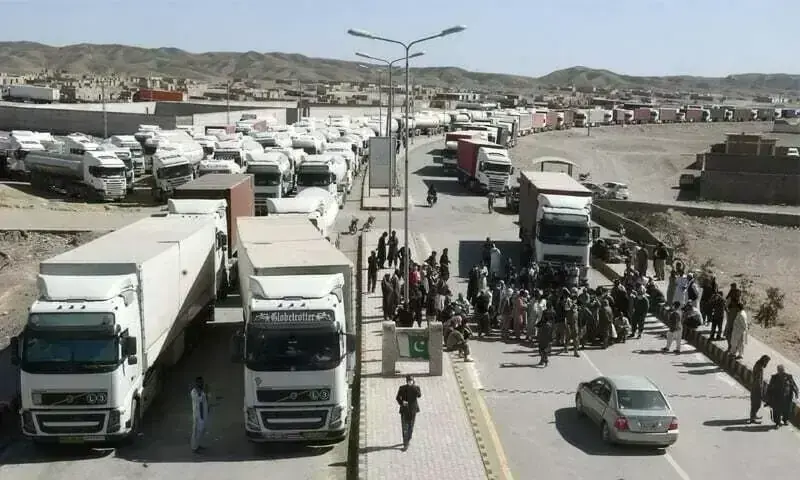
ISLAMABAD: Pakistan has effectively activated alternative westward trade corridors via China and Iran to access Central Asia, signalling a structural shift in its connectivity strategy away from Afghanistan-dependent routes, government and establishment sources told Business Recorder.
According to officials familiar with the development, Islamabad is no longer treating Afghanistan as the primary transit gateway to Central Asian Republics (CARs), citing persistent security risks, unpredictable border closures, and high transaction costs on Afghan routes.
Instead, Pakistan is operationalising two parallel corridors — one through China’s western region and the other via Iran — both of which are now being positioned as more reliable and scalable trade pathways.
“Ground realities have forced a recalibration,” a senior government official said. “The China and Iran corridors are not just alternatives anymore — they are becoming the preferred routes for regional connectivity.”
READ MORE: Pakistan activates new transit trade corridor through Iran
Through China, Pakistan is leveraging improved infrastructure and year-round access via the Khunjerab Pass to connect with Kyrgyzstan, Kazakhstan, and Tajikistan. Officials noted that routes to Bishkek and Almaty are not only shorter but also more secure compared to Afghan transit, with reduced delays and better logistics predictability.
On the western flank, the activation of the Gabd–Rimdan border crossing with Iran in April 2026 has opened a functional corridor toward Turkmenistan and Uzbekistan. The first shipment toward Tashkent has already been dispatched, marking the operationalisation of the Iran route. While distances via Iran may be marginally longer than Afghan routes, officials emphasised that consistency, lower insurance premiums, and absence of informal levies make it more cost-effective in real terms.
Establishment sources said that Afghan routes — historically considered the shortest land bridge — have “limited practical utility” under current conditions. “Frequent closures at Torkham and Chaman, coupled with security concerns and weak infrastructure, make these routes commercially unreliable,” a senior security official said, adding that transit times often extend unpredictably, undermining supply chain planning.
The shift is being supported by a broader infrastructure push. Key projects include the planned upgrade of the Karachi–Peshawar ML-1 railway line, expansion under CPEC Phase II including Karakoram Highway improvements, and the operationalisation of Gwadar Port as a warm-water outlet for Central Asian trade. Officials also pointed to the development of dry ports and logistics ecosystems aimed at integrating these corridors into a cohesive trade network.
Policy planners view this transition as part of a larger geo-economic repositioning. “Pakistan is moving from being a terminal geography to a transit economy,” a senior official involved in regional connectivity planning said. “This is about securing trade continuity, diversifying routes, and reducing exposure to single-point disruptions.”
Analysts say the development carries strategic implications beyond trade. By anchoring connectivity through China and Iran, Pakistan is aligning its logistics architecture with emerging regional alignments, potentially enhancing its role as a conduit between South Asia, Central Asia, and beyond.
While Afghan routes are unlikely to be completely abandoned, officials indicated that their role will diminish unless conditions stabilise. “The focus now is reliability over theoretical distance,” a government source said.
Copyright Business Recorder, 2026


















Comments
Comments are closed for this article.