


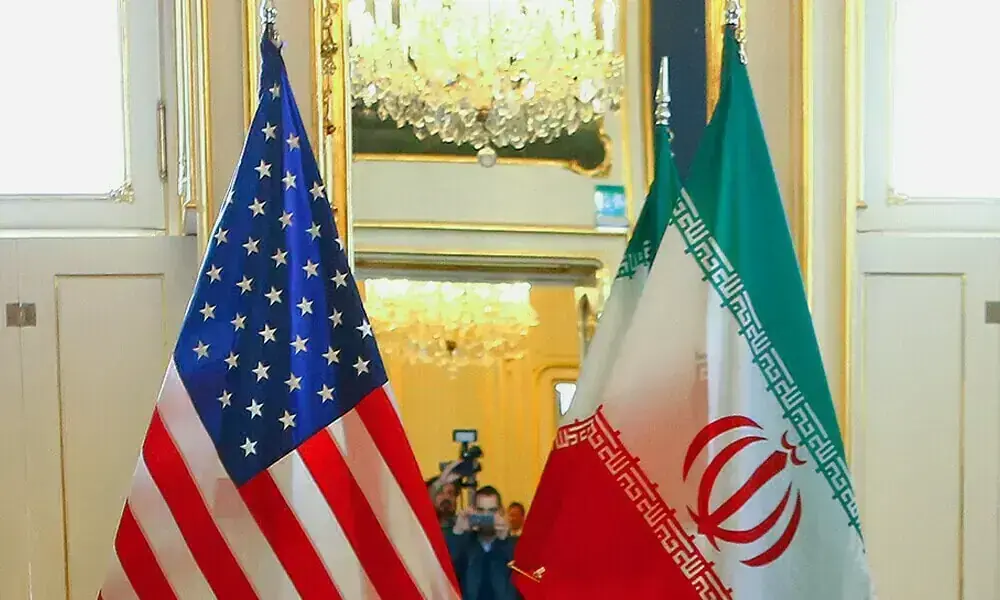

The main topic around the world last week was the halt of hostilities between the USA and Iran for a period of two weeks as both sides sat at the negotiating table in Islamabad to sort out their differences.
Though no headway was apparently made but at one time it seemed almost impossible that such a conversation would even take place as heated rhetoric flew in all directions. It is not uncommon if you look at the history of the world that negotiations take place and temperatures simmer down after violent clashes that may last from several weeks to several years. The oldest recorded such conflict and subsequent negotiations in human history is the battle between the Egyptians and Hittites that had lasted for 15 years before they sat down to negotiate. There was no clear winner as a treaty was signed. Known as the Eternal Treaty or the Treaty of Kadesh this peace deal is considered the first such ancient document to have survived over the years. It was written in Akkadian, the international language of the time. Very interesting language was used showing respect for both leaders who were before this treaty mortal enemies. Maybe a blueprint to show modern day leaders the kind of language to be used in such an agreement.
The treaty stated “It is concluded that Reamasesa-mai-amana, the Great King, the King (of the land of Egypt) with Hattusili, the Great King, the King of the land of Hatti, his brother, for the land of Egypt and the land of Hatti, in order to establish a good peace and a good fraternity forever among them.”
They made a commitment to end all hostilities and mutually discuss borders, creating defined territories for each kingdom. Ramesses II and Hattusili III formed an alliance between the kingdoms and assured aid in the event of an invasion by external forces. The treaty concludes with a call to the gods of Hatti and Egypt to bear witness to their agreement.
In modern days when such treaties are written or agreements made there is always some power that guarantees adherence to the treaty. In ancient times it was a little different and divine intervention was sought to maintain the terms of the treaties and ensure its full implementation. “They who do not observe the words that are in this silver tablet, the great gods of the country of Egypt as well as the great gods of the country of Hatti will exterminate their houses, their country and their servants”.
Many more treaties have been signed and negotiated in modern times and the top treaties of modern day include Treaty of Tordesillas (1494), The Peace of Westphalia (1648), The Treaty of Paris (1783), The Congress of Vienna (1814–15), and The Treaty of Versailles (1919). How countries were forced to surrender and sign treaties is also part of history. The surrender of the Empire of Japan in World War II is an example. This was announced by Emperor Hirohito on 15 August and formally signed on 2 September 1945, ending the war. It is not unusual for the more powerful countries on insisting on surrender instead of an agreement on equal terms that safeguards the national integrity of both nations. Mostly, agreements are made with one party holding all the cards but giving the impression that the terms are fair and equitable for both parties.
Much has changed over the years, including the means of war and the spoils of war. Today, oil enjoys centre stage in conflicts between nations. In ancient times the world was not oil dependent in so many aspects that it could lead to wars or occupation of lands that produced oil. It is also an irony that countries with major oil producing capabilities are not as militarily strong as those whose whole systems and way of life are dependent on smooth and unlimited supply of oil. The amount of lethal weapons and their range has also increased enormously and so has their indiscriminate use which not too long ago was constrained by laws assured by the United Nation. With so many conflicts of interest and gradual erosion of control by UNO it is no wonder that peace nowadays is so hard to achieve and even major negotiations fail to produce positive results.
Copyright Business Recorder, 2026
The writer is a well-known columnist




















Comments