


At US-Iran talks, Pakistan’s field marshal takes centre stage
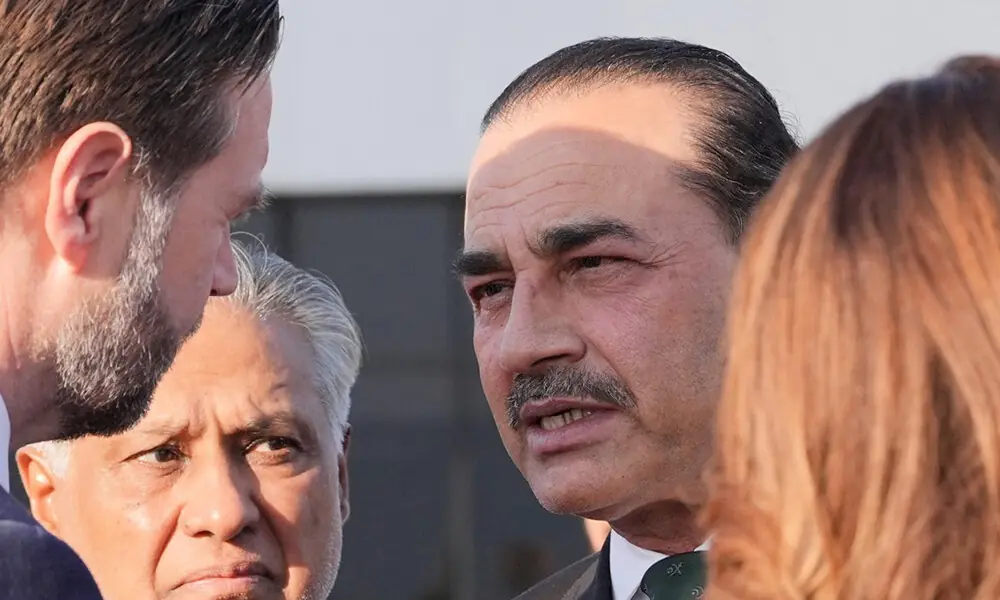

ISLAMABAD: When US Vice President JD Vance disembarked his plane ahead of high-stakes talks with Iran in Islamabad on Saturday, he was greeted by the powerful Pakistani army chief, his civilian attire blending in with those around him.
The image illustrated what many experts say is Field Marshal Asim Munir’s growing role at the centre of Pakistan’s foreign relations.
“He is a soldier, a statesman and a diplomat,” Islamabad-based political analyst Qamar Cheema told AFP. “Munir has created a momentum for Pakistan at a global level to change Pakistan’s perception.”
Pakistan’s push to get Iran and the United States to the negotiating table for their highest-level face-to-face talks in decades to end weeks of war has garnered international praise – and some surprise.
In Islamabad, Munir was at the centre of the action – greeting both delegations on their arrival and displaying remarkable bonhomie with Vance.
READ MORE: Pakistan, Iran stress stability as key to economic cooperation
During the historic face-to-face trilateral talks, Munir and Pakistani Foreign Minister Ishaq Dar helped “mediate” the talks, as per the civilian official.
It is a long way to have come for a country that has had a stop-start alliance with Washington, which has often admonished Islamabad when military leaders have toppled civilian governments – even as it has worked with them.
US President Donald Trump frequently refers to Munir as his “favourite field marshal”, after a rapport built during US efforts to defuse a short but intense armed conflict between Pakistan and rival India last year.
Pakistan heaped praise on Trump in the wake of that conflict, with Prime Minister Shehbaz Sharif nominating him for the Nobel Peace Prize. India has downplayed any US involvement in resolving the crisis.
READ MORE: What are the main talking points at the US-Iran negotiations in Pakistan?
This weekend’s marathon talks ended with Vance announcing he was leaving without a deal, but Pakistan said it would continue to facilitate dialogue.
“Field Marshal Munir through tireless effort, played a key and historic role in extinguishing the flames of war and in bringing both parties to the negotiating table,” Sharif said in a televised address a few hours before the talks began.
READ MORE: Pakistan hopes US, Iran will engage constructively in peace talks
Munir, a former intelligence chief, took up his tenure as army chief in 2022 with a lower profile in the diplomatic community than his loquacious predecessor General Qamar Javed Bajwa – an impression that has since changed in key capitals.
“Field Marshal Asim Munir appears to be far more hands-on in matters of governance and foreign policy than his predecessors,” said Shuja Nawaz, Atlantic Council fellow and author of “The Battle for Pakistan: The Bitter US Friendship and a Tough Neighbourhood”.
“He has proven his ability as an influencer on the global stage largely by his ability to make coherent arguments for Pakistan,” Nawaz told AFP, adding the close ties Munir had nurtured with regional heavyweights Iran and Saudi Arabia had impressed Trump.
Munir accompanied Sharif during a visit to Washington in June, lunching with Trump.
That meeting led to the burgeoning relationship between the Pakistani military leader and Trump, who told media “they know Iran very well, better than most” when asked if he’d asked Munir for advice on Iran and Israel, who were then locked in an earlier conflict and trading strikes.
“Asim Munir’s diplomatic status was boosted by the war with India primarily and then his outreach in Washington DC,” said Hassan Abbas, a Pakistani-American author of several books on the region’s politics and security.
“His pictures and his lunch meeting with President Trump was the factor that changed his international profile,” he said.
As the US and Iranian delegations left Pakistan, Munir was once again on the tarmac to see off the visitors.
They may not have reached a deal, but both thanked their hosts profusely – especially Field Marshal Munir.






















Comments