


The silent revolution: how grassroots mobilisation is rewriting the destiny of rural Sindh
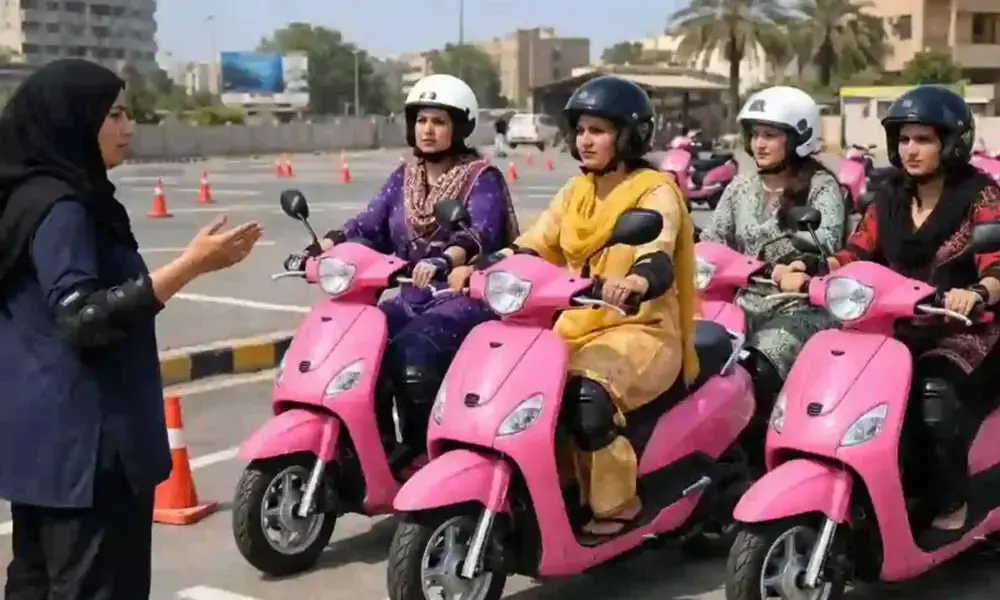

If the pink EV scooters navigating Karachi’s streets represent the visible, urban face of women’s empowerment in Sindh, there is a much quieter but arguably more profound revolution unfolding in the province’s agrarian heartland. Far from the glare of city cameras, in districts like Shikarpur, Sukkur, and Khairpur, the narrative of the disenfranchised rural woman is being fundamentally rewritten. At the centre of this transformation is the Sindh Rural Support Organisation (SRSO), a government-backed engine of grassroots change that is systematically dismantling the architecture of rural poverty.
Initiated with the financial backing and political will of the Pakistan People’s Party (PPP)-led Sindh government, the SRSO operates on a radically simple premise: true empowerment cannot be parachuted in from the top down; it must be built from the ground up, and it must be led by women.
For decades, the rural woman in Sindh was largely invisible in economic data, her exhaustive labor on agricultural lands and within the home uncompensated and unrecognized. She was, in many cases, entirely dependent both economically and socially. The SRSO intervened by organising these marginalized women into Community Organisations (COs) at the village level. This wasn’t merely an exercise in creating social clubs; it was the deliberate construction of localised democratic institutions where women could pool resources, articulate their specific needs, and make collective decisions about their futures.
The cornerstone of this movement, implemented through massive provincial initiatives like the Peoples’ Poverty Reduction Programme (PPRP) and the Union Council Based Poverty Reduction Programme (UCBPRP), is the provision of interest-free micro-loans. Traditional banking and corporate finance have always viewed the rural poor, particularly women, as high-risk liabilities. The Sindh government, channeling resources through the SRSO, viewed them instead as an untapped economic asset.
When a woman in Kashmore or Ghotki receives an interest-free loan, she doesn’t just buy livestock, fertilizer, or the raw materials for traditional appliqué work. She buys agency. The empirical data over the last decade speaks for itself: hundreds of thousands of women have transitioned from abject poverty to becoming self-sufficient micro-entrepreneurs. They are managing better crop yields, running retail shops, and selling intricate local handicrafts at national exhibitions. By putting capital directly into the hands of women, the government has actively bypassed the traditional patriarchal bottlenecks that have historically suffocated rural development.
But the most remarkable return on this investment isn’t just economic; it is deeply social and cultural. Financial independence breeds a fierce, unshakeable confidence. We are witnessing the emergence of a powerful, organized sisterhood across rural Sindh. Women who once possessed no voice in their own households are now standing up for their constitutional rights. They are challenging deeply entrenched, regressive customs. In communities where domestic disputes or archaic, violent practices like karo-kari (honour killing) were once swept under the rug as “private matters,” SRSO-mobilised women now intervene. They utilise their collective institutional strength to protect one another, engage with local authorities, and demand justice.
This is the ultimate manifestation of Shaheed Mohtarma Benazir Bhutto’s core political philosophy that democracy is fundamentally incomplete without the economic emancipation of the most vulnerable. It is a philosophy that the current provincial leadership has operationalized at an unprecedented scale. By consistently funding the SRSO to the tune of billions of rupees over the years, the Sindh government has signalled that rural women’s development is not a peripheral charity project; it is the core strategy for provincial stability and growth.
When we discuss empowerment, it is easy to get caught up in the optics of urban milestones and first-of-their-kind announcements. Yet, the true measure of a government’s commitment to its women lies in its reach into the periphery. It lies in the dusty lanes of villages where women, once confined to the absolute margins of society, are now managing community investment funds, establishing localized health and education networks, and ensuring their daughters never have to inherit their poverty.
The SRSO model has decisively proven that when you trust rural women with resources and decision-making power, they do not just uplift themselves—they lift their entire communities. It is a silent revolution, but its echoes will dictate the socio-economic trajectory of Sindh for generations to come.
Copyright Business Recorder, 2026
The writer is the Spokesperson for the Government of Sindh and hails from Lyari. The views expressed in this article are not necessarily those of the newspaper

























Comments
Comments are closed for this article.