


EDITORIAL: The remarks made by Pakistan’s Ambassador to the United Nations, Usman Jadoon, at the Global Water Bankruptcy Policy Roundtable draw urgent attention to a deeply troubling development in South Asia’s already fragile geopolitical environment.
India’s decision to hold the Indus Waters Treaty (IWT) in abeyance, described by the ambassador as a “deliberate weaponisation of water,” goes beyond bilateral discord and poses a serious threat to Pakistan’s water security and regional stability. For more than six decades, the IWT has stood as one of the world’s most durable and effective transboundary water-sharing agreements.
Signed in 1960, it established a stable and predictable framework for managing the Indus River system, which sustains one of the largest contiguous irrigation networks in the world. Its endurance through wars and prolonged political crises has demonstrated—until recently—that even hostile neighbours can cooperate over shared natural resources.
Any unilateral move that undermines this framework, as now threatened by Prime Minister Modi’s far-right Hindu nationalist government, strikes at the credibility of international water governance. The consequences for Pakistan are severe and immediate.
The Indus basin provides over 80 percent of the country’s agricultural water and supports the livelihoods of millions. Unannounced disruptions to downstream water flows and the withholding of critical hydrological data since April 2025 constitute clear and serious violations of treaty obligations.
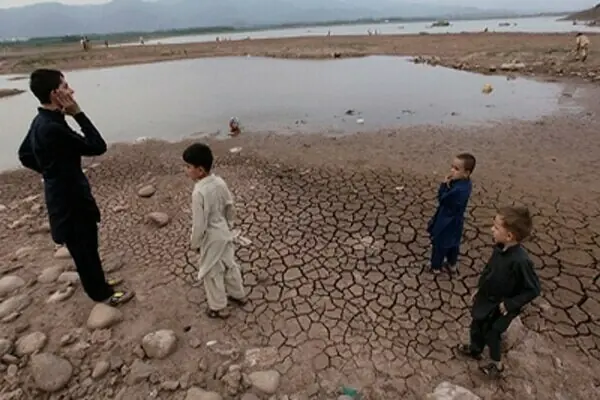
Water insecurity is increasingly acknowledged as a systemic risk, with cascading impacts on food systems, public health, energy security, and political stability. For Pakistan—a semi-arid, climate-vulnerable lower-riparian state—this risk is not abstract but a lived reality.
Recurrent floods and droughts, accelerated glacial melt, groundwater depletion, and rapid population growth are placing extraordinary pressure on already strained water resources.
The call to formally recognise water insecurity as a global systemic risk ahead of the 2026 UN Water Conference is therefore both timely and necessary. Strengthening international frameworks that promote treaty compliance and cooperation is essential to preventing shared water resources from being used as instruments of political pressure.
Copyright Business Recorder, 2026




















Comments
Comments are closed for this article.