


EDITORIAL: Will Pakistan’s disputes with India, Afghanistan escalate into armed clashes in 2026?
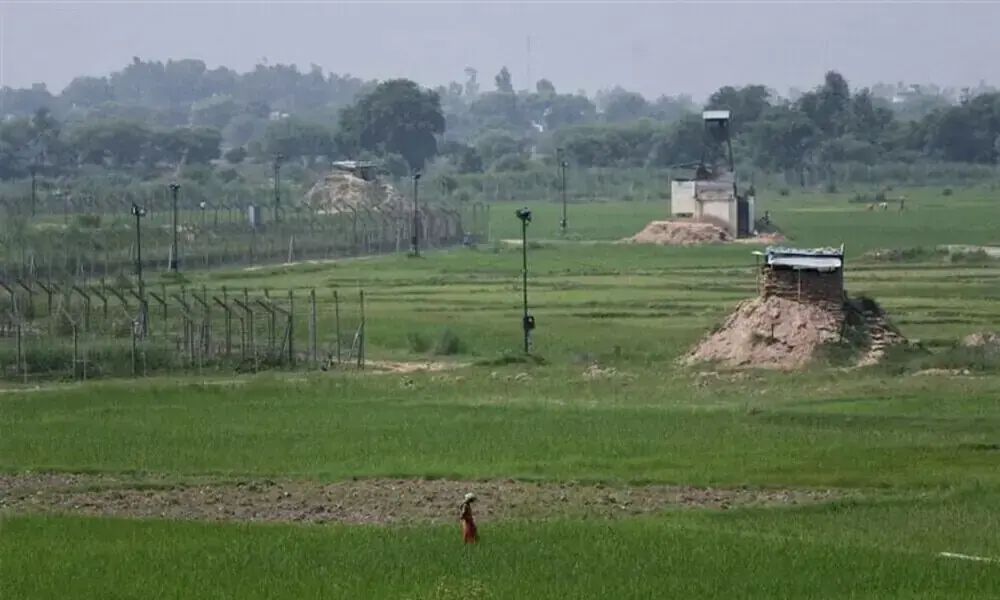
EDITORIAL: The warning issued by the Council on Foreign Relations (CFR), a Washington-based foreign policy think tank whose Conflicts to Watch series is widely used by governments and security planners, deserves to be taken at face value. Its assessment that Pakistan’s disputes with India and Afghanistan could escalate into armed clashes in 2026 reflects conditions that already exist on the ground, rather than distant hypotheticals.
On the eastern front, the aftershocks of this year’s India-Pakistan confrontation have not dissipated. The fighting that followed the Pahalgam attack ended in a ceasefire brokered by the United States, but it did not resolve the underlying problem that triggered the crisis. India launched military action without presenting evidence linking the attack to the Pakistani state. Islamabad pointed this out immediately and called for a neutral investigation. United Nations experts later recorded the same deficiency, noting that India failed to meet the evidentiary threshold required to justify cross-border use of force under international law.
That finding matters because it strips away the legal and moral scaffolding New Delhi attempted to erect around its actions. Unable to secure international validation, India has since leaned more heavily on rhetoric. Political and military statements have grown sharper, not more restrained. This escalation in language appears aimed at managing domestic perception after a conflict that did not deliver the narrative of dominance India sought.
The military balance demonstrated during the confrontation is central to the current tension. Pakistan emerged from the crisis having established clear tactical superiority on the battlefield, including the downing of multiple Indian fighter jets during the exchange. That outcome punctured India’s claim of escalation dominance and forced an abrupt recalibration in New Delhi. The speed with which external actors, most notably the United States, moved to broker a ceasefire reflected recognition that India had failed to achieve its objectives and that further escalation carried unacceptable risks. The ceasefire was therefore not the consequence of Indian success, but of a conflict that had already exposed its limitations. Efforts to retrospectively reshape that reality do not alter the facts established during the fighting.
CFR’s assessment rightly flags Kashmir as the most likely trigger for renewed hostilities. Coercive policies and recurring violence in the territory have repeatedly pulled the region back towards confrontation. Until that dispute is addressed in accordance with international law, it will remain a structural source of instability rather than a closed chapter.
To Pakistan’s west, the risks are different but no less real. The report also identifies the potential for Pakistan-Afghanistan tensions to escalate due to continued cross-border militant attacks. Islamabad has consistently argued that violence emanating from Afghan territory cannot be treated as accidental or episodic. That concern has been compounded by the Taliban authorities’ failure to act decisively against militant groups targeting Pakistan.
Evolving regional geometry only sharpens this risk further. India has been steadily expanding its political and diplomatic engagement with Afghanistan’s de facto rulers. This growing India-Afghanistan proximity, alongside Kabul’s reluctance to address Pakistan’s security concerns, deepens mistrust and complicates already fragile border dynamics. CFR’s characterisation of this front as moderate in likelihood but lower in impact should not breed complacency. Pressure from two directions simultaneously is a strategic strain by any measure.
The common thread across both fronts is the erosion of restraint. On one side, India’s inability to substantiate its claims has been followed not by caution but by louder accusations. On the other, Afghanistan’s leadership continues to deflect responsibility while regional alignments shift around it. These dynamics reinforce each other, raising the probability of miscalculation.
From Pakistan’s standpoint, the report underlines the necessity of firmness without adventurism. The country’s conduct during the last crisis, denying involvement, demanding evidence, and avoiding uncontrolled escalation, helped prevent a wider catastrophe. That approach must now be paired with sustained diplomatic engagement and credible deterrence.
The CFR report is not an endorsement of conflict. It is a reminder that unresolved disputes and contested narratives do not fade with time. They accumulate risk. If 2026 is not to become another year of brinkmanship, the region’s major actors will have to accept that rhetoric cannot substitute for evidence, and force cannot substitute for law. Pakistan’s challenge is to ensure that this lesson is neither forgotten nor distorted before the next test arrives.
Copyright Business Recorder, 2026






















Comments
Comments are closed for this article.