


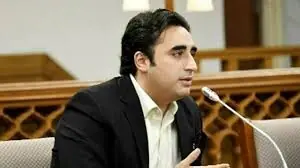
EDITORIAL: Addressing the members of the Federation of Pakistani Chambers of Commerce and Industry (FPCCI), Chairman Pakistan People’s Party (PPP) Bilawal Bhutto-Zardari emphasised the need for mutual trust and collaborative partnerships to achieve economic development.
The overarching objective of politicians globally is to achieve inclusive economic growth/development — be they members of the government, opposition or comprising forces that may not have direct political representation in parliament — yet the economic agenda associated with each entity is distinct based on their political manifestoes. What is relevant to note is that over decades our administrations, civilian and military alike, were compelled to seek an International Monetary Fund (IMF) programme (we are currently on the twenty-fourth programme) that accounted for a confluence of policies though they were quickly abandoned as and when the balance of payment situation improved and the programme was suspended.
What should be a source of concern in the existing hybrid system in Pakistan is the fact that serious differences have emerged between the two major parties in parliament today; notably, the PPP and the Pakistan Muslim League-Nawaz (PML-N). And in this context Bilawal Bhutto-Zardari’s exhortation for mutual trust and collaborative partnership with the PML-N will be critical to avoid any logjam in policy implementation, which the fragile economy of this country cannot afford. His advice was to begin by implementing those policies on which there was an agreement, and he noted that there is already a consensus in the National Assembly to create new provinces adding that “before creating 20 provinces first implement the consensus that already exists for new provinces;” and referred to the resolution passed by the Punjab assembly to create a ‘South Punjab’ province. Needless to add, the motivation behind the consensus in the National Assembly was to bring governance closer to the people, accelerate development and reduce bureaucratic centralisation.
The PPP Chairman further appreciated district-wise research (165 districts) conducted by the business community and argued that it would strengthen PPP’s argument for decentralisation and declared his party’s readiness to consider their recommendations.
Bilawal pointed out that after the 18th Amendment Sindh played a leading role in revenue collections (Sindh remains the top revenue generator from sales tax on services), breaking all Federal Board of Revenue’s (FBR’s) previous collection records (as did Punjab and Balochistan), concluding that “it all happened due to decentralisation.” He suggested provinces to have representation in the FBR and allowing provinces to collect sales tax on goods as well and, in the event that any province’s collection is higher than that budgeted by the FBR, then that province be allowed to keep the excess.
These recommendations come in the wake of reports that the federal government is seeking to change Clause 160 3(A) of the constitution that disallows a reversal in the provinces’ share in the existing National Finance Commission award. Bilawal pointed out that “you can attract more bees with honey than vinegar,” and urged the FBR to make the tax regimen competitive (with other regional countries) and to be respectful to the taxpayers (instead of the current climate of mistrust and charges of harassment by many an industrialist).
The Chairman noted the need for reforms relating to raising productivity including reducing electricity tariffs, special economic zones as well as a pet project of his party, notably to encourage public private partnerships. These would no doubt not be implementable as long as the country’s reliance on the existing IMF programme remains — a programme without which over USD 16 billion rollovers and loans would become unavailable from the three friendly countries. It is relevant to note that the Fund diagnosed our existing economic crises to be the outcome of sustained extremely flawed policies that include the following: “the state’s support of businesses through subsidies, favourable taxation arrangements, protection and governmental price setting has undermined the development of a dynamic and outward-oriented economy. Subsidies have taken the form of low-cost financing and other concessions, which, although varied across industries, left financing and taxes net of subsidies more favourable than in peer economies and less-favoured sectors (text chart). The tax system has been extensively used to provide non-transparent support through exemptions for privileged sectors like real estate, agriculture, manufacturing, and energy, as well as, through the proliferation of Special Economic Zones (SEZs). The government’s intervention in price setting, including for agricultural commodities, fuel products, power, and gas (biannual), combined with high tariff and non-tariff protection tilted the playing field in favour of selected groups or sectors. Despite all this support, the business sector has failed to become an engine of growth, and the incentives eventually weakened competition and trapped resources in chronically inefficient (including perpetually “infant”) industries.”
To conclude, it is critical for the fragile economy that no province is alienated, particularly the province that is being administered by a key player of the hybrid system, and trust and collaboration as pointed out by the PPP Chairman are key elements that would strengthen the economy.
Copyright Business Recorder, 2025



















Comments
Comments are closed for this article.