


Govt urged to improve Karachi’s transport system without further ado
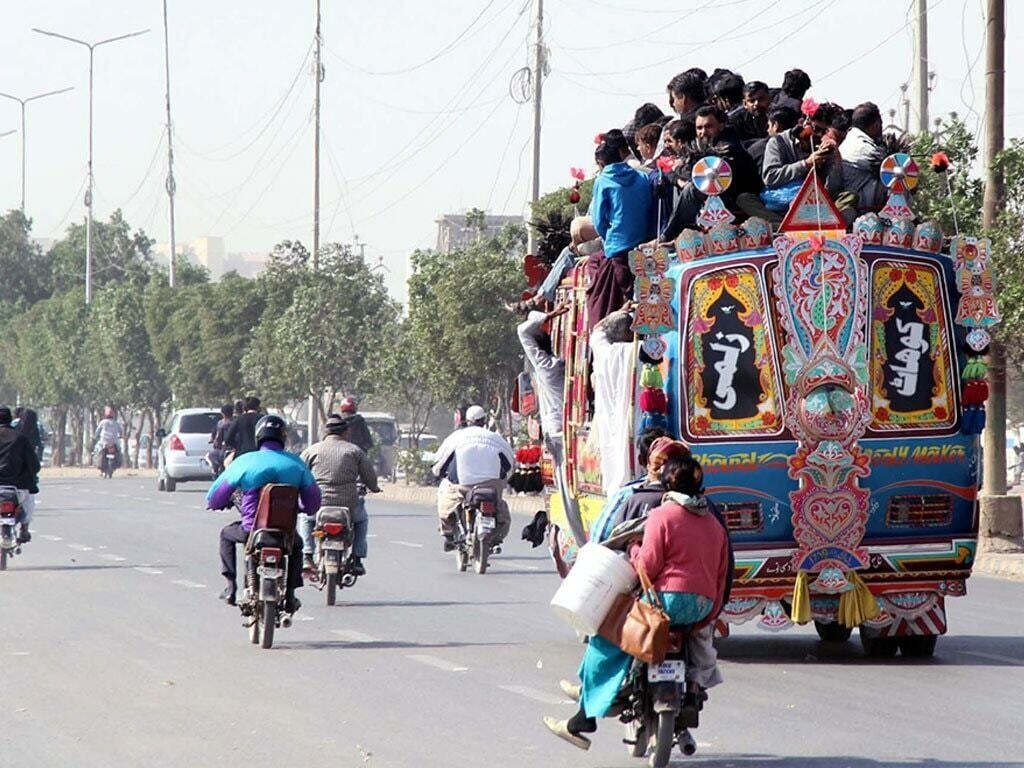

KARACHI: Expressing grave concern over the poor transport system in the megacity, Pasban Democratic Party (PDP) Chairman Altaf Shakoor said here Sunday that due to inadequate public transport system Karachi suffers over one billion rupees daily as economic loss.
He said by conservative estimates based on traffic congestion, wasted fuel, lost labour hours, and delayed movement of goods; Karachi suffers an economic loss of over a billion rupees every single day due to its broken urban transport system. This massive loss directly impacts industrial productivity, port operations, business efficiency, and household incomes. Millions of workers waste several hours daily in traffic, reducing output and increasing stress, fatigue, and health costs.
He said history clearly shows that the world’s great urban centres progressed on the backbone of strong public transport systems. Cities such as London, Tokyo, New York, Paris, Singapore, and Dubai built underground railways, metro networks, and integrated bus systems before or alongside their rise as global economic powers. Efficient commuting expanded labour markets, reduced transport costs, increased land values, and supported industrial and commercial growth—in essence, mass mobility created mass productivity.
Altaf Shakoor said London’s rise as a financial capital was powered by the world’s first underground railway, which enabled daily mass commuting. Tokyo became the largest metropolitan economy through the world’s most efficient metro and suburban rail network. New York’s subway made vertical expansion and rapid workforce movement possible. Singapore used integrated transport planning to maintain economic efficiency while controlling congestion. Dubai transformed into a global logistics and tourism hub by aligning its metro with ports, airports, and commercial zones.
These cities prove that modern transport is not a by-product of development—it is its primary driver. In contrast, Karachi’s growth has remained disconnected from structured transport planning, said the PDP Chairman. The collapse of the Karachi Circular Railway (KCR), closure of Karachi Transport Corporation (KTC), uncontrolled rise of private vehicles, weak bus networks, and reliance on informal transport have produced severe congestion, pollution, accidents, and economic inefficiency. Poor connectivity restricts labour mobility, delays cargo to ports, and discourages investment.
He said beyond economics, transport failure deepens social inequality. Women, students, and low-income workers suffer most due to unsafe and unreliable travel. Rising emissions also damage public health and urban liveability. Karachi is one of those cities in the world where air pollution is dangerously high.
He said if Karachi aspires to become a world-class city, it must follow the proven global path: fast expansion of BRT, revival of Circular Railway, feeder networks, and walk able infrastructure. Without fixing mobility, Karachi’s economic bleeding will continue unchecked.
He asked the federal government to help in the revival and expansion of the KCR under the CPEC Phase 2. He also urged the Sindh government to complete the Red Line RBT on an emergency basis and also complete phase two of Green RBT as soon as possible. He said every rupee invested in Karachi transport system would provide at least one hundred rupees to the national economy in terms of economic growth.
Copyright Business Recorder, 2025

























Comments
Comments are closed for this article.