


Bilawal speaks of improved performance of healthcare sector in Sindh
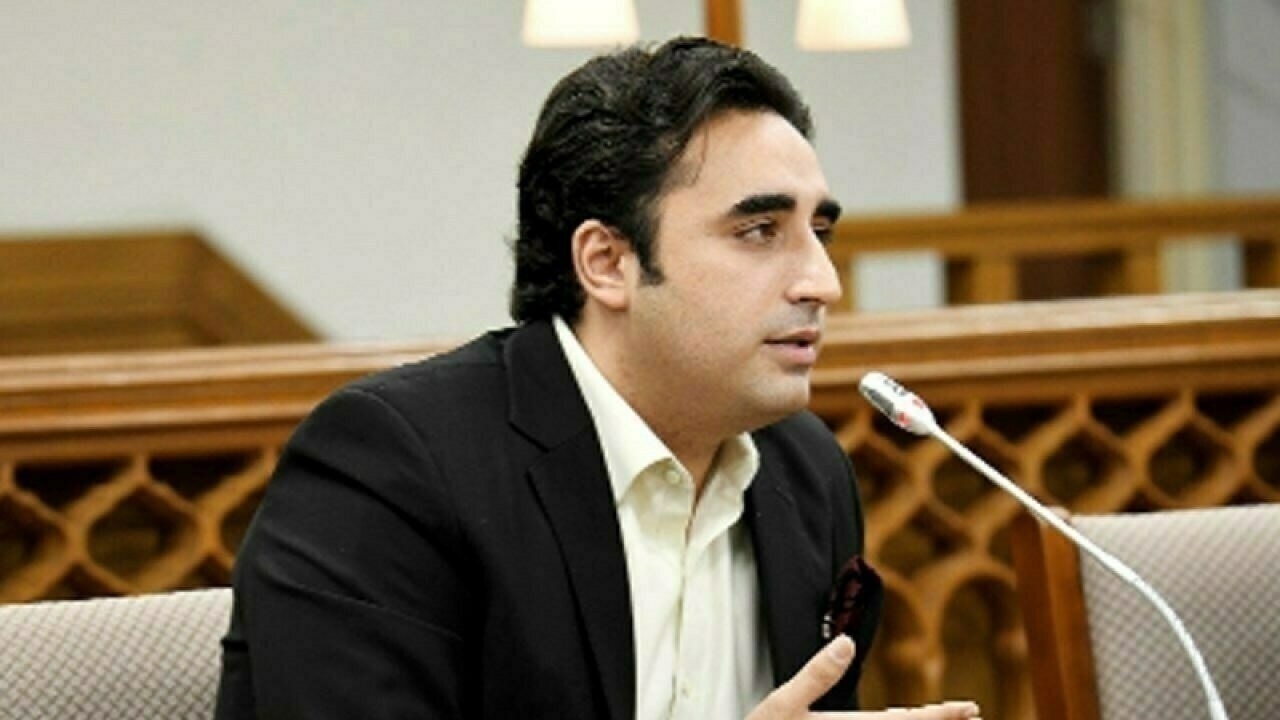

KARACHI: Chairman Pakistan Peoples Party (PPP) Bilawal Bhutto Zardari inaugurated the newly established Dr Syed Haroon Ahmed Dialysis Centre and the Zubeida Mustafa Lithotripsy Unit at the Sindh Institute of Urology and Transplantation (SIUT) Trust Hospital.
Developed under the Government of Sindh’s Public–Private Partnership (PPP) mode, these state-of-the-art facilities mark another major milestone in strengthening Karachi’s public healthcare system and expanding access to quality medical services for the people.
According to a press release issued by the Media Cell Bilawal House, PPP Chairman Bilawal Bhutto Zardari inaugurated the newly constructed Dr. Syed Haroon Ahmed Dialysis Centre and the Zubeida Mustafa Lithotripsy Unit, describing all initiatives—carried out in collaboration between the Sindh government and SIUT—as a source of pride.
He paid tribute to Dr. Adeebul Hasan Rizvi, the visionary behind SIUT and one of the country’s foremost social figures, for his long-standing and exceptional contributions to the health sector. He added that following Sukkur and Larkana, the Sindh government, in partnership with Dr Rizvi, will now establish SIUT facilities in Gujar Khan, Sargodha, Rahim Yar Khan, and Dera Ismail Khan.
He also announced that a large, state-of-the-art SIUT hospital will be constructed in Larkana by 2027. Highlighting the growth in support, he pointed out that after the 18th Amendment, the Sindh government began funding SIUT at Rs 6 billion, which has now increased to Rs 21 billion this year.
Chairman Bilawal Bhutto Zardari, in his address, pointed out that as a result of the 18th Constitutional Amendment and the devolution of powers to the grassroots level, there has been remarkable improvement in Sindh’s public health sector. He said that at SIUT, NICVD, NICH, JPMC and Gambat Hospital, citizens from Sindh as well as from across the country receives all treatment facilities free of cost.
He said that before the 18th Amendment, the condition of institutions like NICVD, NICH and JPMC was no secret, but today they have transformed into world-class institutions. He further said that NICVD is now the world’s largest institute providing free treatment for cardiac diseases.
Chairman Bilawal Bhutto Zardari, while speaking about the public healthcare system introduced by the people’s government of Sindh and the initiatives taken by other provinces, said that after the 18th Amendment, every province introduced its own health model. He said that the Sindh government created a network of health facilities that can compete at the international level by ensuring direct funding for public hospitals and providing services under the public-private partnership model.
He said that Khyber Pakhtunkhwa introduced the Health Card and allocated the entire health department budget to this card, claiming that through it they were providing free treatment facilities to the entire population of the province. “In my view, this health model is flawed because it has a financial limit, and once that limit is crossed, the patient has to bear the expenses themselves.
Secondly, even if I, Bilawal Bhutto Zardari, take that card, I will receive the same amount of money as any other poor citizen. This is also an injustice,” he said while discussing the card. He further added that the biggest injustice in this system is that the government takes money away from its own public health institutions and transfers it to private hospitals that are run entirely on commercial, profit-making lines.
While speaking about the debate in some quarters regarding transferring powers related to education and population control from the provinces back to the federal government, Chairman Bilawal Bhutto Zardari cautioned, “I say this with great respect — this would be the wrong approach.” He said that once a right is given to someone, taking it back on any grounds results in a “backlash.” He added: “We could have even managed that backlash, if the federal government had demonstrated any performance anywhere, and we could acknowledge that it had at least excelled in this sector.”
He emphasized that the federal government already has the forum of the Council of Common Interests (CCI) available to ensure coordination with the provinces.
Chairman Bilawal Bhutto Zardari said that serving the poor and marginalized segments of society is the philosophy of the PPP. He said that we want to establish a Pakistan where there is no divide between the rich and the poor, and where healthcare facilities are available to everyone.
On this occasion, Sindh Chief Minister Syed Murad Ali Shah, Provincial Minister for Health and Population Welfare Dr. Azra Fazal Pechuho, provincial ministers, members of the assembly, party leaders, and various political and social figures were also present.
Copyright Business Recorder, 2025




















Comments
Comments are closed for this article.