


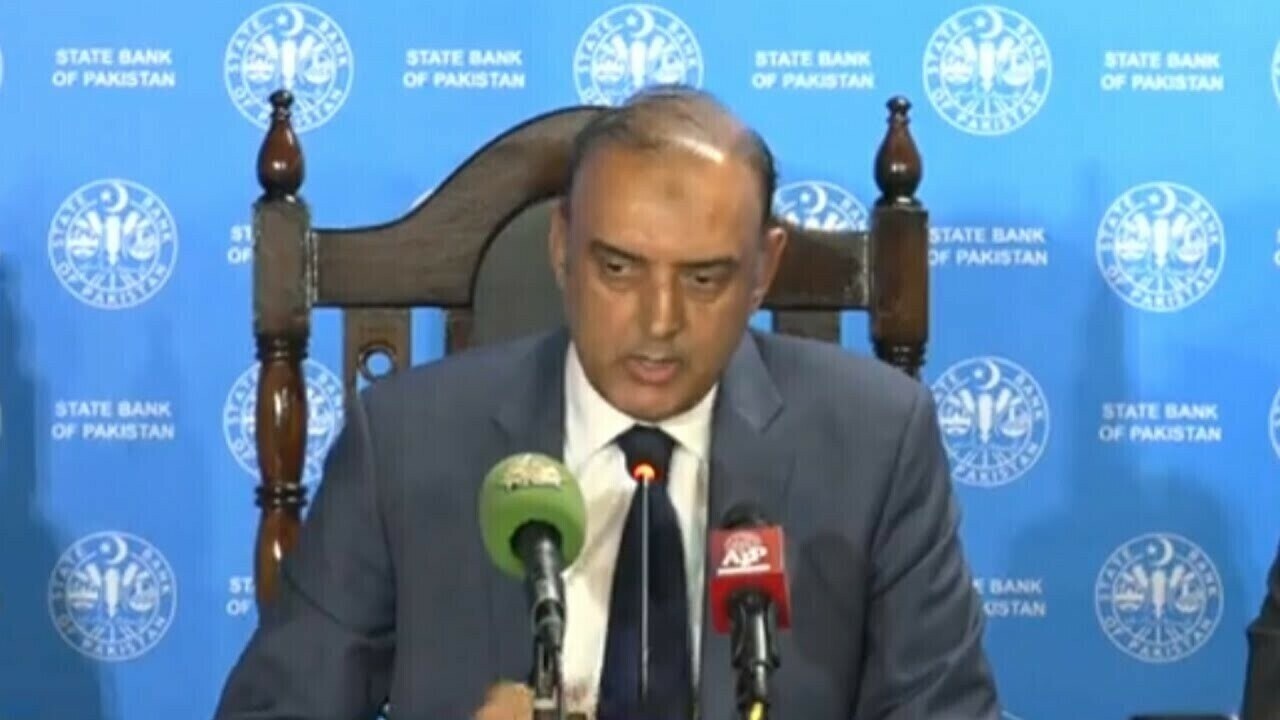

ISLAMABAD: Jameel Ahmad, Governor of the State Bank of Pakistan (SBP), Wednesday stressed the urgent need for the country to move beyond temporary stabilisation measures and adopt a more durable, sustainable, and outward-looking growth model.
Speaking at the opening session of the Pakistan Business Council’s (PBC) Dialogue on the Economy, he pointed out that Pakistan has often been trapped in a cycle of growth followed by painful stabilisation.
However, he stressed that the current moment offers a real opportunity for long-term transformation, contingent on maintaining policy continuity and ensuring the adaptability of the private sector.
He outlined the key differences between the current stabilisation phase and previous cycles, emphasising that macroeconomic discipline is now supported by well-coordinated, forward-looking monetary and fiscal policies. Unlike past efforts, this approach avoids the premature easing that has historically undermined stability.
Public-private collaboration vital for digital economy: SBP Governor
Ahmad further highlighted that the central bank’s strengthened forecasting capacity now enables policymakers to base decisions on eight-quarter projections rather than short-term indicators.
“Inflation has not only aligned with our forecasts but is also expected to remain within the 5–7 percent target band over the medium term,” he affirmed.
A major pillar of improved stability, according to the SBP governor, is the qualitative strengthening of external buffers.
Unlike previous reliance on debt-driven inflows, he noted that recent reserve accumulation has been propelled by strategic foreign exchange purchases and a reduction in forward liabilities.
He also pointed out that public sector external debt has remained largely stable since 2022, while the external debt-to-GDP ratio has decreased from 31 percent to 26 percent. Over the same period, the SBP’s foreign exchange reserves have surged from a critically low USD 2.9 billion to approximately USD 14.5 billion, marking a nearly fivefold increase.
Ahmad observed that there is growing recognition that sustainable growth will remain elusive unless policymaking shifts towards a long-term vision focused on achieving socioeconomic prosperity for the people, rather than relying on short-term, consumption-driven growth spurts of the past.
This shift, he added, is reflected in the long-term reforms initiated by both the government and the SBP under the homegrown policy framework.
On the fiscal front, the governor pointed out that the government’s consistent achievement of primary surpluses over the past three years has helped put public debt on a more sustainable path – an outcome rarely seen in previous years.
He further noted that the government is undertaking long-term structural reforms, including increasing the tax-to-GDP ratio through better documentation and tax base expansion, as well as energy sector reforms aimed at reducing energy costs.
These efforts, the governor added, are complemented by the SBP’s ongoing initiatives to address gaps in financial intermediation and promote greater financial inclusion across the country.
Looking ahead, Ahmad stressed that Pakistan’s economic model must evolve to prevent another boom-bust cycle.
He noted that historical growth averages, typically around 3-4 percent, are insufficient to sustain a nation of over 250 million people. “Pakistan stands at an inflection point,” he stated, urging the private sector to embrace global competitiveness rather than relying on subsidies or protection from domestic markets.
The SBP governor urged businesses to integrate more fully into global value chains, modernise production processes, and leverage emerging opportunities from key partners such as the US, China, and Middle Eastern economies.
Copyright Business Recorder, 2025




















Comments
Comments are closed for this article.