


Pakistan eyes 2026 launch for first Chinese submarine in $5 billion arms deal
- Under the deal, Islamabad is set to receive eight Hangor-class submarines by 2028
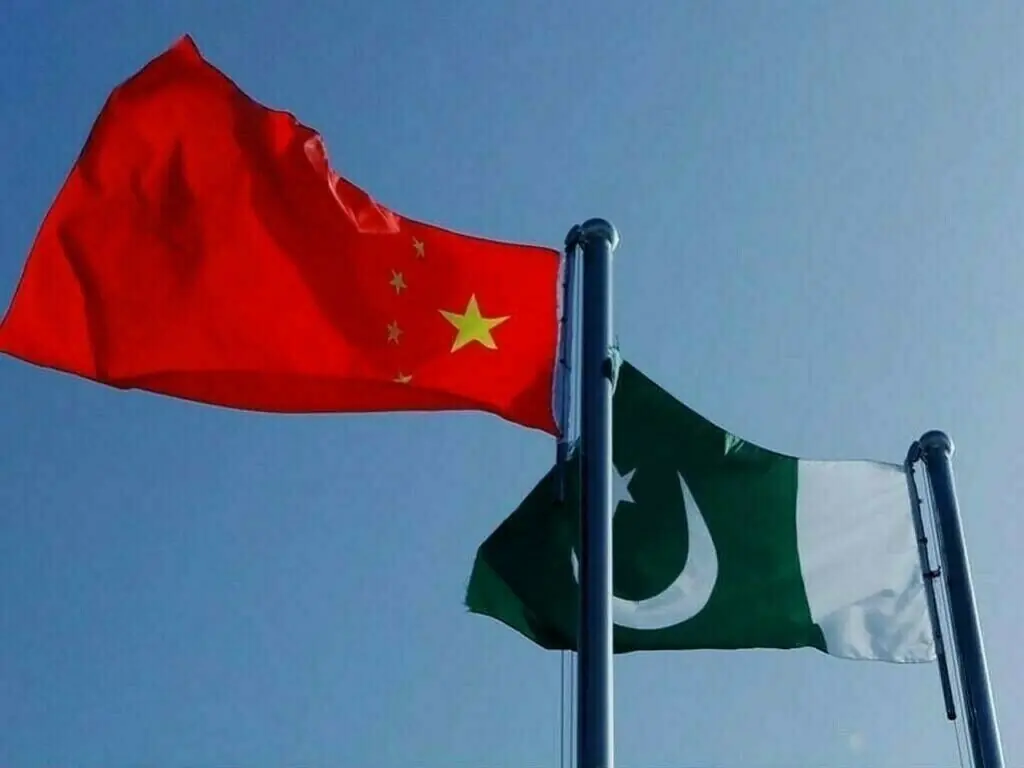

BEIJING: The Pakistan Navy expects its first Chinese-designed submarine to enter active service next year, the country’s top admiral told Chinese state media, bolstering Beijing’s bid to counter regional rival India and project power toward the Middle East.
A deal under which Islamabad will take delivery of eight Hangor-class submarines by 2028 is “progressing smoothly,” Admiral Naveed Ashraf told the Global Times in an interview published on Sunday, adding the submarines would boost Pakistan’s ability to patrol the North Arabian Sea and Indian Ocean.
The update on the Chinese submarine deal follows Pakistan’s air force using Chinese-made J-10 fighter jets in May to shoot downan Indian Air Force Rafale aircraft, made by France.
The altercation between the nuclear-armed neighbours surprised many in the military community and raised questions over the superiority of Western hardware over Chinese alternatives.
Under the terms of the submarine agreement - reportedly worth up to $5 billion - the first four diesel-electric attack submarines will be built in China, with the remaining vessels assembled in Pakistan to improve the South Asian nation’s technical capabilities.
Pakistan has already launched three of the submarines into China’s Yangtze River from a shipyard in the central province of Hubei.
“Chinese-origin platforms and equipment have been reliable, technologically advanced and well-suited to Pakistan Navy’s operational requirements,” Ashraf told the tabloid, which is published by the ruling Communist Party’s People’s Daily.
“As modern warfare evolves, emerging technologies such as unmanned systems, AI and advanced electronic warfare systems are becoming increasingly important. The Pakistan Navy is focusing on these technologies and exploring collaboration with China,” Ashraf was also quoted as saying.
Islamabad has long been Beijing’s top arms customer, and over the 2020-2024 period bought over 60% of China’s weapons exports, data from the Stockholm International Peace Research Institute shows.
Billion-dollar build up
Along with billions in arms sales, Beijing has heavily invested in building out its connections to the Arabian Sea through a 3,000 km (1864.11 miles) economic corridor stretching from China’s Xinjiang to Pakistan’s deep-water port of Gwadar.
The China-Pakistan Economic Corridor, part of President Xi Jinping’s flagship ‘Belt and Road’ infrastructure initiative, aims to secure a route for the world’s largest energy importer to bring in supplies from the Middle East, bypassing the Straits of Malacca — a strategic chokepoint between Malaysia and Indonesia that could be blocked in wartime.
The initiative also extends China’s sphere of influence toward Afghanistan and Iran and onto Central Asia, and effectively encircles India, given Beijing’s ties to the junta in Myanmar and good relations with Bangladesh.
India currently operates three indigenously developed nuclear-powered submarines, along with three classes of diesel-electric attack submarines acquired or developed over decades with France, Germany, and Russia.
“This cooperation (with China) goes beyond hardware; it reflects a shared strategic outlook, mutual trust, and a long-standing partnership,” Ashraf said.
“In the coming decade, we expect this relationship to grow, encompassing not only shipbuilding and training, but also enhanced interoperability, research, technology sharing and industrial collaboration.”
















Comments
Comments are closed for this article.