


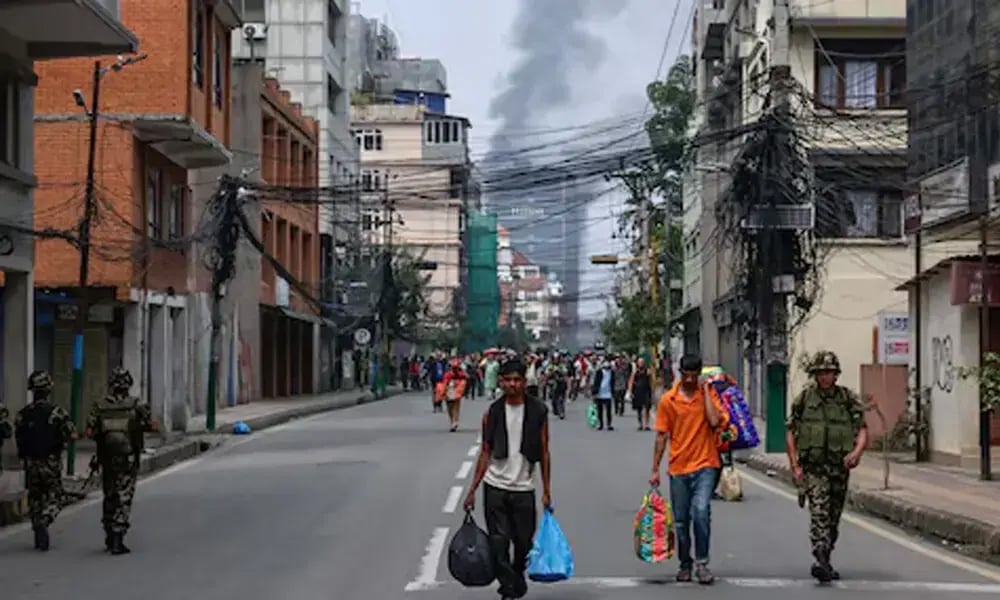
EDITORIAL: The scenes from Kathmandu are a reminder that the grievances of the young can no longer really be managed in the old authoritarian way – with bans and batons. So, when Nepal’s government moved to block social media platforms that had missed a registration deadline, it triggered far more than technical inconvenience.
It struck at the primary space where a generation already angry at corruption and exclusion has learned to mobilise. The result was not silence but an eruption, and within days Prime Minister KP Sharma Oli was forced to step down after 19 people were killed in clashes between protesters and security forces.
This is the true lesson of Nepal’s unrest. Social media has become the amplifier of discontent in societies where the gap between rulers and the ruled has grown intolerable. The protests were led mostly by Gen Z, many still in school or university, who see little future in an order dominated by political patronage, graft, and shrinking opportunity. They defied curfews, endured rubber bullets and tear gas, and turned a fight about online access into a much larger indictment of a system that rewards a few while offering little to the many.
There are no direct parallels with Pakistan, but the underlying theme is familiar. The spectacle of perks and privileges for legislators many times higher than the minimum wage, while austerity and inflation squeeze ordinary families, echoes beyond Nepal. The corruption scandals, the visible inequality, and the tone-deafness of elites are not unique to one country. When young people find their voice, especially through the connective power of digital platforms, repression and deflection rarely succeed for long.
The government’s own reaction has underlined the danger of misreading the moment. Attempts to frame protesters as rioters or “traitors” only hardened opposition. The eventual reversal of the social media ban came too late, and the resignation of the prime minister was more a symptom of collapse than a solution. The institutions of the state remain fragile, and the anger that boiled over last week will not easily dissipate without meaningful reforms.
That is why Nepal’s unrest deserves more than passing notice. It shows how quickly discontent can tip into crisis when institutions fail to absorb or respond to legitimate grievances. It also shows that corruption is no longer just a moral failing of the elite; it is a structural risk to stability. In a country of limited resources, any perception that leaders enrich themselves while cutting education, health, and public works is bound to provoke a reckoning.
The regional context cannot be ignored either. India’s role in Nepal’s internal affairs has long been contentious, and speculation has already surfaced about its hand in recent events. New Delhi has been accused of meddling from Bangladesh to Sri Lanka, and even in the West – Canada and the US –have both pointed to its covert operations. Whether or not it played a role this time, the fact that such suspicions arise so quickly reflects a history of interference that undermines trust in the neighbourhood.
For Pakistan, the message is clear enough. Discontent may take different forms in different countries, but corruption, privilege, and repression create the same combustible mix everywhere. The power of Gen Z, connected and restless, is reshaping politics across Asia. Those in authority would do well to heed Nepal’s example: silence cannot be enforced for long, and the price of ignoring popular anger is always higher than the cost of reform.
Copyright Business Recorder, 2025




















Comments
Comments are closed for this article.