



Most media outlets reported the latest gas price notification with a single headline takeaway: gas prices remain unchanged across domestic consumer categories. That’s only partly true. While the base tariff per MMBTU may not have changed, two key revisions — one of which has been introduced subtly — will result in higher gas bills for millions of households, even at zero consumption.
First, the government has quietly done away with the fixed Rs107 minimum monthly charge for domestic users. In its place is a new rule that ties the minimum bill to the first tariff slab of each category. For protected consumers, that translates into a minimum energy charge of Rs181. For unprotected consumers, the minimum charge is now Rs452, up from Rs177 previously. In both cases, the new minimum is now linked to tariff rates and will rise automatically with future slab revisions — a clear departure from the static number of the past for both categories.
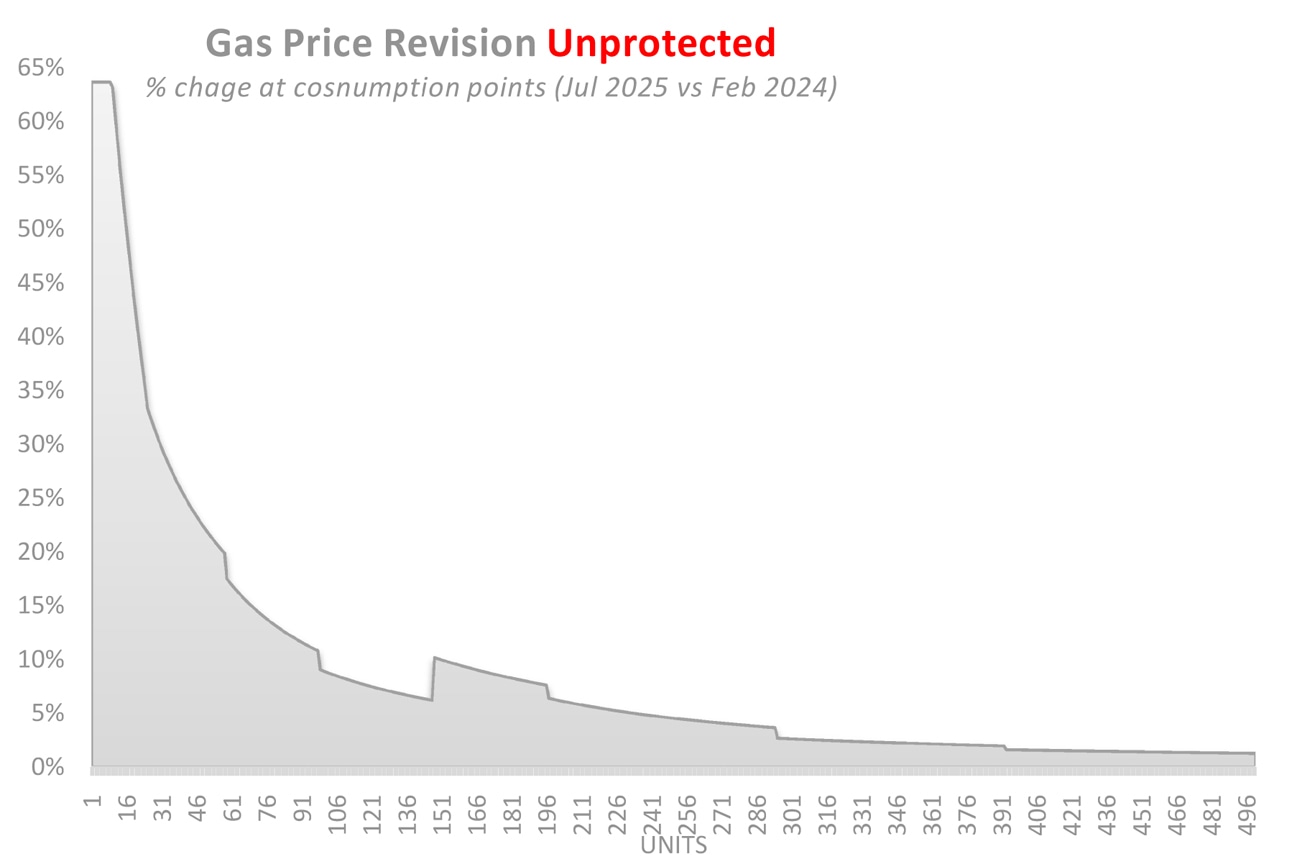
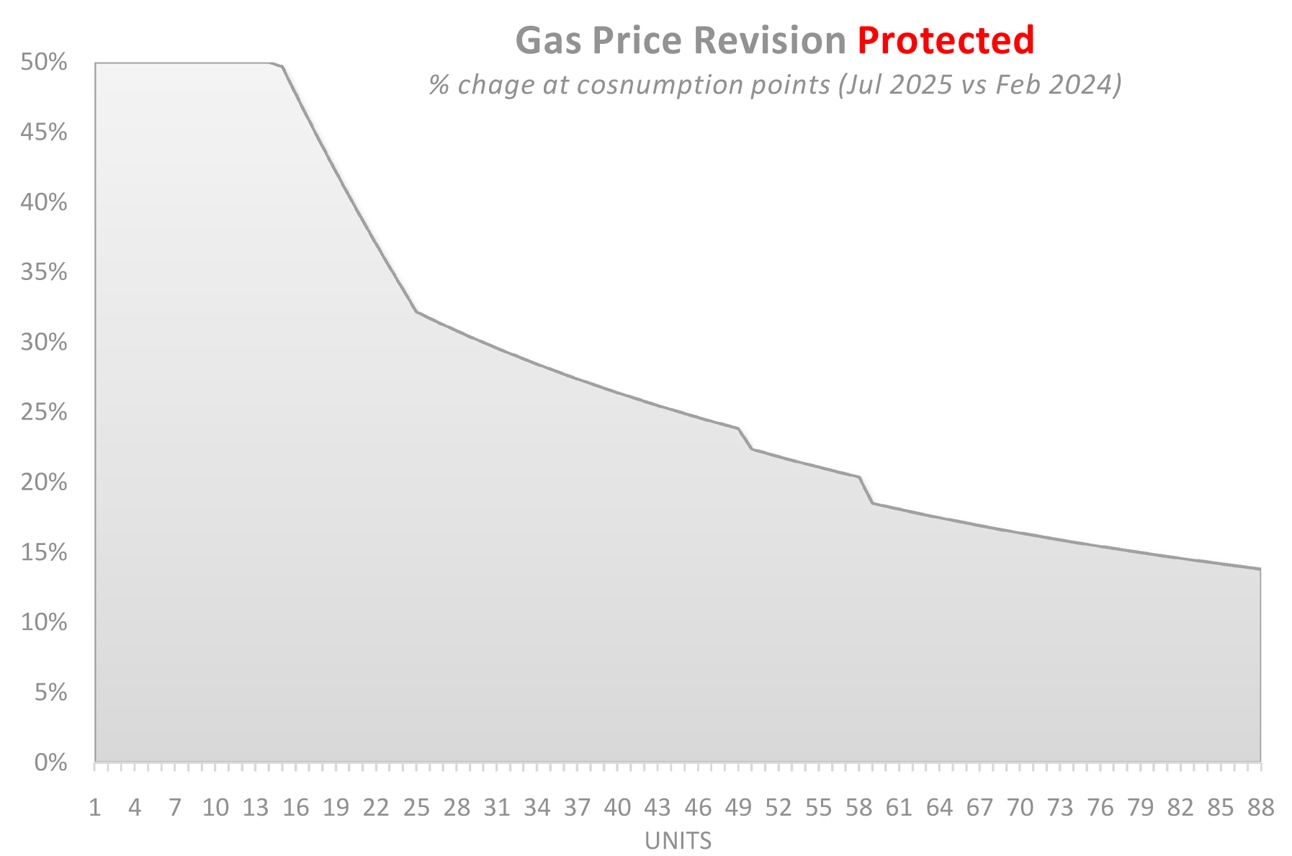
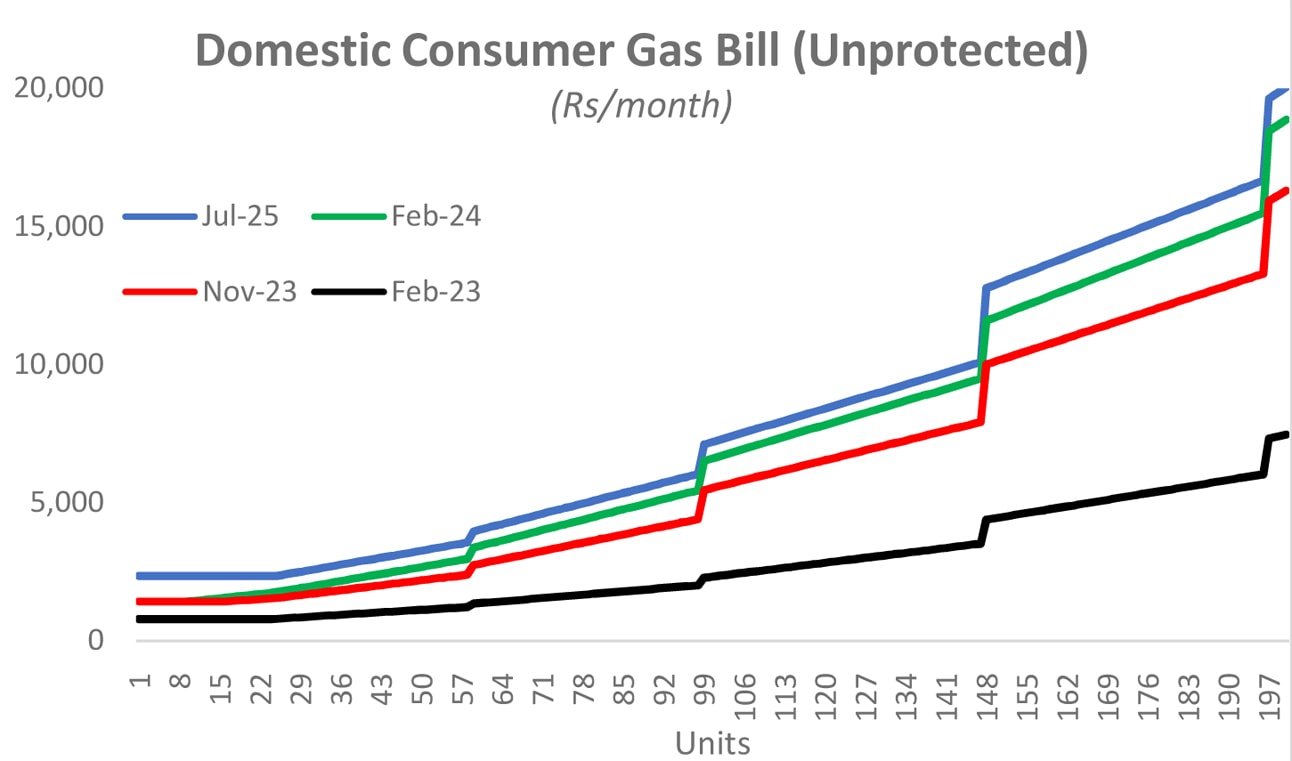
Second, the fixed monthly charges — which are payable regardless of usage — have also been raised. For protected users, the fixed charge is now Rs600/month, up from Rs400 — a 50 percent increase. For unprotected consumers in low consumption slabs, the fixed charge has risen from Rs1,000 to Rs1,500.
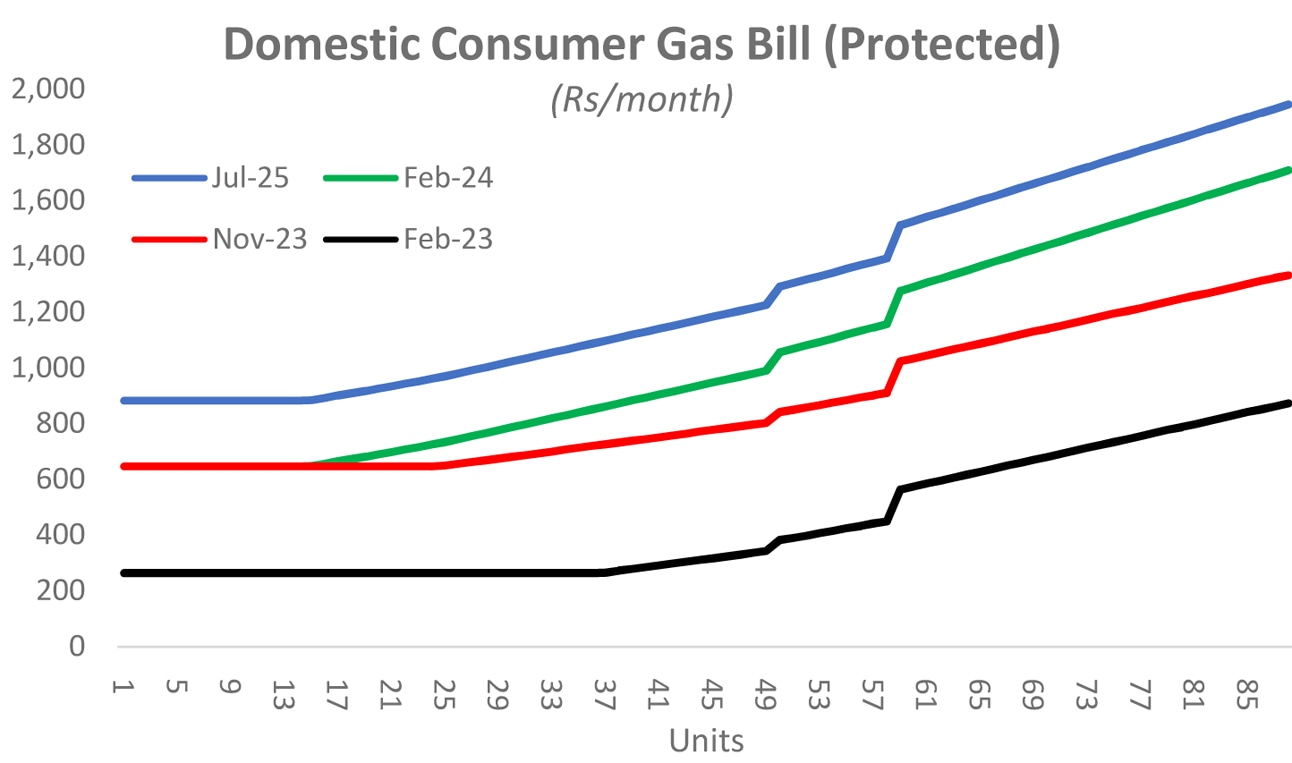
When combined, the impact is far from minimal. For protected consumers, the minimum monthly bill — even at zero gas usage — has risen from Rs645 to Rs968, a 50 percent jump. For unprotected consumers, the minimum bill has increased from Rs1,436 to Rs2,350, an almost Rs900 spike. These jumps are independent of any increase in gas consumption or base tariff — and yet, they've received little attention.
The number of protected and unprotected users is not publicly disclosed, but latest available data suggest that 66 percent of domestic consumers fall within the first two consumption slabs — the very slabs now facing the biggest hikes in percentage terms. This means that even without a change in base tariff, the effective gas burden on a majority of households is going up.
Of particular interest will be how the Pakistan Bureau of Statistics (PBS) treats this change in its inflation calculation. In past episodes, the PBS has often misclassified or underreported the true impact of utility price changes, especially when adjustments come through changes in fixed or minimum charges rather than base tariffs. Given that the lower consumption slabs largely overlap with the bottom three quintiles in CPI measurement, it is critical that the PBS correctly accounts for the rise in minimum gas bills — or risk underestimating inflation faced by the most vulnerable.
The notification may have avoided headlines, but for millions of households, the bill will do the talking.
Copyright Business Recorder, 2025




















Comments
Comments are closed for this article.