


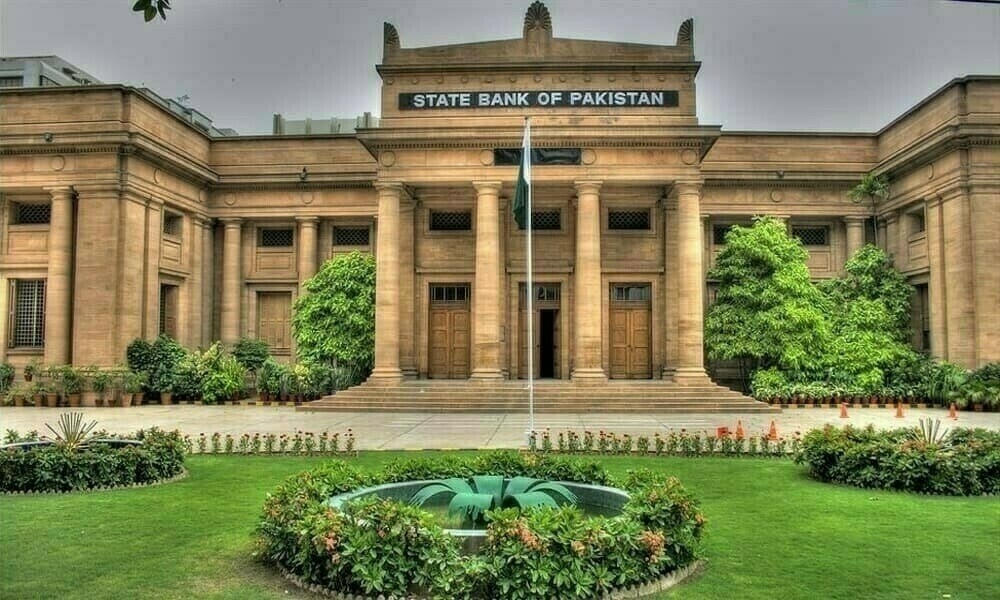
EDITORIAL: The State Bank of Pakistan’s Quarterly (January-March) Payments System Review report — bafflingly limited to just three months, at best described as extremely short term — has revealed some disturbing though not surprising data: 89 percent of Pakistan’s retail payments are conducted through digital channels but represent merely 29 percent of the value of total transactions; and paper-based and over-the-counter (OTC) payments processed through bank branches and branchless banking agents account for only 11 percent of total volume and 71 percent of total value.
This discrepancy can partly be explained by the informal economy which is projected at around 50 percent of the formal economy — a projection at best given that quantifying that which is outside the purview of the government statistical machinery is a challenging task at best.
The Federal Board of Revenue (FBR), in its indefatigable quest to generate more total revenue each year, focuses on the revenue it could generate if the informal economy is brought into the tax net yet one must not lose sight of the fact that the informal sector provides employment opportunities to hundreds of thousands of Pakistanis who, if left to the formal sector, could not be accommodated.
The SBP report noted that Raast (instant payment system processed 371 million transactions worth 8.5 trillion rupees during January-March 2025) and RTGS (real time gross settlement system handled 1.5 million transactions amounting to 347 trillion rupees) have been instrumental in accelerating digital payments. These numbers are impressive; however, it would have been useful to identify how many of these transactions were carried out by the informal sector.
Hernando de Soto maintained that in countries where the informal sector is sizeable macroeconomic data can never be reliable because the informal economy has a strong preference to using paper-based or cash for transactions. And added credibly that the informal sector gives birth to a situation whereby the influence of informal activities in an economy can only be measured through indirect means with a long information delay.
Be that as it may, the reason behind the greater use of paper- or cash-based transactions in Pakistan’s case is not only due to low levels of literacy but also due to rampant digital fraud that is reported in the media attributable to insufficient investment in digital security.
Two recent rather disturbing cases of digital fraud relate to the pensioners and the vulnerable recipients of Kifaalat, the Benazir Income Support Programme’s (BISP’s) quarterly cash disbursements. At present, BISP beneficiaries who report fraud complain that FIA does not proactively investigate as sums involved are very small; however, this leakage can be plugged if the government invests appropriate amounts in not only education but also in providing security in digital payments. And, needless to add, the rather frequent cessation of internet services in Pakistan, ostensibly for security reasons, compromises the reliability of the use of digital services that requires an urgent revisit.
To conclude, while the digital imprint on transactions within Pakistan is certainly rising yet there is a need to take other measures in order to ensure that it is strengthened with time — measures that must include dealing with security concerns, by not through shutting down the internet which has also had disastrous consequences on those who run their business on the net, but through law enforcement agencies.
Copyright Business Recorder, 2025


















Comments
Comments are closed for this article.