


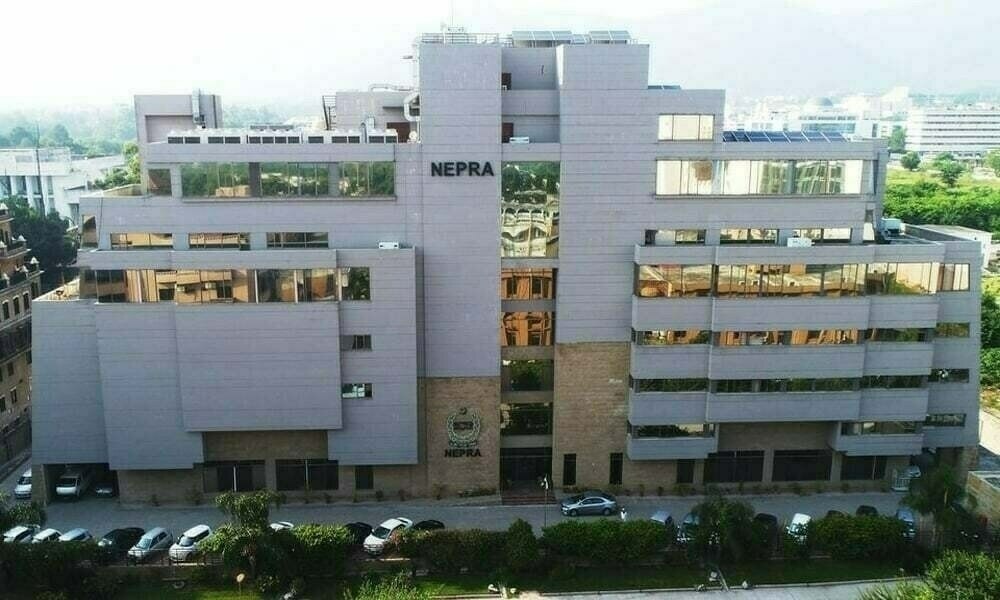
EDITORIAL: After a prolonged delay, the regulator — National Electric Power Regulatory Authority (Nepra) — has finally approved the Multi-Year Tariff (MYT) for the only private entity operating in the power utility sector.
There has been a considerable outcry in the media following the Power Minister’s criticism of Nepra’s decision to allow KE (Karachi Electric) to incorporate recovery losses. But before delving into the controversy, it must be emphasised that this is a step in the right direction, as it will unlock KE’s valuation for its shareholders.
It will help resolve disputes among existing shareholders and incentivize much-needed investment in the fully integrated energy-utility company. This, in turn, will bode well for the sustainability of the power supply to Karachi, the country’s economic hub and a city of teeming millions.
Moreover, the move sets the stage for the privatisation of other distribution companies (Discos) — a long-awaited reform in the power sector’s transmission and distribution segments. Until now, reform efforts have largely focused on the generation side.
Unfortunately, the debate primarily concerns KE receiving compensation for recovery losses. On paper, KE’s recovery losses appear higher than those of a few other Discos. Ironically, in the so-called “better-performing” Discos, recovery during 8MFY25 exceeds 100 percent for consumers using 0–200 units but drops to the 80s for higher-slab consumers.
The pattern for KE is similar. However, its overall recovery rates are lower — mid-80s for the 0 — 200-unit slab and mid-70s for higher slabs. These figures point to overbilling by other Discos and lower collection efficiency by KE. Nepra has allowed KE to pass on these costs to different consumers.
However, shifting the burden to others is unfair to honest consumers. Yet, other Discos have been doing the same — without any transparency.
The PHL surcharge (Rs3.23/unit), paid by all electricity consumers nationwide, including KE’s, represents a legacy cost linked to historical losses by state-owned Discos. These public entities are not held financially accountable for their losses; the costs are absorbed into the infamous circular debt. In contrast, KE’s shareholders bear the losses and are justified in seeking cost coverage.
The way forward should focus on reducing KE’s losses and ending overbilling by others. Media scrutiny should push KE to improve its recovery rates.
Nonetheless, KE’s AT&C (Aggregate Technical and Commercial) losses, as allowed by Nepra, have declined from 43.2 percent in 2009 to 20.3 percent today, with a target of 15.3 percent by 2030. The power division’s criticism is a grievance against KE’s current management. Nepra’s determination came after consultations with all stakeholders, including the power division. If there were objections, they should have been raised during that process.
It is important to note that Karachi is a complex city, and the private operator has halved its losses over the past 15 years. Had other Discos achieved similar results, the savings would have been substantial.
Nepra’s allowance for losses is set to decline over the next seven years — and the same standard should be applied to other Discos as well. Achieving this, however, requires investment and competent management. Such outcomes are unlikely without corporatisation and privatisation. To move forward, Discos must be held accountable for their losses and rewarded for improved performance. They need their MYTs and access to private investment — both of which would benefit Pakistan’s broader, evolving power sector. KE’s MYT approval is a step in this direction.
Copyright Business Recorder, 2025




















Comments
Comments are closed for this article.