



EDITORIAL: Federal Finance Minister Muhammad Aurangzeb told reporters on the side-lines of the Senate Parliamentary Committee on Finance and Revenue that rollovers of 12 billion dollars by friendly countries – China 5 billion dollars, Saudi Arabia 4 billion dollars and the United Arab Emirates 3 billion dollars - have been agreed. He added that these rollovers have been extended for one year and that they have been extended for the past few years.
A one-year extension has been the practice in the past but since rollover of these loans for the duration of the 7 billion dollar thirty-seven months International Monetary Fund (IMF) Extended Fund Facility (EFF) programme’s prior condition it appears that the rollovers would take place each year provided the country demonstrates delivery on its commitments made to the Fund under the programme.
The Fund press release expressly states that “continued strong financial support from Pakistan’s development and bilateral partners will be critical for the program to achieve its objectives,” however, one would assume that a year in advance may be deemed, as in previous years, to qualify as “timely confirmation of necessary financing assurances from Pakistan’s development and bilateral partners.” This, however, would imply that the Sword of Damocles will continue to hang on the country’s economic managers in terms of adhering to the “prior” conditions, prior to the EFF approval by the Board, and prior and post conditions agreed for each quarterly review for the next thirty-seven months which, needless to add, will be a challenge for two major reasons.
First and foremost, the administrative measures required by the Fund and by extension the three friendly countries (as our recent economic history shows that neither of the three countries is willing to extend a rollover without Fund approval of a tranche release) would insist on utility rates reflecting full cost recovery, which has implied a steady rise in rates that has crippled the capacity of the public to retain its quality of life. Jamaat-i-Islami is already attracting large numbers to its ongoing reverse the rise in utility rates protest movement and as rates are further increased the likelihood of public discontent spilling out on our streets will rise.
And secondly, in the event that the government is successful in implementing higher tax rates on the salaried class, and widening the tax net through the imposition of some retrogressive taxes for example sales tax on stationary, and the registration of all 3.2 million traders (under 50,000 have registered so far) there will be no mini-budget.
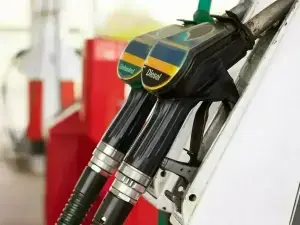
However, in the event that the process is delayed due to public opposition as happened in the past, the economic team would almost certainly agree to generating the shortfall in the budgeted revenue through higher taxes on other items as it did in the quarterly review of the recently concluded Stand-By Arrangement; and given that the Federal Board of Revenue relies heavily on low-hanging fruit there is a distinct possibility that the petroleum levy may be raised to 70 rupees per litre, as already legislated in the Finance Act for the current financial year though not yet implemented as the levy on petrol and high speed diesel is currently at 60 rupees per litre. This in turn will fuel inflation further.
Aurangzeb further noted that the government has received offers from international commercial banks for concessional loans though he did not mention the terms of the loans, adding that “we are reviewing these offers.” In this context it is relevant to note that the rating agency Fitch recently upgraded the country from CCC- to CCC+ though it noted in the fine print that “For sovereigns rated CCC+ or below Fitch assumes a starting point of CCC+ for determining the Country Ceiling. Fitch’s Country Ceiling Model produced a starting point uplift of 0 notches.
Fitch’s rating committee applied a +1 notch qualitative (as opposed to quantitative) adjustment to this, under the balance of payments restriction pillar, reflecting that the private sector has not been prevented or significantly impeded from converting local currency into foreign currency and transferring the proceeds to non-resident creditors to service debt payments.” Sadly though, the government is not yet able to clear due payments to energy projects signed under the China Pakistan Economic Corridor umbrella.
Fitch further notes that it “only assigns CCC+ in the event that transfer and convertibility risk has materialised and is impacting the vast majority of economic sectors and asset classes.” To conclude, key macroeconomic data will have to improve before the feel good factor becomes prevalent in the general public.
Copyright Business Recorder, 2024





















Comments
Comments are closed for this article.