


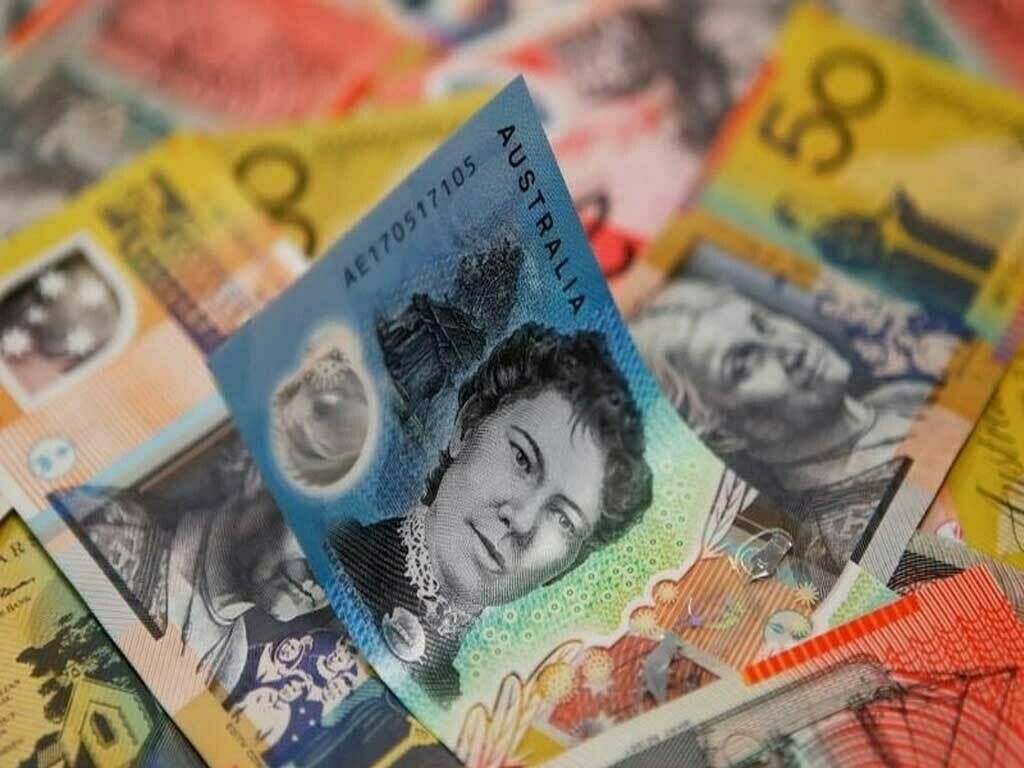
SYDNEY: The Australian dollar was left directionless on Thursday after jobs data proved too mixed to clarify the outlook for a rate hike, while the New Zealand dollar grappled with the ever-greater risk of lower interest rates at home.
The Aussie held at $0.6728, and short of its recent six-month top at $0.6798.
A break of support at $0.6715 could see a retreat to $0.6667.
The kiwi dollar sat at $0.6070, having touched a 10-week low of $0.6033 on Wednesday only to bounce on a bout of short covering. Resistance now lies around $0.6098.
Concerns about possible US trade curbs on China weighed on sentiment, as did selling against a rebounding Japanese yen.
The Aussie shed 2.3% on the yen to 104.64 as investors cut back on very long positions.
Australian data showed net employment jumped by 50,200 in June, more than double forecasts, but the jobless rate still ticked higher to 4.1% as more people joined the labour force.
This should be positive news for the Reserve Bank of Australia (RBA), which has been seeking to maintain the major employment gains made in recent years, while lessening upward pressure on wages and costs.
The market reaction was restrained, with futures implying only a 20% chance of a rate hike at the RBA’s next meeting in August.
“Our composite measure of job vacancies continued to decline in June and is consistent with a marked increase in the unemployment rate in the months ahead,” said Abhijit Surya, an economist at Capital Economics.
Australian dollar sails to six-month top as kiwi sinks
“All told, we’re sticking to our forecast that the RBA won’t hike rates any further. That said, it will be a close call.”
Over in New Zealand, expectations of early cuts had been encouraged by a benign inflation report, with local banks now tipping earlier moves.
“We have brought forward our forecast timing of the first 25bp cut in the cash rate to November, rather than in February,” said Sharon Zollner, head of New Zealand economics at ANZ.
“We still see a cut in August as unlikely at this stage, given non-tradable inflation is still so high, but October is a possibility we certainly wouldn’t discount.”
Markets imply about a 50% chance of a cut next month and are more than fully priced for October.
They have around 180 basis points of easing priced in by the end of 2025, compared to 49 basis points for the RBA.




















Comments
Comments are closed for this article.