


China’s yuan holds steady as state-owned banks’ action outweighs Moody’s outlook cut
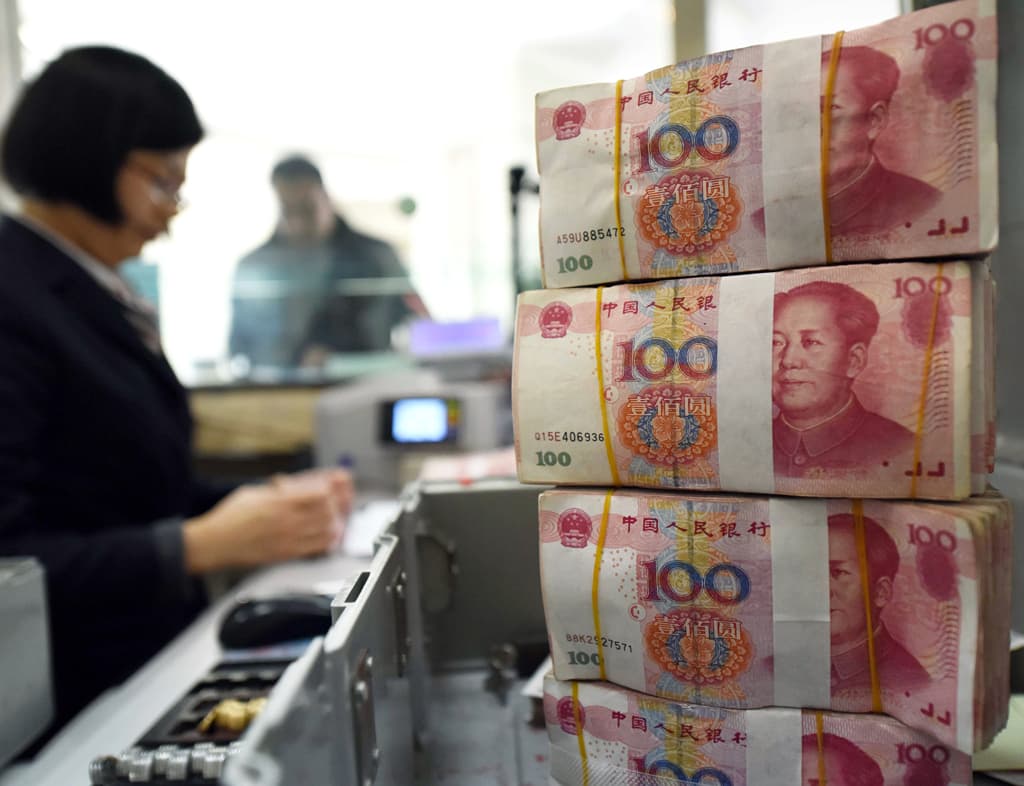

SHANGHAI: China’s yuan held steady against the US dollar on Tuesday, as the sale of dollars by major state-owned banks outweighed Moody’s decision to cut China’s credit outlook.
The spot yuan opened at 7.1374 per dollar and closed the domestic session at 7.1420 per dollar, 15 pips firmer than the previous late session close. The slight strength in the yuan comes as China’s major state-owned banks were seen swapping yuan for US dollars in the onshore swap market and selling those dollars in the spot market to support the yuan throughout the whole trading session on Tuesday, Reuters reported.
The state banks’ actions followed Moody’s decision to cut its outlook on China’s government credit ratings to negative from stable, citing lower medium-term economic growth and risks from a major correction in the country’s vast property sector. Chinese state banks often act on behalf of the country’s central bank in the foreign exchange market, but also trade on their own behalf.
“Now the markets are more concerned with property crisis and weak growth, rather than the immediate sovereign debts risk,” said Ken Cheung, chief Asian FX strategist at Mizuho Bank. Investors didn’t take much cheer from a survey that showed China’s services activity expanded at a quicker pace in November.
Prior to the market opening, the People’s Bank of China set the midpoint rate, around which the yuan is allowed to trade in a 2% band, at 7.1127 per US dollar, 116 pips weaker than the previous fix 7.1011, and 349 pips firmer than Reuters’ estimate.
The PBOC continued to set the daily fixing rate persistently lower than expectations in order to support the yuan, said Alvin Tan, head of Asia FX strategy. Investors continued to watch the upcoming Central Economic Work Conference (CEWC) this month as it will set macro policy tones for 2024.
“We expect the CEWC to emphasize continued support for growth with proactive fiscal policy in a more explicit way, accommodative monetary and credit policy, and more support for the property market,” said economists at UBS.






















Comments
Comments are closed for this article.