


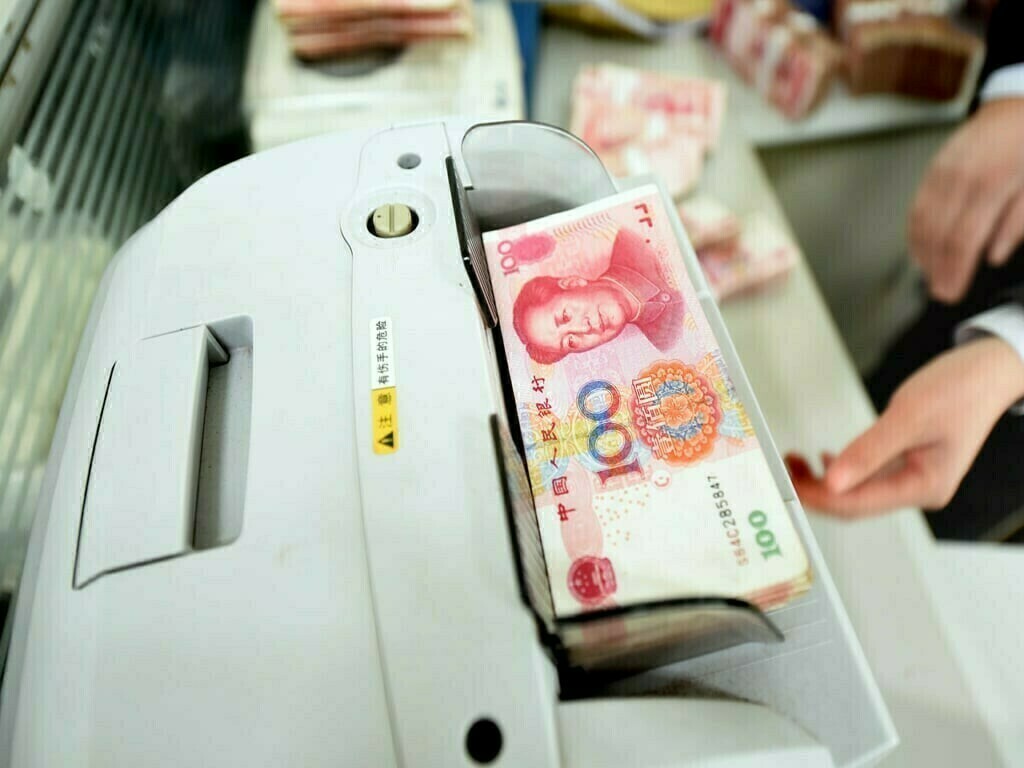

SHANGHAI: China’s yuan fell against the dollar on Monday, nearly touching its daily trading limit, as pressure builds amid a widening Sino-US yield gap, big capital outflows and growing worries about the Middle East conflict.
Overall, however, analysts expect the yuan’s fall to be contained by stepped-up stabilisation efforts from China’s central bank, which over the weekend pledged to prevent risk contagion in forex markets.
The onshore spot yuan was changing hands at roughly 7.3170 at midday, slightly softer than the previous late session close.
But the Chinese currency is 1.93% weaker than the midpoint - close to the 2% limit - after the People’s Bank of China (PBOC) set the guidance rate steady at 7.1792 per US dollar with a strong fixing bias.
The yuan’s weakness comes amid lingering concerns over China’s economy, and the widening US yield advantage over Chinese currency assets.
The gap between US and China 10-year treasury yields widened to more than 226 basis points on Monday, the biggest in more than two decades.
China’s yuan eases against dollar on widening yield gap
“Investors are still concerned about the global situation with the Gaza conflict at risk of spreading whilst it remains anything but certain that global rate hikes are over,” Maybank said in a note to clients.
Israel bombarded Gaza with air strikes early on Monday and its aircraft struck southern Lebanon overnight, heightening worries about a widening Middle East conflict.
Adding to the pressure on the yuan, capital outflows from China rose sharply to $75 billion in September, the biggest such monthly amount since 2016, according to Goldman Sachs.
However, Goldman said it is sticking to its year-end yuan forecast of 7.30 per dollar, saying that “policymakers appear to put more weight on confidence and stability in FX management.”
PBOC Governor Pan Gongsheng said over the weekend China would prevent risk contagion in stock, bond and foreign exchange markets, and ensure the stable operation of financial markets.
DBS forecast the yuan to be within the 7.30-40 range against the dollar as significant depreciation looks unlikely.
“The RMB could see more resilience amid an increased policy bias to lean against further weakness,” DBS strategist Chang Wei Liang wrote.




















Comments
Comments are closed for this article.