


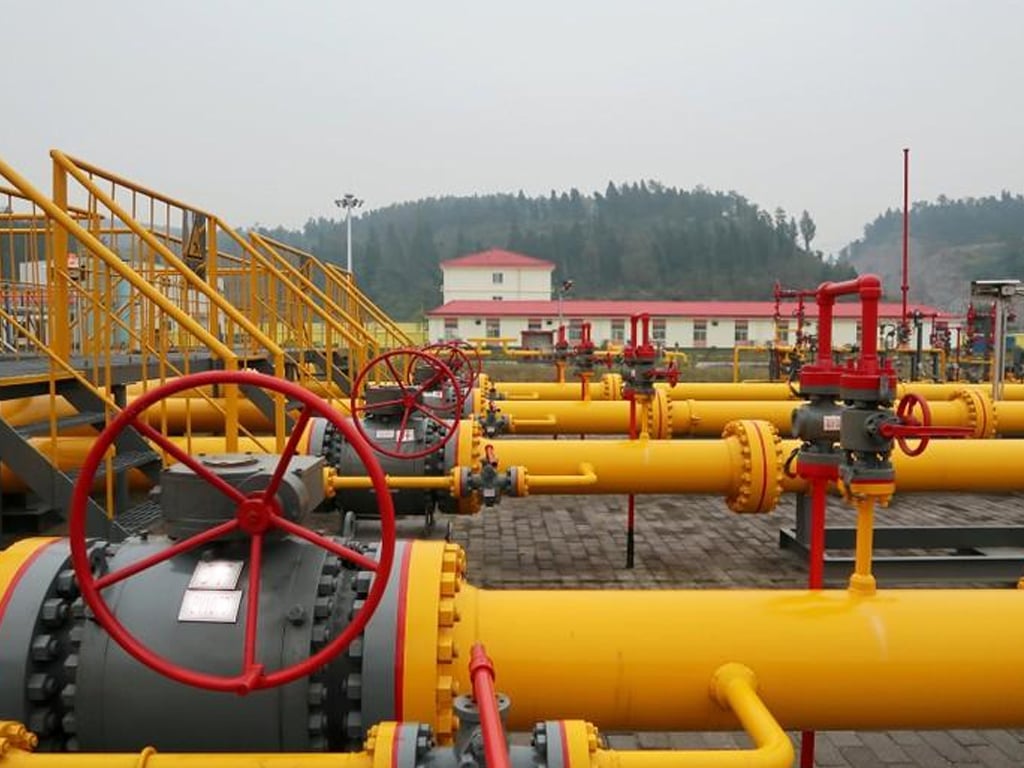

NEW YORK: US natural gas futures fell about 3% on Tuesday as the amount of gas flowing to liquefied natural gas (LNG) export plants remained low due to maintenance outages and as a tropical storm reduced power demand in Texas.
Forecasts called for gas demand to rise more than expected next week with weather across much of the country expected to remain hotter than normal through at least early September.
On Monday in the central US, power demand surged to an all-time high in the Southwest Power Pool (SPP) as homes and businesses cranked up air conditioners to escape a brutal heat wave that is moving into the Midwest and is expected to cause power use to break records in the Midcontinent Independent System Operator (MISO) territory on Wednesday and Thursday.
Extreme heat boosts the amount of gas burned to produce power for cooling, especially in Texas, which set two weekend demand records on Saturday and Sunday and gets most of its electricity from gas-fired plants. In 2022, about 49% of the state’s power came from gas-fired plants, with most of the rest coming from wind (22%), coal (16%), nuclear (8%) and solar (4%), federal energy data showed.
Cooling rains from Tropical Storm Harold, however, were offering some relief to the heat in Texas. The US National Hurricane Centre said Harold hit the South Texas coast on Tuesday.
Power demand in Texas was on track to drop to 80,482 megawatts (MW) on Tuesday from 84,580 MW on Monday, according to the Electric Reliability Council of Texas, which operates the electric grid for much of the state.
Front-month gas futures for September delivery on the New York Mercantile Exchange fell 7.2 cents, or 2.7%, to settle at $2.560 per million British thermal units (mmBtu).
One factor that has weighed on gas futures in recent months - they are down about 43% so far this year - has been persistently lower spot prices. Next-day gas at the Henry Hub benchmark in Louisiana traded around $2.60 per mmBtu for Tuesday. Spot gas has only traded over futures twice since the end of April.
Data provider Refinitiv said average gas output in the US Lower 48 states had eased to 101.7 billion cubic feet per day (bcfd) so far in August from 101.8 bcfd in July. That compares with a monthly record of 102.2 bcfd in May.
Meteorologists forecast the weather in the Lower 48 states will remain hotter than normal through at least Sept. 6.
Refinitiv forecast US gas demand, including exports, would rise from 102.7 bcfd this week to 103.1 bcfd next week. The forecast for next week was higher than Refinitiv’s outlook on Monday.
Gas flows to the seven big US LNG export plants has fallen from an average of 12.7 bcfd in July to 12.3 bcfd so far in August due mostly to reductions at Cheniere Energy’s Sabine Pass facility in Louisiana. That compares with a monthly record of 14.0 bcfd in April.




















Comments
Comments are closed for this article.