




Amidst falling exports and FDI the decline in remittances from Overseas Pakistanis is the last thing one expects at a time when the country is possibly facing the prospects of sovereign default. More alarming is that the slide is systematic and continues.
Remittances from overseas Pakistanis during November 2022 declined by 14.3 percent, year-on-year, while the month-on-month decline stood at 4.8 percent. Whereas, with cumulative inflow of $12 billion during Jul-Nov 2022, the remittances decreased by 9.77 percent in the first five months of FY23 as compared to the similar period of last year. The drop is quite disturbing, to say the least.
The reasons behind this disturbing development are said to be the recession in the West and re-emergence of illegal channels of hawala and hundi that particularly attract outward flows of remittances flow from Saudi Arabia and the UAE.
During the period 2016 to 2019, remittances hovered around $ 20 billion. In the year 2020, remittances soared to $ 23 billion. The years 2021 and 2022 saw an unprecedented jump to $ 29.5 billion and $ 31.3 billion, respectively. In the five months (July to November 2022) it dipped to $12 billion.
However, the reasons cited for the decline as recession in Europe and re-emergence of illegal channels do not appear convincing.
The remittance trend from FY 2016 to FY 2022 (stated as above) is meaningful and speaks for itself. In the period from FY 2020 to FY 2022, when with leading economies were still struggling in the aftermath of Covid-19, the remittances were displaying an upward trend.
This was the period when Pakistan successfully managed the pandemic, the exports driven by textile filled in the gap in the global market, overall exports increased, political stability prevailed and fiscal figures of the country looked good. The confidence of overseas Pakistanis was bullish and their remittances peaked.
In the July to November 2022 period, the remittances dipped by around 10 percent. This was a period of deepening political uncertainty in the country and the fiscal situation of the country weakened so much so that those in the government and outside it were raising the question whether or not the country is headed for default. The sentiment of overseas Pakistanis, therefore, turned bearish, which found its best reflection in the reduction in remittances during this period.
One may safely conclude that the reason that appears more realistic for the decline in remittances is political uncertainty and the resulting economic turmoil in the country. The threat of Pakistan heading towards default and its consequences have adversely impacted the outlook of overseas Pakistanis, who are now taking a wait-and-see approach.
In the meantime, more worries are cropping up on the fiscal landscape of the country. Finance Minister Ishaq Dar has said that the International Monetary Fund (IMF) wanted to see not only the previous quarter but also the next three quarters, besides how the country would meet the $16 billion post-flood reconstruction and rehabilitation phase. This may delay the arrival of much-needed next tranche from the IMF. Funds from Saudi Arabia are also unlikely to materialise anytime soon
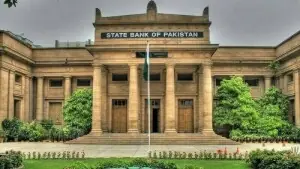
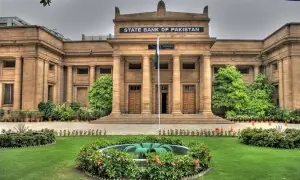
As the country is in dire need of foreign aid to reduce its current account deficit as well as ensure enough reserves to pay its debt obligations for the next financial year, Pakistan’s central bank has stated that its foreign exchange reserves have fallen to $6.7 billion, its lowest level in nearly four years as the country battles the economic crisis.
Copyright Business Recorder, 2022
The writer is a former President OICCI; Global Business Leader and Strategic Affairs Analyst

















Comments
Comments are closed for this article.