


Indian, Chinese commanders hold parley on border, growing calls to boycott Chinese goods
- While blaming each other’s for the bloodshed, the two governments have sought to avoid any escalation.
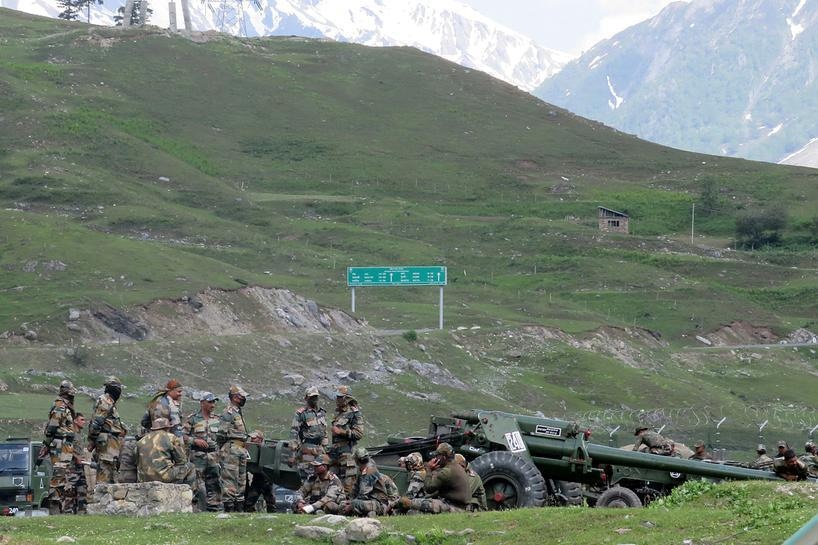
Indian and Chinese military commanders held a second round of talks to ease tensions at their contested border on Monday, as the public mood hardened in India for a military and economic riposte to China following the worst clash in over five decades.
An Indian government source said corps commanders from both sides met in Moldo, on the Chinese side of the Line of Actual Control, the de facto border dividing India’s Ladakh region from the Chinese held Aksai Chin, high in the western Himalayas.
Lower ranking officers had attended the first parley last Thursday after the brutal clash June 15, when soldiers fought with rocks, metal rods and wooden clubs.
While blaming each other’s for the bloodshed, the two governments have sought to avoid any escalation that could risk further conflict between the two nuclear armed states.
Under long observed protocols, both militaries refrain from firing weapons, and the last time there was a deadly clash on the disputed border was in 1967.
The Indian foreign ministry has, however, described the fighting that left 20 Indian soldiers dead and at least 76 injured as a “pre-meditated and planned action” by China.
For its part, China has accused Indian troops of violating a military agreement, and provoking and attacking its troops in the Galwan valley in Ladakh. China has not disclosed how many casualties it suffered, though an Indian minister has said around 40 Chinese soldiers may have been killed.
Shocked and angered by the death of their soldiers, Indians have been calling for Prime Minister Narendra Modi’s nationalist government to show India will not be bullied, bitterly remembering how China humiliated their country in a war in 1962.
Members of an Indian traders body set alight a pile of Chinese goods at a New Delhi market, pushing for a nationwide boycott of products from its northern neighbour.
The Confederation of All India Traders (CAIT), which represents some 70 million traders, has asked federal and state governments to support a boycott of Chinese goods and cancel government contracts awarded to Chinese companies.
The confrontation in the Himalayas means Modi now has to reassess relations with China, posing possibly the most difficult foreign policy questions he has faced so far.
“At this moment, we stand at historic crossroads,” former prime minister Manmohan Singh said in a statement, “Our government’s decisions and actions will have serious bearings on how the future generations perceive us.”


















Comments
Comments are closed for this article.