



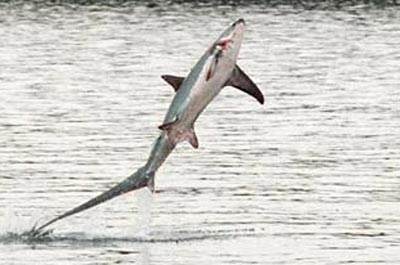
 BANGKOK: An international conference voted on Monday to ban trade in some shark species whose populations have fallen to crisis levels due in part to demand from China, the world's biggest consumer of shark fins for use in soup.
The Convention on International Trade in Endangered Species of Wild Flora and Fauna (CITES) agreed to ban international trade in the oceanic whitetip, the porbeagle and three types of hammerhead sharks unless shipments are accompanied by documentation showing they were caught legally.
Around 7 percent of sharks are killed each year, according to a paper in the Marine Policy journal this year, an unsustainable amount that is threatening certain populations with extinction.
Governments will have 18 months to comply with the restrictions, agreed by a two-thirds majority of the countries at the CITES conference in Bangkok.
If countries are found to be non-compliant, they may be subject to sanctions that can cover trade in all CITES-listed species.
Japan and China, major consumers of shark products, opposed the listing, citing difficulties in identifying the specific species' fins.
They also said regional fisheries management bodies should manage marine issues, rather than CITES, but most countries, including the original proponents in Latin America and the European Union, and environmental NGOs rejected that view.
"In reality we need fisheries management bodies managing the fishing and CITES managing the trade," said Elizabeth Wilson, manager for global shark conservation at The Pew Charitable Trusts, an NGO.
The vote will require final approval at a CITES plenary on March 14, the final day of the meeting, which is likely given the large majority in favour.






















Comments
Comments are closed for this article.