


Horse ready meals spark European food scare

 LONDON: Britain held emergency talks on Saturday about horsemeat found in beef ready meals amid confusion over the origin of the meat in a food scandal that has spread to several other European countries.
Food minister Owen Paterson rounded up industry bodies and retailers in an attempt to tackle what he feared was an "international criminal conspiracy" to mislead the public by passing off cheaper horsemeat as beef.
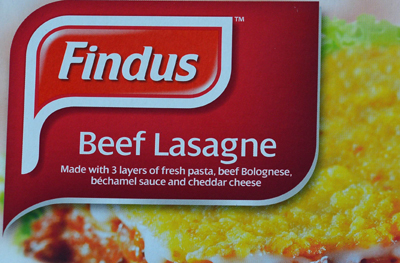
Swedish food giant Findus withdrew various frozen meals from France and Sweden on Friday, a day after withdrawing frozen beef lasagne from sale in Britain that was found to contain up to 100 percent equine flesh.
The British supermarket chain Aldi voiced anger Friday after finding that two of its own brand frozen ready meal ranges -- beef lasagne and spaghetti bolognese contained between 30 and 100 percent horsemeat.
The meals were all produced in Luxembourg for French supplier Comigel, which said the horsemeat used originally came from a Romanian abattoir via a meat-processing firm called Spanghero in southwest France.
But officials at Spanghero's headquarters in Castelnaudary refused to say where the meat had come from and whether it had passed through intermediaries, but indicated a statement would be made later Saturday.
"We have a real problem," Paterson told Sky News television.
"There are very significant amounts of horsemeat in products marked as processed beef. That is totally unacceptable.
"People must go to the shops today knowing and having confidence that if it's marked beef, it is beef.
"It may be incompetence; I fear it's actually probably an international criminal conspiracy and I'm completely determined to get to the bottom of it."
Paterson said he wanted to know how the industry intended to analyse all processed beef products on sale in Britain by the end of next week.
"Something must have gone extraordinarily wrong or someone was acting in a criminal manner," he said.
He stressed that there was no evidence that the products were unsafe for human consumption but added: "This is an issue of mis-labelling and effectively a conspiracy to mislead the public."
Comigel chairman Erich Lehagre meanwhile apologised to the company's customers.
"We are aware of the very strong feelings this has given rise to, particularly in Britain," he told AFP.
According to Lehagre, his company thought Spanghero were supplying them with beef from French cattle.
However, "they've told us the meat came from a Romanian producer who used abattoirs which slaughtered both cattle and horses and processed beef and horsemeat."
The meals were then produced in Luxembourg by a supplier called Tavola.
Luxembourg's director of veterinary services Felix Wildschutz told AFP that the meat imported from France had been "fraudulently labelled" beef.
Spanghero was established in the 1970s by two former France rugby players, Claude and Laurent Spanghero. They were bought out in 2009 by Lur Berri, a Basque agricultural cooperative.
In Romania, Sorin Minea, president of Romalimenta, the country's food industry federation, said: "Horsemeat is cheaper than beef. The French importer has doubtless sought to buy cheaper meat. But given the specific colour and texture of horsemeat, it is impossible that they did not realise it wasn't beef.
"It remains to be seen if the abattoir or the importer has falsified the labelling," he stressed.
On Thursday, Britain's Food Standards Agency (FSA) announced that 11 of 18 samples of Findus beef lasagne were found to contain between 60 and 100 percent horsemeat.
All Findus frozen beef lasagnes have been recalled from Swedish stores while in France, the company is withdrawing three products lasagne, cottage pie and moussaka.
The FSA said it had ordered further tests on the suspect lasagne for the veterinary drug phenylbutazone, which can cause a serious blood disorder to humans in rare cases
France's agriculture minister Stephane Le Foll warned that companies found to have knowingly misled consumers would be "severely punished."
France's anti-fraud body, the DGCCRF, has launched an investigation.
It is the latest horsemeat-related scare to his Europe after equine DNA was found two weeks ago in frozen beefburgers in Britain and Ireland, countries where horsemeat consumption is generally taboo.
The consumption of horsemeat is more common in other parts of Europe including France, as well as in central Asia, China and Latin America.




















Comments
Comments are closed for this article.