


IMF tells Gulf states to speed up switch from oil

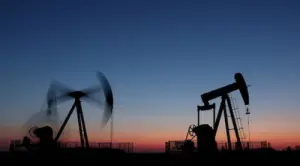
DUBAI: The IMF on Tuesday advised energy-rich Gulf economies to speed up their diversification away from oil after projecting the worst growth for the region since the global financial crisis.
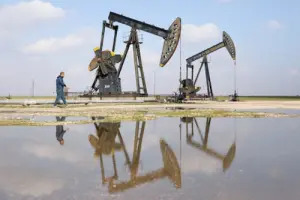
Oil exporters in the Middle East, especially those in the Gulf Cooperation Council, have been hit hard by the collapse in crude prices which provided a major part of their finances.
Following the slump, GCC members Bahrain, Kuwait, Oman, Qatar, Saudi Arabia and United Arab Emirates undertook fiscal measures and reforms to cut public spending and boost non-oil revenues.
As a result, economic growth has slowed considerably as the GCC six and other regional oil exporters posted huge budget deficits.
In its Regional Economic Outlook, the International Monetary Fund on Tuesday projected GCC economic growth at just 0.5 percent this year, the worst since the 0.3 percent growth in 2009 following the global financial crisis.
"It is the right time for GCC economies to accelerate their diversification outside oil and to promote a greater role for the private sector to lead growth and create additional jobs," said Jihad Azour, director of the Middle East and Central Asia at IMF.
"Preparing their economies to the post-oil era is something that is becoming a priority for authorities all over the GCC," Azour told AFP.
"We are seeing governments developing diversification strategies and introducing a certain number of reforms to allow the economy to be prepared for the post-oil era. And those are important reforms," he said.
- Non-oil sector on rise -
Azour said the GCC growth projections are mainly driven by the oil producers deal to cut output to bolster low crude prices which meant GCC states pumped and exported less oil.
The IMF report also projected that the economies of oil exporters in the Middle East and North Africa -- also including Iran, Iraq, Algeria, Libya and Yemen -- would grow 1.7 percent, down from 5.6 percent the previous year.
MENA oil importers, on the contrary, were expected to expand 4.3 percent this year, up from 3.6 percent in 2016, the report added.
Azour said the IMF was projecting flat growth this year for Saudi Arabia, the largest economy in the MENA region, but the non-oil sector was growing faster than expected.
This was an indication "that the Saudi economy is bottoming up and it shows that the gradual implementation of the fiscal adjustment now is going to allow the Saudi economy to grow faster," Azour said.
He estimated that Saudi Arabia and UAE could achieve a fiscal balance by between 2020 and 2022.
Azour said the introduction of the five percent value-added tax (VAT) was one of the reform measures that would allow the GCC countries to diversify their revenues away from oil.
"Its low rate will have a limited impact on price rise and inflation," said Azour, adding that VAT is estimated to generate between 1.5 and two percent of gross domestic product annually.
So far, Saudi Arabia and UAE have said they would apply the tax at the start of next year while the remaining four nations have the whole of 2018 to implement it.












Comments
Comments are closed for this article.