Live
IMF World Bank meetings
Business & Finance

Pakistan discusses reforms with MSCI, Deutsche Bank

  • Discussions focused on MSCI’s classification criteria and foreign investors’ concerns
Published Updated

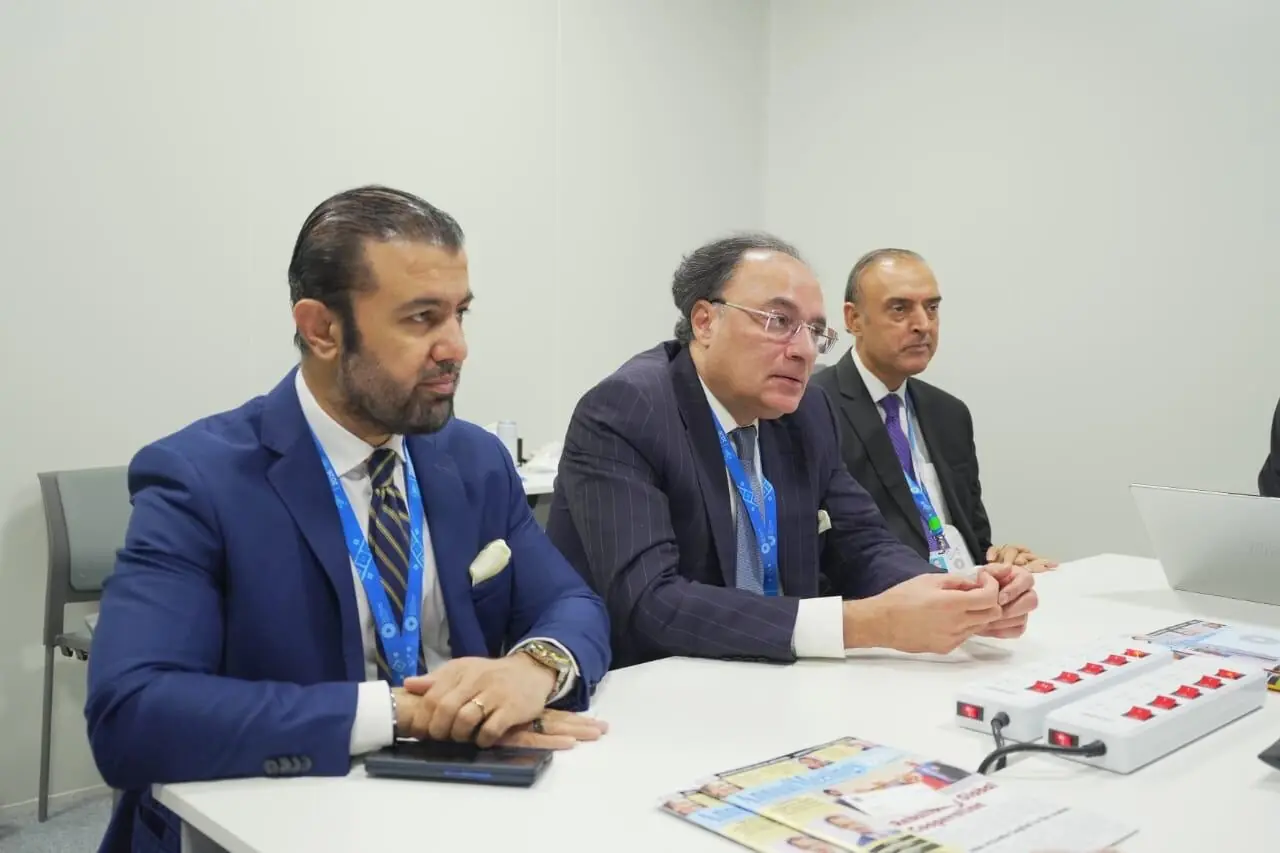
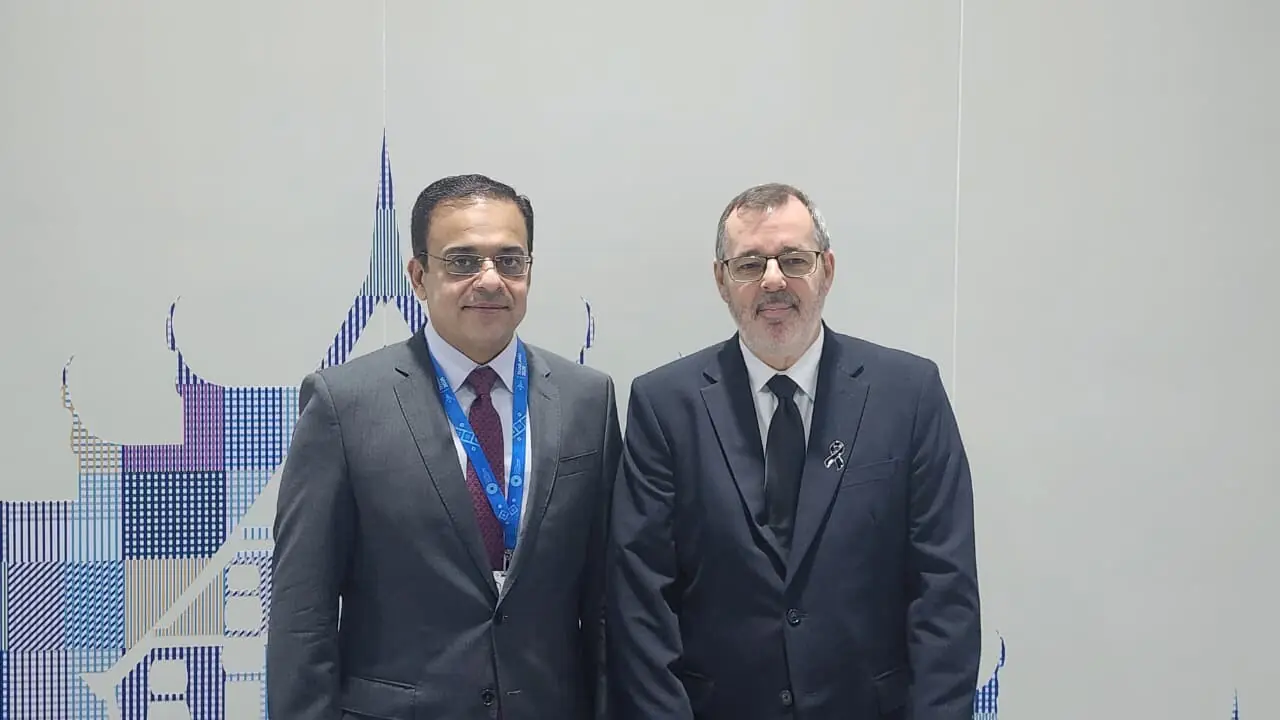
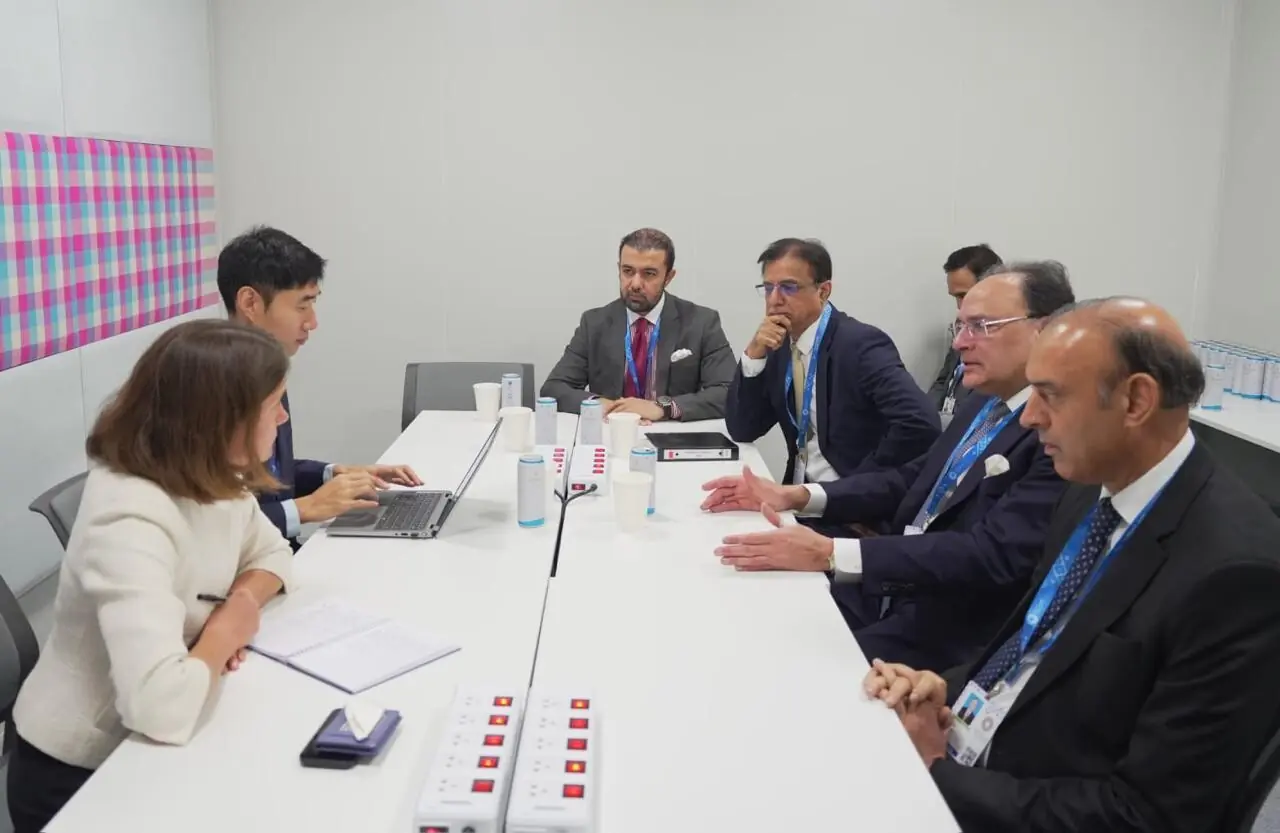
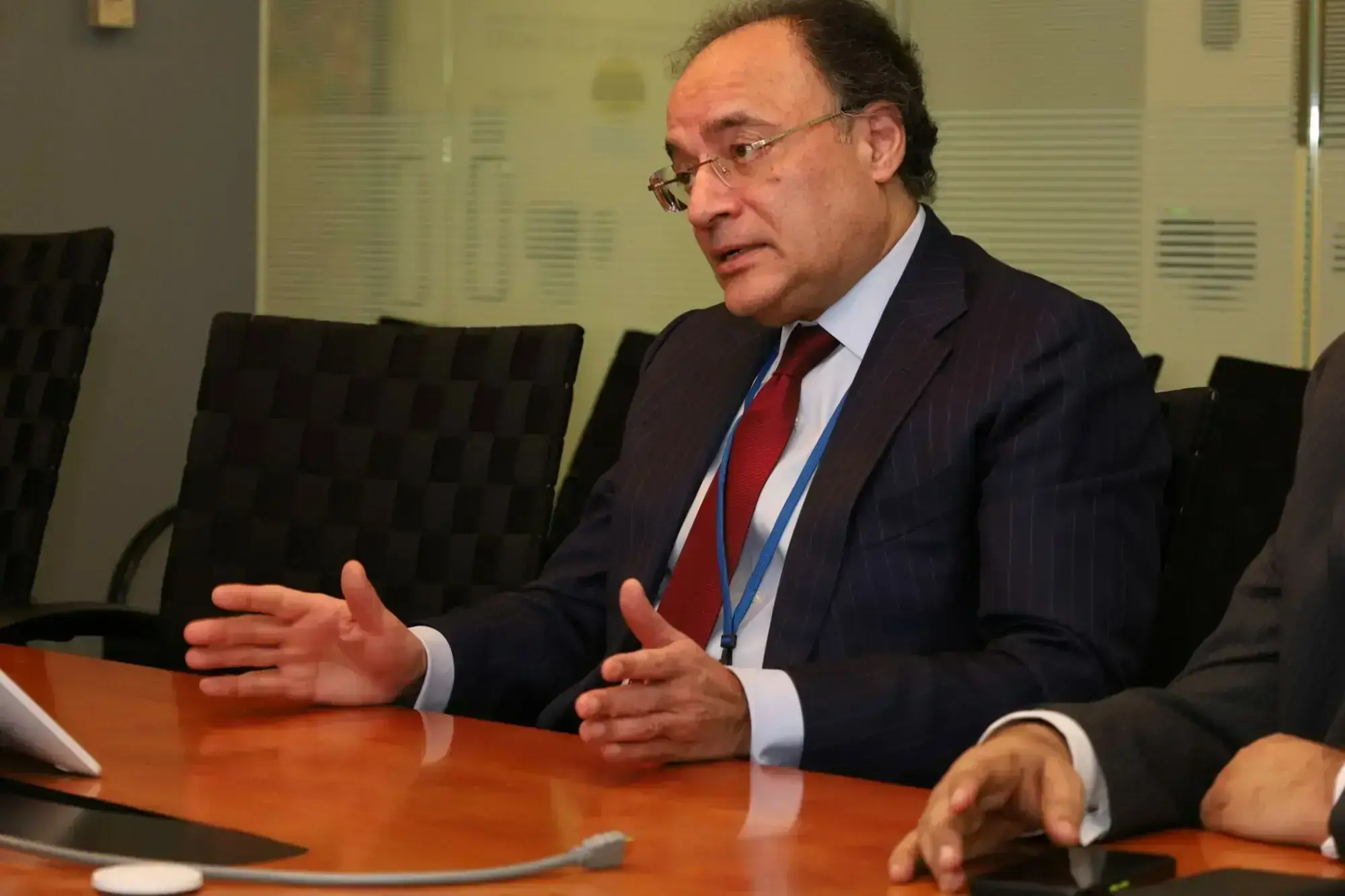
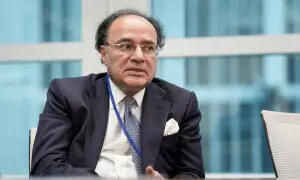
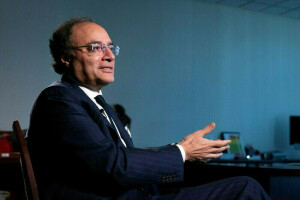
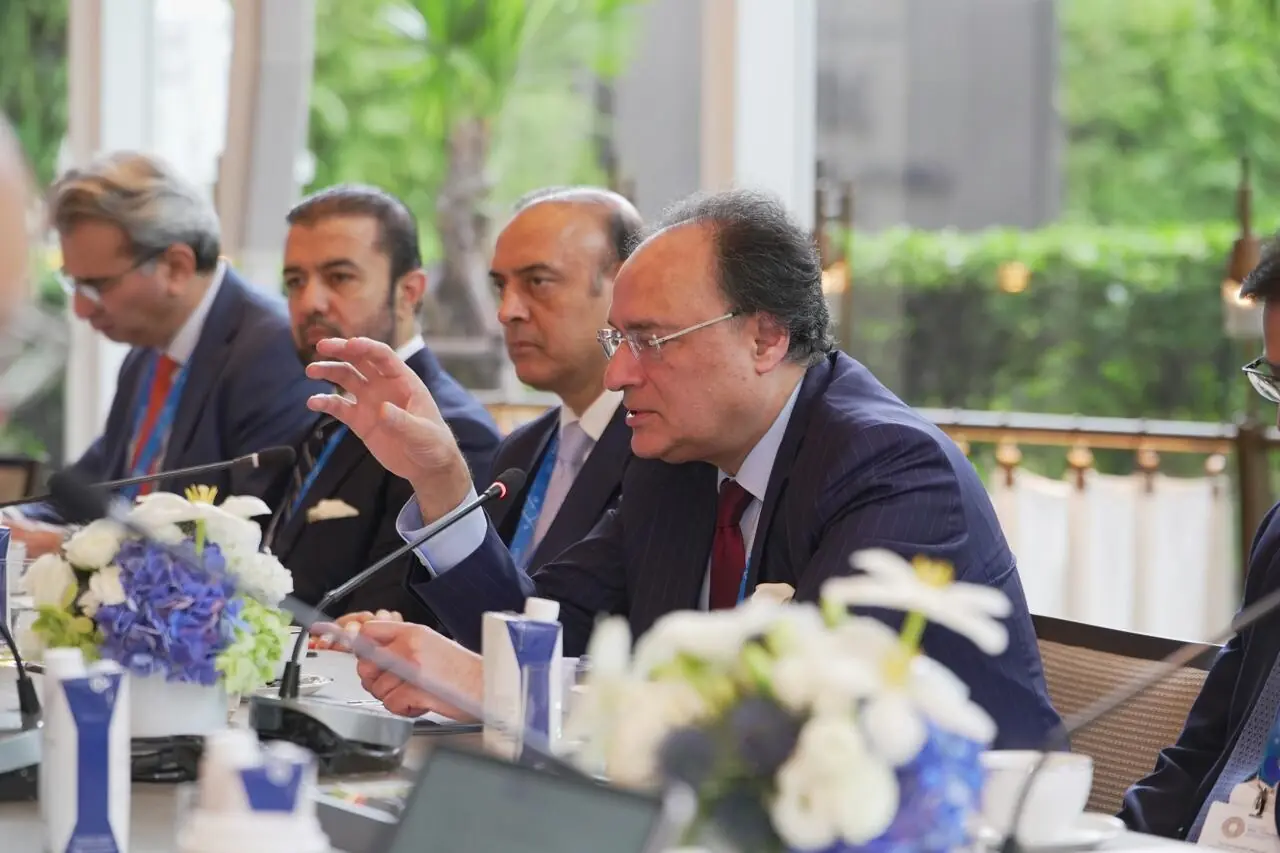
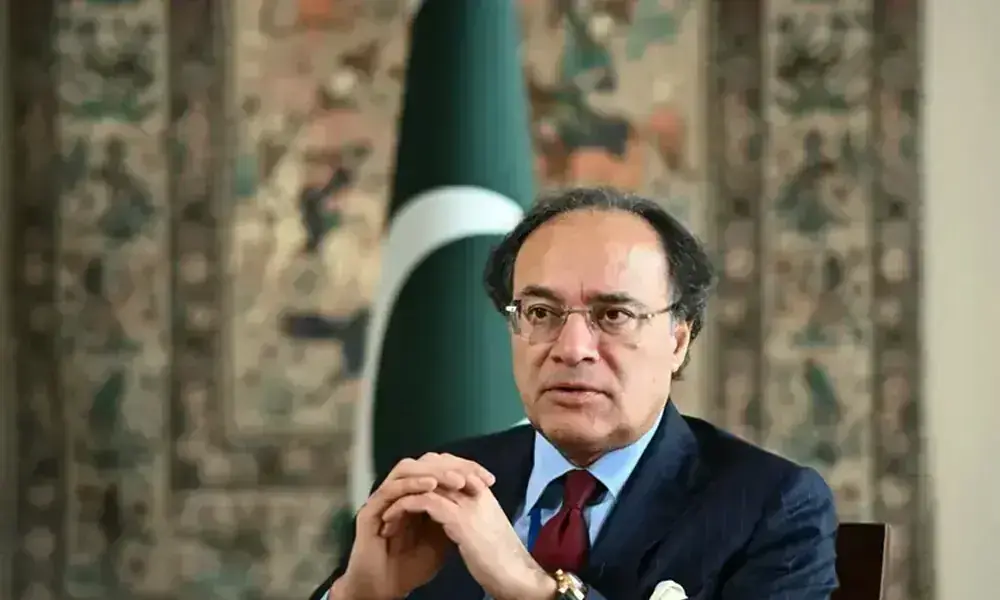
Finance Minister Muhammad Aurangzeb met representatives of Morgan Stanley Capital International (MSCI) and Deutsche Bank on the sidelines of the World Bank Group-IMF Annual Meetings 2026 in Bangkok to discuss Pakistan’s capital market reforms, financing options and investment prospects.

At the meeting with MSCI, attended by the governor of the State Bank of Pakistan (SBP), Aurangzeb highlighted improvements in Pakistan’s economic indicators and stock market participation. Discussions focused on MSCI’s classification criteria and foreign investors’ concerns regarding foreign exchange, prefunding, hedging and pooled investments.

The meeting also discussed repatriation arrangements through Special Convertible Rupee Accounts (SCRAs) and expanded access to Roshan Digital Accounts. Participants agreed on technical follow-up to address operational concerns and improve market accessibility.

In a separate meeting with Deutsche Bank representatives, Aurangzeb highlighted improvements in macroeconomic stability, foreign exchange reserves, sovereign ratings and investor confidence. He also outlined Pakistan’s return to international capital markets through private placements, Panda bonds and Eurobonds.

The minister said Pakistan was exploring ways to diversify its financing sources, including Sukuk, rupee-denominated bonds settled in dollars and the possible tokenisation of Eurobonds.

He appreciated Deutsche Bank’s longstanding presence in Pakistan and encouraged greater corporate engagement and support for foreign portfolio investment. Discussions also covered debt management, currency diversification and investor outreach in Europe and other international markets.

Aurangzeb welcomed Deutsche Bank’s interest in providing strategic advisory support for privatisation, including that of power distribution companies and major airports.

Business & Finance

Pakistan explores $1.5bn financing through World Bank guarantees

  • Discussions covered leveraging World Bank resources, combining budget support with guarantees and broadening investor participation
Published Updated

Pakistan is exploring a financing arrangement targeting around $1.5 billion through World Bank Group guarantees to secure funding at competitive rates, the Finance Division said on Friday, as the government seeks to diversify its external financing sources.

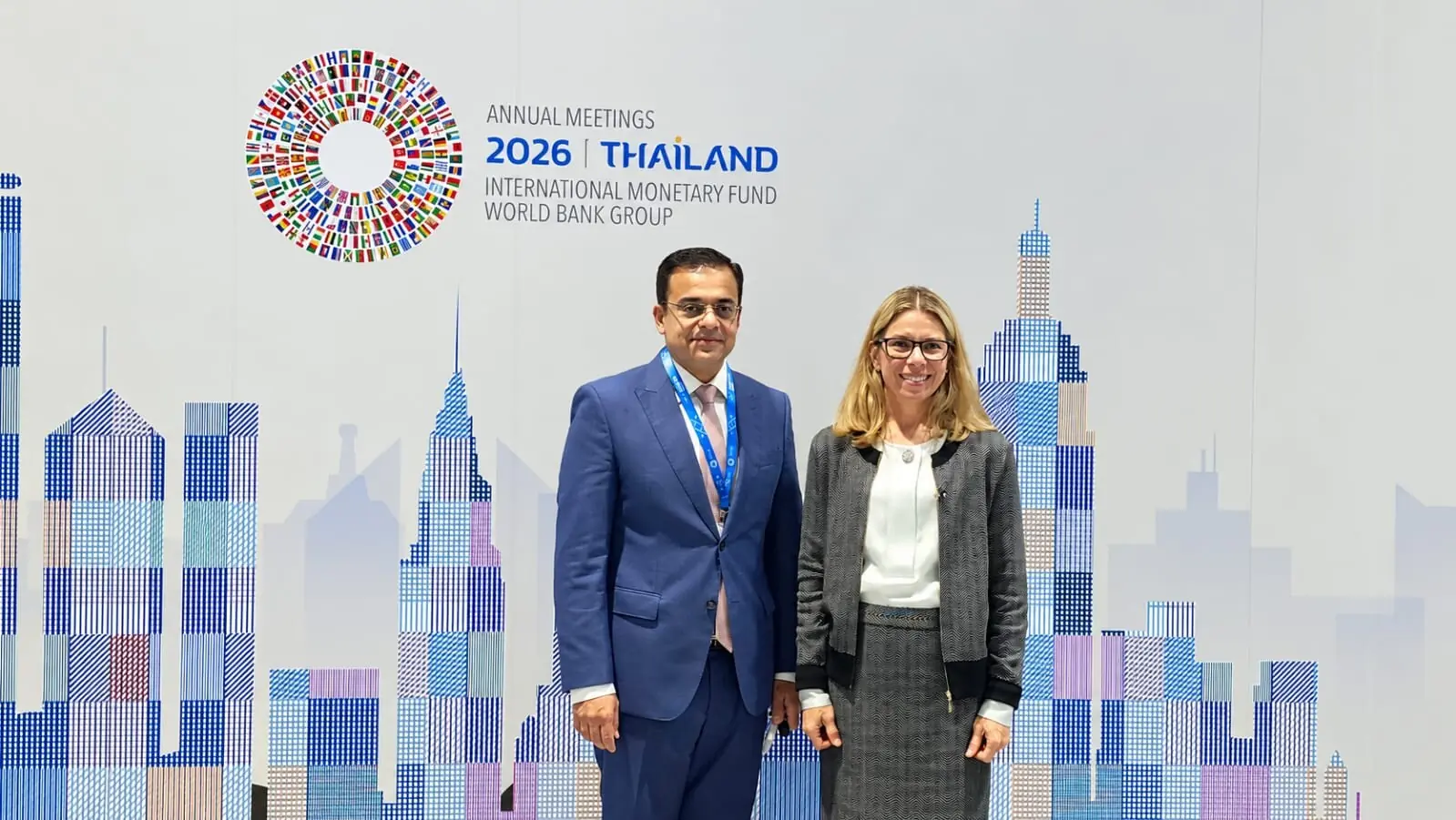
The development came during Finance Minister Muhammad Aurangzeb meeting with Alvarez & Marsal on the sidelines of the World Bank Group–IMF Annual Meetings 2026 in Bangkok, Thailand, to discuss long-term financing through World Bank Group guarantees.

“The finance minister welcomed the proposal of combining a World Bank policy-based guarantee with Multilateral Investment Guarantee Agency (MIGA) coverage to attract financing at competitive rates, with a potential financing target of approximately $1.5 billion, subject to the guarantee envelope and transaction structure,” read the statement.

Discussions covered leveraging World Bank resources, combining budget support with guarantees and broadening investor participation. Aurangzeb emphasised using an existing Development Policy Operation (DPO) to avoid delays associated with negotiating a new framework.

He supported further exploration of the proposal through the Finance Division, Economic Affairs Division and World Bank Group. The meeting also touched on ongoing advisory work on the privatisation of DISCOs.

In another engagement with Erin Browne, US Treasury under secretary for international affairs, Aurangzeb, accompanied by the governor of the State Bank of Pakistan (SBP), discussed Pakistan’s economic outlook, reforms and external financing.

The finance minister highlighted Pakistan’s $3 billion Eurobond issuance in September and plans to diversify financing through Sukuk, Panda bonds and other instruments.

He outlined progress under the IMF programme, tax reforms, three consecutive years of primary surpluses and foreign exchange reserves of approximately $21.6 billion.

Discussions covered the regional conflict’s implications for energy, inflation and food security, as well as measures to ensure supplies and prepare for winter demand. Aurangzeb emphasised export-led growth, stronger IT exports, improved goods competitiveness and debt sustainability to support progress towards a BB sovereign rating.

He also discussed privatisation, airport outsourcing, engagement with Boeing and potential US EXIM Bank financing, expressing deep appreciation for continued US support.

Moreover, the finance minister also met with a Lazard delegation to discuss mining investment, financing diversification and Pakistan’s sovereign credit outlook.

Aurangzeb welcomed proposals for blended finance, sustainability-linked loans, guaranteed Sukuk and debt swaps to broaden funding sources and improve financing terms. He highlighted Pakistan’s restored international capital market access and plans for further issuances, including Panda bonds.

He emphasised cost discipline, alignment with the medium-term financing strategy, and preparation to benefit from favourable market conditions. Both sides discussed sovereign rating advisory support, policy predictability and stronger economic resilience to support progress towards the BB rating category.

It was agreed that follow-up would be coordinated through the Debt Management Office and the State Bank of Pakistan, with Lazard proposing a short note outlining its recommendations.

Markets

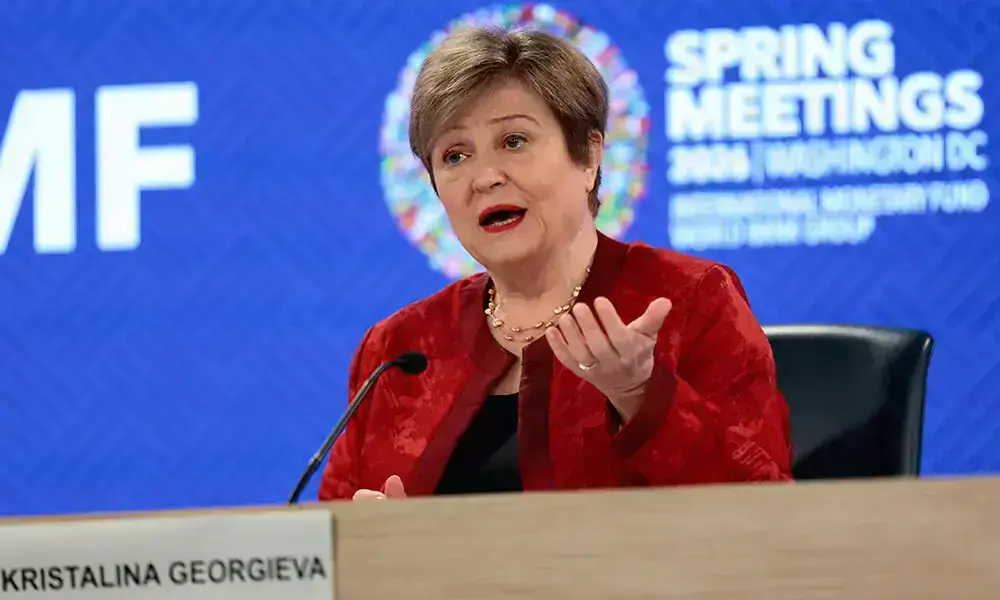
IMF chief Georgieva sounds alarm about AI, cyber risks; urges cooperation

  • 'The need of the hour is for urgent and practical international cooperation,' IMF Managing Director Kristalina Georgieva told the annual meetings
Published Updated
By

BANGKOK: The head of the International Monetary Fund on Friday appealed to global financial leaders to cooperate in the face of multiple risks facing the global economy, including high debt levels, rapid advancements in AI and exponentially increasing cyberattacks.

IMF’s Georgieva says US growth will not be enough to shrink debt

“The need of the hour is for urgent and practical international cooperation,” IMF Managing Director Kristalina Georgieva told the annual meetings of the IMF and World Bank in Bangkok.

Business & Finance

Pakistan seeks Fitch's assessment for BB sovereign rating

  • Aurangzeb discussed trade and investment engagement with the United States
Published Updated

Pakistan has sought Fitch Ratings’ assessment of the requirements for progressing towards the BB sovereign rating category.

The development came during a meeting between Finance Minister Muhammad Aurangzeb and the Governor of the State Bank of Pakistan (SBP) with Fitch Ratings on the sidelines of the World Bank Group–IMF Annual Meetings 2026 in Bangkok, Thailand, to discuss Pakistan’s economic performance and sovereign credit outlook, read a statement.

Aurangzeb discussed trade and investment engagement with the United States and sought Fitch’s assessment of the requirements for progressing towards the BB rating category.

Earlier, Aurangzeb met with Moody’s to discuss the country’s economic outlook and prospects for a further sovereign rating upgrade.

The finance minister highlighted restored international capital market access, fiscal consolidation and sustained primary surpluses.

He outlined inflation trends, monetary policy, exchange rate stability and the contained current account deficit. Discussions also covered reserve accumulation, reduced forward liabilities and stronger external buffers to withstand economic shocks.

The delegation highlighted improving debt sustainability, declining servicing costs, longer borrowing maturities and bilateral rollover assurances. Also reaffirmed commitment to completing the IMF programme, implementing structural reforms and promoting export-led growth.

In a separate meeting with Randeep Sarai, Canada’s Secretary of State for International Development,  the finance minister highlighted Pakistan’s economic stabilisation and urged progress on the investment protection agreement to encourage Canadian investment.

Both sides explored opportunities in agriculture, agrotechnology, livestock and food security, emphasising private-sector participation, read a statement.

Discussions covered the Barrick mining project, its security review, financing arrangements and potential contribution to exports and employment.

The finance minister highlighted opportunities in IT services, AI skills, virtual assets and diaspora engagement, including remittances from Canada.

The two sides exchanged views on Pakistan’s mediation efforts and the regional conflict’s effects on energy, fertiliser supplies and global food security. The Finance Minister thanked Canada for its flood assistance, identified tourism as another area of cooperation and invited Sarai to visit Pakistan.

Markets

Pakistan to chair World Bank, IMF Boards in 2027

  • Pakistan returns to the chairmanship for the first time since 1953
Published Updated

In a key development, Pakistan has been nominated to chair the Boards of Governors of the International Monetary Fund (IMF) and the World Bank Group (WBG) in 2027, the Ministry of Economic Affairs said on Friday, marking the country’s first such appointment since 1953.

“Federal Minister for Economic Affairs and Governor WBG for Pakistan, Ahad Khan Cheema, has been formally announced as the incoming chair of the Boards of Governors of the WBG and the IMF for 2027,” read a statement.

The announcement was made during the plenary session of the 2026 WBG–IMF Annual Meetings in Bangkok, the statement read.

“The forthcoming chairmanship provides Pakistan an important opportunity to contribute to global economic and development deliberations and facilitate constructive dialogue among member countries at a critical juncture for the multilateral system,” the ministry said.

The Boards of Governors of the WBG and the IMF are the highest decision-making bodies of these two major international financial institutions. They represent the member countries and determine the broad direction of the organisations.

Following the plenary, Ahad Cheema received a briefing from the WBG Corporate Secretariat on the responsibilities of the chairmanship.

He also met WBG Vice President and Corporate Secretary Aradhana Kumar-Capoor to discuss institutional support and coordination during Pakistan’s term.

The minister also met Governor of the Central Bank of Paraguay Carlos Carvallo Spalding.

He congratulated Spalding, the outgoing chair, on the successful completion of his tenure and commended his stewardship of the chairmanship. The two exchanged views on the responsibilities of the office and priorities for the year ahead, providing an opportunity to benefit from the outgoing chair’s experience and insights.

During the meetings, the minister highlighted Pakistan’s commitment to strengthening the voice of developing countries, promoting effective and predictable development financing, enhancing coordination among multilateral development institutions, and mobilising private capital to support sustainable and inclusive growth.

He reaffirmed Pakistan’s resolve to work closely with the WBG, IMF and member countries to foster constructive dialogue and contribute to a more responsive multilateral development and financial system.

Business & Finance

Finance minister interacts with World Bank President Ajay Banga in Bangkok

  • The occasion provided an opportunity for informal interaction
Published Updated

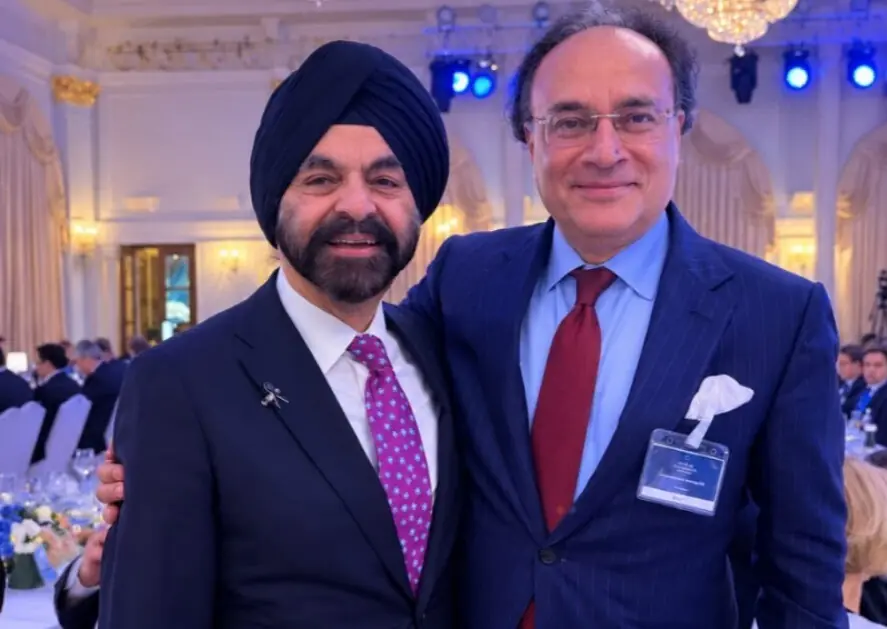
Finance Minister Muhammad Aurangzeb met World Bank President Ajay Banga during a dinner hosted by Thailand’s prime minister on the sidelines of the World Bank-IMF annual meetings in Bangkok.

“The occasion provided an opportunity for informal interaction alongside the ongoing high-level engagements at the annual meetings,” the finance ministry said on Friday.

Earlier, Banga said the development lender has set a goal of quintupling its critical minerals business ​in five years, and has identified 20 countries that it ‌can partner with on critical minerals development projects.

Banga revealed the new goal in prepared remarks to a plenary session.

“In critical minerals, we plan to quintuple our ​business in five years,” Banga said. “This week, we launched our ⁠first country compacts with MDB partners—to build local industries and keep ​more jobs and value at home.”

The World Bank’s new Metals and Minerals ​implementation plan is targeting $19 billion in critical minerals financing over the fiscal 2026-2030 period, compared with $3.6 billion in the fiscal 2021-2025 period.

On Thursday, Pakistan and the World Bank committed to accelerating implementation of the Country Partnership Framework 2026-2035, with a focus on project preparedness, concessional financing and investments in human development and climate resilience.

The development came during a meeting between Federal Minister for Economic Affairs and Pakistan’s Governor to the World Bank Group (WBG), Ahad Khan Cheema, and Anna Bjerde, Managing Director of Operations, World Bank.

The minister underscored the government’s resolve to translate the CPF’s objectives into tangible development outcomes, calling for enhanced technical and financial support, integrated multisectoral programs and digital monitoring systems to track progress and measure impact.

Markets

World Bank's Banga sets goal of quintupling critical minerals financing in five years

  • Banga revealed the new goal in prepared remarks to a plenary session at the International Monetary Fund and World Bank ​annual meetings in Bangkok
Published Updated
Photo: Reuters
Photo: Reuters
By

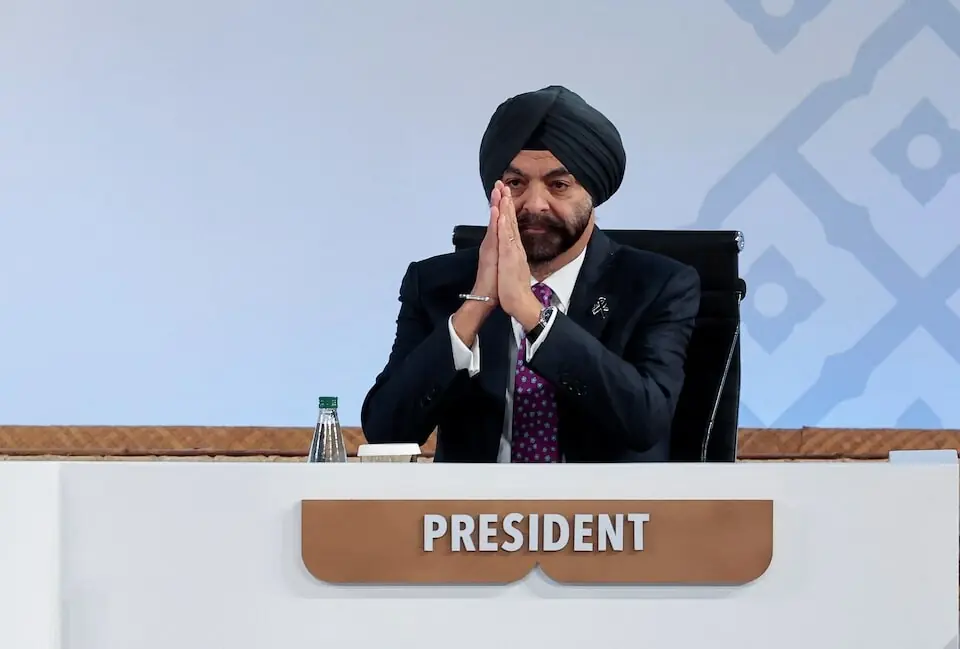
BANGKOK: World Bank President Ajay Banga on Friday said the development lender has set a goal of quintupling its critical minerals business ​in five years, and has identified 20 countries that it ‌can partner with on critical minerals development projects.

Banga revealed the new goal in prepared remarks to a plenary session at the International Monetary Fund and World Bank ​annual meetings in Bangkok.

“In critical minerals, we plan to quintuple our ​business in five years,” Banga said. “This week, we launched our ⁠first country compacts with MDB partners—to build local industries and keep ​more jobs and value at home.”

The World Bank’s new Metals and Minerals ​implementation plan is targeting $19 billion in critical minerals financing over the fiscal 2026-2030 period, compared with $3.6 billion in the fiscal 2021-2025 period.

Critical minerals development is an area where ​the United States, the World Bank’s largest shareholder, has called for the ​bank to devote more financing resources.

US Treasury Secretary Scott Bessent said earlier this week ‌that ⁠he wanted the bank to play a bigger role in enabling critical minerals mining and processing capacity through project de-risking and finance and investment in enabling infrastructure. He said this includes deep-sea mining projects.

Banga did not ​mention deep-sea mining, ​but the bank’s ⁠metals plan calls for a “precautionary approach” to the nascent sector, adding that any engagement and investments must be ​consistent with applicable bank policies.

Banga reviewed the World Bank’s ​overall increases ⁠in financing during the 2026 fiscal year that ended on June 30, including mobilizing $112 billion in private capital, a more than threefold increase from the ⁠2022 ​fiscal year, before he assumed his role.

The jobs challenge ahead

Alongside ​lending from the World Bank’s own balance sheet, this brought the group’s total financing to $230 billion ​for fiscal 2026, he said.

Markets

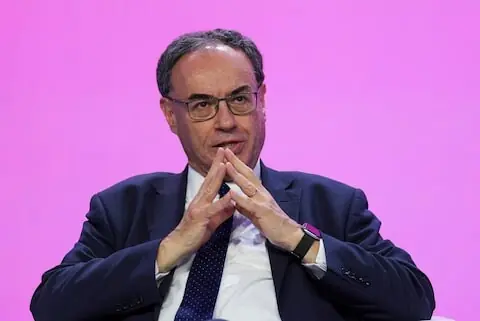
Bank of England's Bailey says second-round inflation pressures look subdued so far

  • The IIF meetings are ​taking place on ​the ⁠sidelines of the annual meetings of the ⁠IMF and ​World Bank
Published Updated
Photo: Reuters
Photo: Reuters
By

BANGKOK: Soaring energy prices so far appear to be having limited wider effects on British prices, but it is too soon to draw firm conclusions about how strong such second-round effects will be, Bank of England Governor Andrew Bailey said ​on Friday.

Most economists now expect the BoE to start raising rates next month, according to ​a Reuters poll, after keeping policy on hold since the outbreak of the US-Iran war ⁠in February.

Last month Bailey was part of a 6-3 majority on the BoE’s Monetary Policy Committee ​that voted to leave interest rates unchanged at 3.75%, but he said at the time that policy might ​have to tighten if the risk of second-round effects increased.

Speaking in Bangkok on Friday, Bailey said it appeared too soon to conclude much about second-round effects.

“I think it’s too early, but to the extent we’ve seen evidence, so far ​it’s been quite subdued,” he told a meeting of the Institute of International Finance, an industry association.

“When ​I go around the country, I do a lot of talking to businesses. There’s a very big focus on ‌cost-cutting and ⁠a very big focus on the difficulty of passing through (higher energy prices),” he added.

Bailey has previously argued that a sharp rise in mortgage rates and other borrowing costs in Britain since the start of the US-Iran war has given the BoE time to consider whether a rate rise is necessary.

But ​BoE policymakers have also ​said that waiting for ⁠very clear evidence of second-round effects – for example, in annual pay settlements in early 2027 – risks making them too late.

Bailey said Britain’s economy “is actually turning ​out to be more resilient than we expected it to be”, especially after August ​gross domestic ⁠product data on Thursday showed the strongest annual growth since October 2022.

Inflation of 3.1% in August remained “enormously frustrating”, Bailey said, blaming the overshoot of the central bank’s 2% target on conflicts in the Middle East. These conflicts, ⁠he ​added, were also the main factor driving sharp moves in British ​government bonds, which last week pushed some yields to their highest since 1998.

The IIF meetings are taking place on the sidelines of ​the annual meetings of the International Monetary Fund and World Bank.

Business & Finance

Pakistan, Islamic Development Bank advance $5.6bn cooperation in infrastructure development

  • Economic Affairs minister emphasises concessional resources must be deployed efficiently
Published Updated

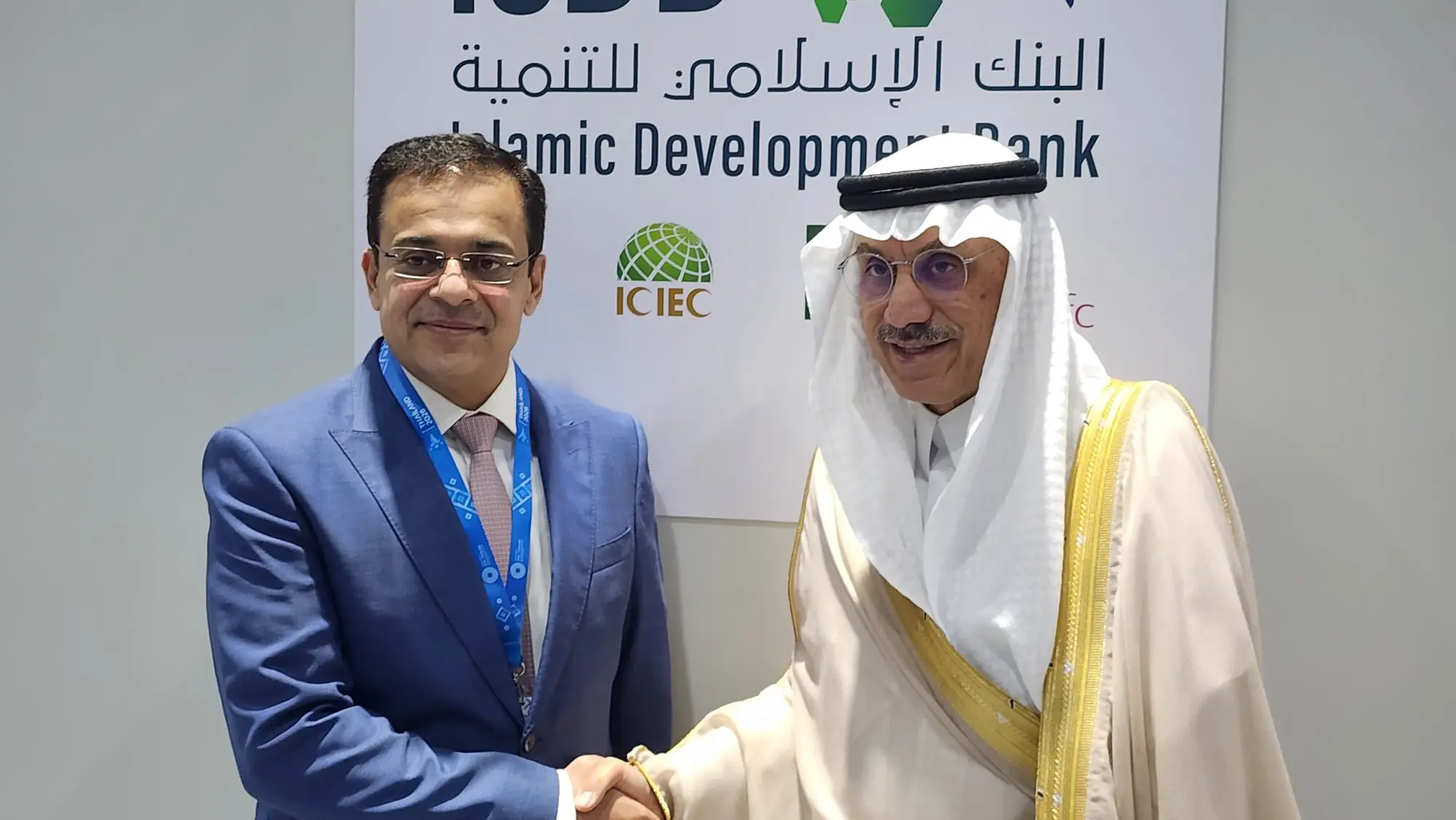
Pakistan and Islamic Development Bank (IsDB) advanced on Thursday $5.6 billion cooperation in infrastructure development, enhanced trade and polio eradication, an official statement read.

The development came as Federal Minister for Economic Affairs Ahad Khan Cheema met H.E. Dr. Muhammad Sulaiman Al Jasser, Chairman of the IsDB Group, on the sidelines of the 2026 World Bank Group–IMF Annual Meetings in Bangkok to discuss accelerating development cooperation under Pakistan’s Member Country Partnership Strategy (MCPS) 2026–2030.

The minister congratulated Dr Al Jasser on his re-election for a second five-year term and reaffirmed Pakistan’s confidence in his leadership.

“Welcoming the MCPS, which envisages approximately $5.6 billion in indicative IsDB Group financing, the minister emphasised the importance of translating the indicative financing envelope into a concrete pipeline of well-prepared projects, with clear timelines for financing approvals, disbursements and implementation,” the statement read.

The minister appreciated IsDB’s $475 million financing for the M-6 Sukkur–Hyderabad Motorway and welcomed its support for Pakistan’s polio eradication programme, including the recent approval of $100 million for Phase V.

Highlighting the strategic importance of the ML-1 Railway Upgradation Project for modernising Pakistan’s railway network, strengthening connectivity and enhancing economic competitiveness, he sought enhanced IsDB support for the project and urged close coordination with the Asian Development Bank and other co-financiers to advance project preparation and expedite implementation.

To further strengthen development cooperation and mobilise trade and private capital, the minister called for a coordinated, whole-of-Group approach involving IsDB, ITFC, ICD, ICIEC and the IsDB Institute to expand opportunities in export finance, SMEs, infrastructure, public-private partnerships and energy transition.

He also highlighted the mobilisation of over $1 billion in trade financing through ITFC during FY2025–26 and sought more competitive terms for future facilities, reflecting Pakistan’s improving macroeconomic and credit profile.

“H.E. Dr. Jasser commended the Government of Pakistan for its ambitious Economic Development vision and affirmed IsDB Group’s commitment to contribute to the attainment of Pakistan’s development priorities.

“Both sides reaffirmed the importance of a strong, results-oriented partnership focused on transformational investments, effective implementation and measurable development outcomes,” the statement said.

Pakistan, World Bank commit to accelerating partnership framework implementation

Pakistan and the World Bank have committed to accelerating implementation of the Country Partnership Framework 2026-2035, with a focus on project preparedness, concessional financing and investments in human development and climate resilience.

Federal Minister for Economic Affairs and Pakistan’s Governor to the World Bank Group (WBG), Ahad Khan Cheema, met Anna Bjerde, Managing Director of Operations, World Bank, on the sidelines of the 2026 World Bank Group–IMF Annual Meetings in Bangkok to discuss implementation of Pakistan’s Country Partnership Framework (CPF) 2026–2035.

The minister underscored the government’s resolve to translate the CPF’s objectives into tangible development outcomes, calling for enhanced technical and financial support, integrated multisectoral programs and digital monitoring systems to track progress and measure impact.

He emphasised the importance of stronger project preparedness through dedicated Project Readiness Facilities (PRFs), predictable financing and enhanced implementation support to expedite project approvals and execution.

The minister emphasised that concessional resources must be deployed efficiently to maximise development impact while safeguarding debt sustainability.

Discussions also covered WBG’s support for sectors critical to human development, climate resilience, water and sanitation and economic transformation, with the minister highlighting the importance of investments in sectors with high job-creation potential to expand employment opportunities and promote inclusive growth.

Cheema also discussed enhanced support for the ML-1 Railway Upgradation Project and the vision of an Economic Railway Corridor along the approximately 1,800-km railway line to strengthen connectivity and unlock economic opportunities, alongside the proposed Minerals Compact to advance Pakistan’s minerals sector.

Bjerde reaffirmed the World Bank’s commitment to supporting Pakistan’s priority sectors and working with the government to strengthen operational efficiency and accelerate project implementation.

Both sides agreed to deepen their cooperation to advance shared priorities under the CPF and ensure that development financing translates into timely, sustainable and measurable benefits for the people of Pakistan.

Technology

Pakistan seeks Alibaba cooperation for cashless economy, SME exports

  • Discussions covered digital payments, a cashless economy and transparent delivery of social protection payments and targeted subsidies
Published Updated

Finance Minister Muhammad Aurangzeb met Alibaba International Digital Commerce leadership in Bangkok to discuss cooperation on digital payments, e-commerce and technology, including proposals to rationalise e-commerce taxation and accelerate Pakistan’s single window platform, the finance ministry said on Wednesday.

Aurangzeb met with the leadership of Alibaba International Digital Commerce (AIDC) on the sidelines of the World Bank Group–IMF Annual Meetings 2026 in Bangkok, Thailand, to review cooperation on Pakistan’s digital economy, read a statement.

Discussions covered digital payments, a cashless economy and transparent delivery of social protection payments and targeted subsidies.

The finance minister appreciated Alibaba’s support for SMEs, local brands and exports through Daraz and Alibaba.com. He also invited proposals to rationalise e-commerce taxation, balancing fairness with broader tax participation.

Both sides discussed accelerating the Pakistan Single Window e-commerce platform and improving the tracking of cross-border payments and export proceeds. Cooperation on cloud infrastructure, artificial intelligence (AI) and tax administration was also reviewed, with emphasis on integrated data systems, cybersecurity and institutional capacity.

The two sides also explored modernising Pakistan Post’s sorting systems and expanding agricultural exports to China through Alibaba’s retail network.

In a separate meeting, Aurangzeb met with Engineer Adeeb Y. Al Aama, Chief Executive Officer of the International Islamic Trade Finance Corporation (ITFC), where he highlighted Pakistan’s economic progress, stronger reserves and renewed access to international capital markets.

Both sides reviewed the remaining financing tranche and discussed aligning borrowing costs with improved market conditions. They agreed that technical teams would explore pricing and financing-volume adjustments to find a mutually acceptable solution.

The finance minister further outlined efforts to replace costly, short-term borrowing with longer-maturity financing without increasing external debt.

Discussions also covered digital product passports to support textile exports to the European Union and single-window connectivity to facilitate ASEAN trade. Both sides reaffirmed their long-term partnership and commitment to strengthening Pakistan’s export competitiveness.

In an engagement with UN Deputy Secretary-General Amina J. Mohammed, the finance minister discussed strengthening the Borrowers’ Forum through peer learning, continuity in governance and an effective virtual secretariat.

He emphasised a stronger Global South voice and more responsive international financial institutions.

Both sides stressed adequate financing for the Sustainable Development Goals, poverty reduction, social protection and decent jobs. Discussions also covered climate financing gaps, simpler access to funds and stronger capacity to prepare bankable projects.

The finance minister further highlighted local currency financing to reduce exchange rate risks, alongside accountable domestic policymaking. He thanked Amina for appreciating Pakistan’s mediation efforts in the recent US–Iran crisis.

Markets

Aurangzeb meets Moody's, seeks stronger sovereign rating

  • The finance minister outlined efforts to replace costly, short-term debt with longer-maturity financing without increasing the external debt stock
Published Updated

Finance Minister Muhammad Aurangzeb met with Moody’s on the sidelines of the IMF-World Bank meetings in Bangkok to discuss the country’s economic outlook and prospects for a further sovereign rating upgrade, the finance ministry said on Wednesday.

According to a statement, discussions covered the recent rating upgrade, improved fiscal and external indicators, and renewed access to international capital markets. The finance minister outlined efforts to replace costly, short-term debt with longer-maturity financing without increasing the external debt stock.

The delegation highlighted rising foreign exchange reserves, a contained current account deficit and reduced State Bank forward liabilities. Aurangzeb reaffirmed commitment to structural reforms and sustainable, export-led growth beyond the IMF programme.

He also sought Moody’s views on achieving a stronger rating and striking the right balance between political risk and economic performance in its assessments.

Earlier this month, Aurangzeb said that Pakistan was expected to be upgraded to a ‘B+’ sovereign credit rating by the first quarter (Jul–Sep) of the next fiscal year 2027-28 by global agencies.

Pakistan has been rated at ‘B’ with a stable outlook since July 2026 by S&P Global Ratings, while Moody’s raised Pakistan’s credit rating to ‘B3’ from ‘Caa1’ with a stable outlook in August 2026.

In a separate meeting with Dr Abdulhamid Alkhalifa, President of the OPEC Fund for International Development, the finance minister highlighted Pakistan’s economic stabilisation, progress under the IMF programme and renewed access to international capital markets.

He appreciated the Fund’s willingness to expand trade and project financing support for Pakistan.

Discussions covered M6 motorway financing, including the approved first tranche, the pending loan agreement and subsequent tranches. The discussions also identified the ML-1 railway modernisation and power transmission infrastructure as key priorities.

Both sides emphasised faster approvals and stronger coordination to ensure timely project delivery, while also discussing regional peace and stability.

The finance minister thanked Dr Alkhalifa for the invitation to visit the Fund, with the possibility of signing the project agreement during the visit.

Markets

Global trade fragmentation creates opportunities for Pakistan, says Aurangzeb

  • Engagement with regional blocs like ASEAN and GCC
Published Updated

Pakistan sees opportunities to expand trade with regional economic blocs amid growing fragmentation in global trade, Finance Minister Muhammad Aurangzeb said, as the country seeks to diversify its economic partnerships and strengthen trade resilience against geopolitical shocks.

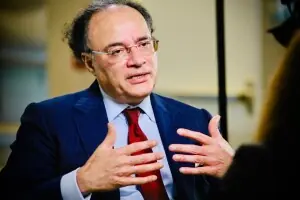
“We are sitting here in Thailand. I’m going to be meeting the Thai finance minister,” Aurangzeb said in an interview with Channel News Asia, adding that recent global developments offered Pakistan an opportunity to explore markets beyond its established trading partners.

“At times you have to, as they say, there’s opportunity in adversity,” he said.

“So right now we have fantastic trade relationships. Our largest trading partner is actually the US, followed by the EU. But it now allows us to explore other regional blocks where there is huge potential both ways.”

Aurangzeb said Pakistan was pursuing economic engagement with the Gulf Cooperation Council (GCC), Central Asian republics and the Association of Southeast Asian Nations (ASEAN), where he sees significant potential for trade in both directions.

He cited Pakistan’s engagement with Malaysia and Indonesia, noting that Prime Minister Shehbaz Sharif had visited Malaysia several times, while Malaysian and Indonesian leaders had also visited Pakistan.

He said Pakistan was seeking to move its relationships with international partners from aid towards trade and investment.

The strategy also extends to China and the United States, with Aurangzeb describing Pakistan’s approach to the two countries as an “and-and” discussion. “I think from our perspective, we are going to work with both very closely.”

China remains a longstanding strategic partner, he said, adding that the first phase of the China-Pakistan Economic Corridor (CPEC) focused on infrastructure, including roads, ports and power projects.

The second phase is focused on monetising that infrastructure through business-to-business cooperation and joint ventures, some of which, he said, were already producing goods for export.

The minister also highlighted the importance of Gulf countries to Pakistan’s economy, particularly because of trade and remittance flows. “We hit $41.6 billion in remittances last year. We expect that number to touch $44 billion this year,” he said.

His remarks come as Pakistan seeks to broaden its economic partnerships amid geopolitical uncertainty and changes in global trade patterns.

Markets

Aurangzeb meets IMF chief, briefs investors on Pakistan’s economy

  • Finance minister outlined efforts to diversify international financing and replace costly borrowing without increasing the external debt stock
Published Updated

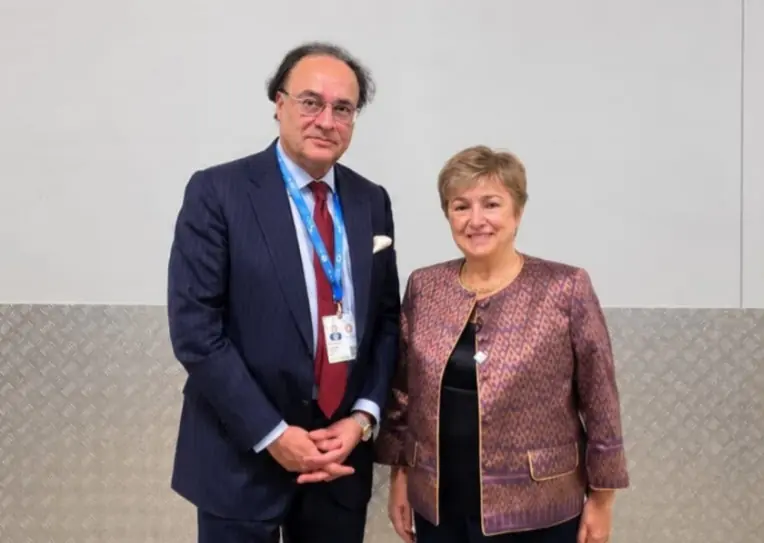
Finance Minister Muhammad Aurangzeb met International Monetary Fund (IMF) Managing Director Kristalina Georgieva and briefed international investors on Pakistan’s economic stabilisation, fiscal consolidation and efforts to diversify external financing on the sidelines of the IMF-World Bank Annual Meetings 2026 in Bangkok.

Aurangzeb also participated in the JP Morgan Investment Seminar on “Pakistan: The Road to Resilience in a Turbulent Global Economy Landscape”.

During the seminar, the finance minister highlighted progress in macroeconomic stabilisation, fiscal consolidation, revenue mobilization and sustained primary surpluses. Discussions covered strong remittances, improved foreign exchange reserves, a contained current account deficit and external debt repayments.

He outlined efforts to diversify international financing and replace costly borrowing without increasing the external debt stock. He reaffirmed commitment to the IMF programme and continued structural reforms, alongside prudent monetary policy to contain inflation.

Aurangzeb emphasised targeted support for vulnerable households, careful energy procurement and sustainable, export-led growth. Discussions also addressed federal–provincial fiscal coordination and stronger trade and investment partnerships.

Markets

Pakistan eyes US energy imports, Boeing aircraft financing

  • Aurangzeb reviewed progress towards a trade framework agreement and energy diversification
Published Updated
Image: AI generated
Image: AI generated

Pakistan has discussed increasing energy imports from the United States to diversify supplies and maintain fuel availability amid rising tensions in the Middle East, alongside financing for Boeing aircraft acquisitions

The development came during a meeting between Finance Minister Muhammad Aurangzeb and Ambassador Yon of the US State Department on the sidelines of the World Bank Group–IMF Annual Meetings 2026 in Bangkok, Thailand.

According to a statement released on Wednesday, Aurangzeb reviewed progress towards a trade framework agreement and energy diversification through increased imports from the United States. The finance minister also outlined measures to maintain fuel supplies and support vulnerable consumers.

Pakistan expects over 4% growth, diversify financing with Panda bonds, Sukuk: Aurangzeb

Discussions covered AML/CFT arrangements, FATF follow-up and investment financing through the US Development Finance Corporation (DFC) and EXIM Bank.

The finance minister highlighted Reko Diq, cooperation on critical minerals, project security and opportunities to mobilise private investment.

The meeting also discussed Boeing aircraft acquisition and financing, aviation clearances, digital asset regulation and potential remittances and Eurobond tokenisation applications.

In a separate meeting, the finance minister met with S&P Global Ratings to discuss Pakistan’s economic progress and sovereign credit outlook.

The finance minister highlighted the successful September bond issuance, strong investor participation and progress under the IMF programme. He briefed the agency on improved tax collections, reserve accumulation and reduced swap and forward liabilities.

He reaffirmed commitment to structural reforms, fiscal discipline and sustainable export-led growth. He also outlined Pakistan’s ambition to enter the double-B rating category through sustained economic improvements.

Discussions covered agricultural income taxation, energy and food security, targeted relief and climate resilience. Aurangzeb noted S&P’s emphasis on policy continuity, reform implementation, a lower interest burden and stronger external buffers as key rating considerations.

Markets

Pakistan expects over 4% growth, diversify financing with Panda bonds, Sukuk: Aurangzeb

  • Finance minister outlined measures to maintain energy supplies and provide targeted relief to vulnerable groups
Published Updated

Finance Minister Muhammad Aurangzeb told international investors that Pakistan expects economic growth of 4% or higher this fiscal year, while highlighting fiscal improvements and plans to diversify the country’s financing sources.

Aurangzeb participated in the Citi Macro Forum Session and briefed international investors on Pakistan’s economic outlook and reform priorities.

The finance minister highlighted continued macroeconomic stabilisation, three consecutive years of primary surpluses, a fiscal deficit at a 22-year low and strengthened foreign exchange buffers, while expressing optimism about growth reaching or exceeding 4% during the current fiscal year.

He outlined Pakistan’s capital market strategy, including further Panda bond issuances, Sukuk and a rupee-denominated, dollar-settled international bond, emphasising diversification of funding sources, lower borrowing costs and longer debt maturities.

IMF sees Pakistan’s inflation rising to 9.9% in 2027 as growth slows

He also discussed progress under the IMF programme, tax-base expansion, stronger enforcement and provincial coordination to sustain fiscal discipline.

Addressing the impact of the Middle East conflict, the finance minister outlined measures to maintain energy supplies and provide targeted relief to vulnerable groups within existing budgetary allocations. Discussions also covered climate resilience, disaster preparedness and effective utilisation of development financing.

He reaffirmed Pakistan’s commitment to sustained reforms and a transition from aid towards trade and investment in its partnerships with other countries.

In a separate meeting, Aurangzeb briefed investors on Pakistan’s economic progress at Standard Chartered Bank’s Sovereign Investor Roundtable.

He stressed sustained structural reforms, fiscal discipline, stronger tax enforcement and investment- and export-led growth beyond the IMF programme. Discussions covered stronger reserves, inflation and the external outlook, energy security, targeted relief and climate financing.

The finance minister reaffirmed the government’s commitment to further strengthening Pakistan’s sovereign credit standing.

Business & Finance

FM Aurangzeb vows continued reforms under IMF programme

  • Aurangzeb outlines debt management measures to lower financing costs, extend maturities and reduce rollover risks
Published Updated

Finance Minister Muhammad Aurangzeb reaffirmed on Tuesday Pakistan’s ownership of taxation, energy, state-owned enterprise (SOE) and pension reforms under the IMF-supported programme, stressing that sustained implementation was essential to achieve lasting economic growth and public welfare.

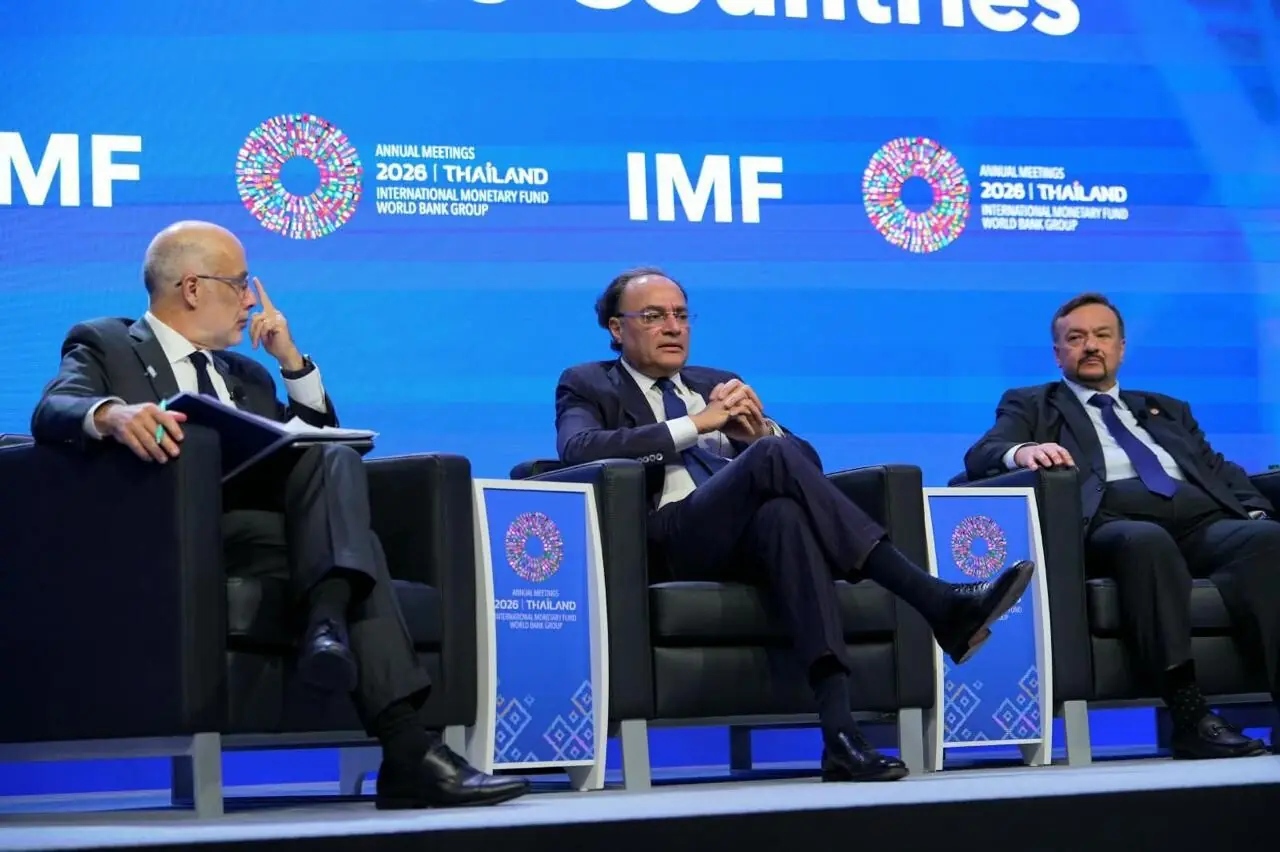
The development came as the minister highlighted debt management and fiscal reforms at a panel on Mitigating Sovereign Risks in Market-Access Countries on the sidelines of the World Bank Group–IMF Annual Meetings 2026 in Bangkok, Thailand, according to a Finance Division statement.

“The Finance minister reaffirmed national ownership of taxation, energy, state-owned enterprises and pension reforms under the IMF-supported programme. He stressed the sustained reform implementation to translate macroeconomic stability into sustainable growth and public welfare,” the statement read.

The minister further highlighted Pakistan’s progress in fiscal consolidation, reducing inflation and rebuilding foreign exchange reserves.

“He emphasised revenue mobilisation, tax administration reforms, expenditure restraint and privatisation to strengthen economic resilience,” the statement read.

Aurangzeb outlined debt management measures to lower financing costs, extend maturities and reduce rollover risks. He noted that renewed market access supports a strategy to improve the external debt profile without increasing the overall size.

Finance minister discusses Mashreq Bank’s expansion

Federal minister Aurangzeb also met with Mashreq Bank’s senior management to discuss its expanding presence in Pakistan, a separate Finance Division statement said.

The minister highlighted macroeconomic gains and renewed market access, reaffirming support for Mashreq’s expansion and sustainable growth. He reviewed digital banking growth and opportunities to advance financial inclusion through technology and microfinance.

“Discussion also covered expanding offshore service operations, drawing on Pakistan’s skilled workforce. The meeting explored digital accounts for overseas Pakistanis, foreign-currency products and wider outreach across the GCC.” the statement read.

He also discussed collaboration on tokenisation, blockchain, and digital assets within Pakistan’s evolving regulatory framework. He reviewed potential support for Sukuk, further Panda bond issuance and innovative financing under Pakistan’s medium-term debt strategy.

Business & Finance

G-24 Meeting: Pakistan calls for reform of international financial architecture

  • Finance minister outlined three priorities for the G-24
Published Updated

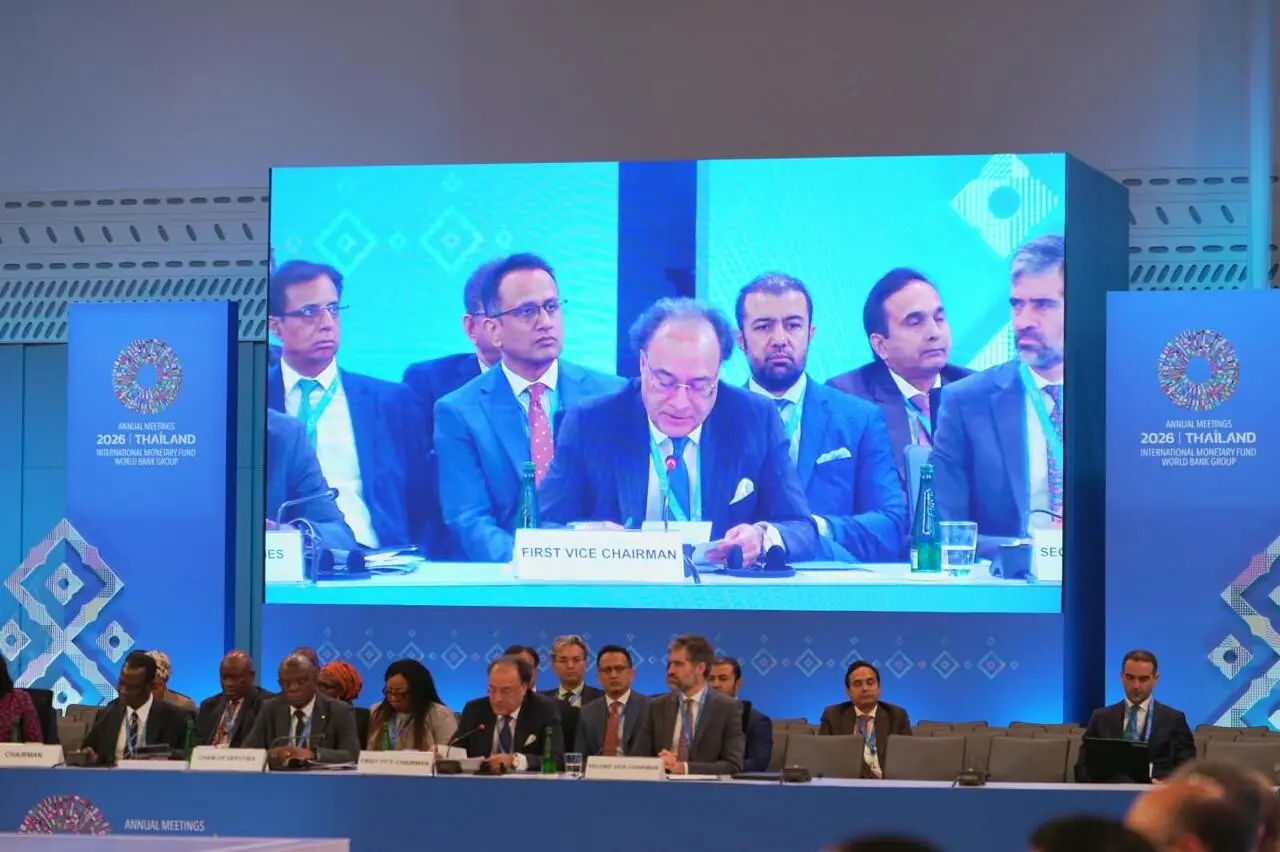
Finance Minister Muhammad Aurangzeb, speaking in his capacity as First Vice-Chair of the G-24 at the Finance Ministers and Central Bank Governors’ Meeting, held on the sidelines of the World Bank Group–IMF Annual Meetings 2026 in Bangkok, Thailand, highlighted the challenges facing developing economies, including fragmentation disrupting trade and investment, climate shocks eroding development gains, restrictive financial conditions and widening financing gaps.

He reaffirmed Pakistan’s commitment, as incoming Chair of the G-24, to strengthening the group’s collective influence and advancing the interests of developing economies.

He stressed that reform of the international financial architecture must keep pace with these challenges and called for timely support for countries undertaking difficult reforms while confronting external shocks beyond their control.

The finance minister outlined three priorities for the G-24 focused on restoring development as the central objective of the international financial system, making the Bretton Woods institutions more representative and responsive, and building a development-oriented international financial architecture.

Appreciating Nigeria’s leadership, he emphasised cooperation among members and institutional partners to advance a more representative, resilient and development-centred international economic order.

Pakistan plans to issue more Panda bonds, eyes Japanese market for borrowing: report

Meanwhile, speaking at the World Bank’s roundtable on “Transforming Demographic Transition into Human Capital Gains and Job Creation,” Aurangzeb stressed the urgency of addressing Pakistan’s rapid population growth and its implications for health, education and employment.

Drawing on experiences from Indonesia, Bangladesh and Iran, he highlighted women’s education, workforce participation and engagement with religious leaders on birth spacing as key priorities.

He outlined the establishment of a National Population Council led by the prime minister and emphasised coordinated federal and provincial action, sustained political commitment and measurable outcomes to bring fragmented initiatives into a comprehensive framework and translate demographic transition into stronger human capital and employment opportunities.

The finance minister emphasised that realising Pakistan’s demographic dividend requires a skilled workforce and private-sector-led growth that creates jobs.

He highlighted freelancing, IT-enabled services and digital skills as opportunities to boost youth earnings and exports, stressing the need for an integrated approach to population, health, education and employment.

In a separate engagement with Sultan Abdulrahman Al-Marshad, Chief Executive Officer of the Saudi Fund for Development (SFD), the finance minister expressed condolences over the loss of life in recent incidents in Saudi Arabia and thanked the Kingdom for its longstanding support to Pakistan.

He highlighted Pakistan’s improving macroeconomic position and renewed access to international capital markets. Discussions focused on expanding trade and investment, strengthening private-sector engagement, following up on the bilateral investment protection agreement and exploring opportunities for refinery upgrades.

Both sides noted satisfactory progress on SFD-supported projects and emphasised the importance of developing a fresh pipeline of projects. The SFD reaffirmed its continued support to Pakistan within its mandate.

Aurangzeb also held discussions with Imad Fakhoury, IFC Regional Vice President for the Middle East and Central Asia, focused on strengthening IFC support for private-sector-led growth and jobs, and translating macroeconomic stability into sustainable growth.

The meeting reviewed IFC’s expanding portfolio, small-business financing, entrepreneurship, capital markets, and green and digital bonds. The finance minister reaffirmed commitment to Reko Diq and appreciated IFC’s financing leadership.

Discussions also covered mining infrastructure and value addition, affordable housing and developer financing, and agricultural development through improved storage, cold chains and electronic warehouse receipt financing. Both sides explored greater private-sector participation in livestock development and support for pharmaceutical exports through stronger regulatory standards and investment.

Infrastructure cooperation focused on public-private partnerships in water services, advanced electricity metering and financing mechanisms for provincial projects.

Business & Finance Print edition: 2026-10-13

IMF-World Bank meetings: Policymakers take on energy shock, rising debt

Published Updated
Photo: AFP
Photo: AFP
By

BANGKOK: Finance ministers and central bankers meet in Bangkok this week for the annual gatherings of the International Monetary Fund and World Bank, with the global economy buffeted between the US-Iran war’s energy shock, rising debt pressures and the AI boom.

The meetings run from Monday through Saturday in the Thai capital, and will see policymakers tackle some stark choices, with the IMF calling on governments to rein in spending even as vulnerable citizens’ needs may be growing in the face of surging inflation and climate risks.

The week will see a combination of high-level closed-door meetings, public events and policy announcements from the world’s top economic officials.

On Tuesday, the IMF will unveil its global economic forecast, along with detailed regional outlooks through the week, as policymakers set about tackling the challenges darkening the economic horizon.

In Bangkok, IMF chief Kristalina Georgieva highlighted how the world economy was being pulled in opposite directions by the negative energy supply shock caused by the US war on Iran and the positive demand shock of the artificial intelligence technology boom.

“That shift into higher gear (from AI) is what is keeping the world economy growing at three percent,” she told an event on the first day of the meetings, adding the growth was “despite the fact we are being dragged down by the energy supply shock.”

At a press briefing, World Bank President Ajay Banga told AFP his message to developing countries on AI was to focus on building “small AI” applications, rather than trying to compete on capital-intensive models.

“Don’t try and compete with America and China on frontier models and large data centres,” he said. “You don’t have the computing power. You don’t have the electricity. You don’t have the people.”

Banga said AI-powered applications could run on less powerful smartphones and be used in healthcare, education, agriculture and other fields that are development priorities for low-income countries.

‘Perfect storm’

Chief among concerns in Bangkok will be the economic fallout of the US war on Iran, which has seen energy prices skyrocket as Tehran’s retaliatory action has targeted Washington’s Gulf allies and curtailed global oil and gas supplies.

The IMF has warned that the effects of the shock have been unequal, with developing countries reliant on imported energy hit the hardest.

Despite the crisis, the Fund has called on countries to curb spending on subsidies and instead build their fiscal buffers after years of shocks since the pandemic.

Critics say that approach is just not feasible for low-income countries, and that multilateral lenders need to do more.

“The poorer member states of the IMF and World Bank are in distress from spillovers of the Iran war, rising interest rates in the West, and a climate crisis exacerbated by El Nino,” said Kevin P. Gallagher, director of Boston University’s Global Development Policy Center.

“The IMF and World Bank are not meeting this moment. They need an ambitious response that provides short-term emergency liquidity alongside longer term financing to make their economic growth paths less vulnerable to these shocks.”

And the needs are great, according to the United Nations Development Programme (UNDP).

The combined shocks “could leave millions more in poverty as developing countries struggle to sustain support for households,” the UNDP warned in a report on Sunday.

“We are witnessing a perfect storm that could throw tens if not hundreds of millions of people back into poverty,” said UNDP Administrator Alexander De Croo.

In the developing world, he added, governments are being forced to make the “impossible” choice between cutting support for their poorest citizens or risking their entire development agenda.

Advanced economies in Europe and the United States have weathered the storm from the rising energy prices better, but have not been immune to surging inflation fuelled by those price increases, which have begun to bleed into other goods.

That inflation has seen central banks around the world raise interest rates in an effort to curb rising prices, tapping the brakes on economic activity.

Still, advanced economies have seen a boom in investment in artificial intelligence technology drive stock markets to new highs and bolster economic growth.

The week will also see several key meetings on the sidelines, including of G20 finance ministers, where spiking bond yields will be high on the agenda.

A notable absence at that meeting will be US Treasury Secretary Scott Bessent, who will skip due to “domestic engagements”, a department official said on Friday.

Business & Finance

Aurangzeb assumes chairmanship of Borrowers’ Platform

  • Finance minister emphasised that the platform would promote mutual learning and technical cooperation
Published Updated

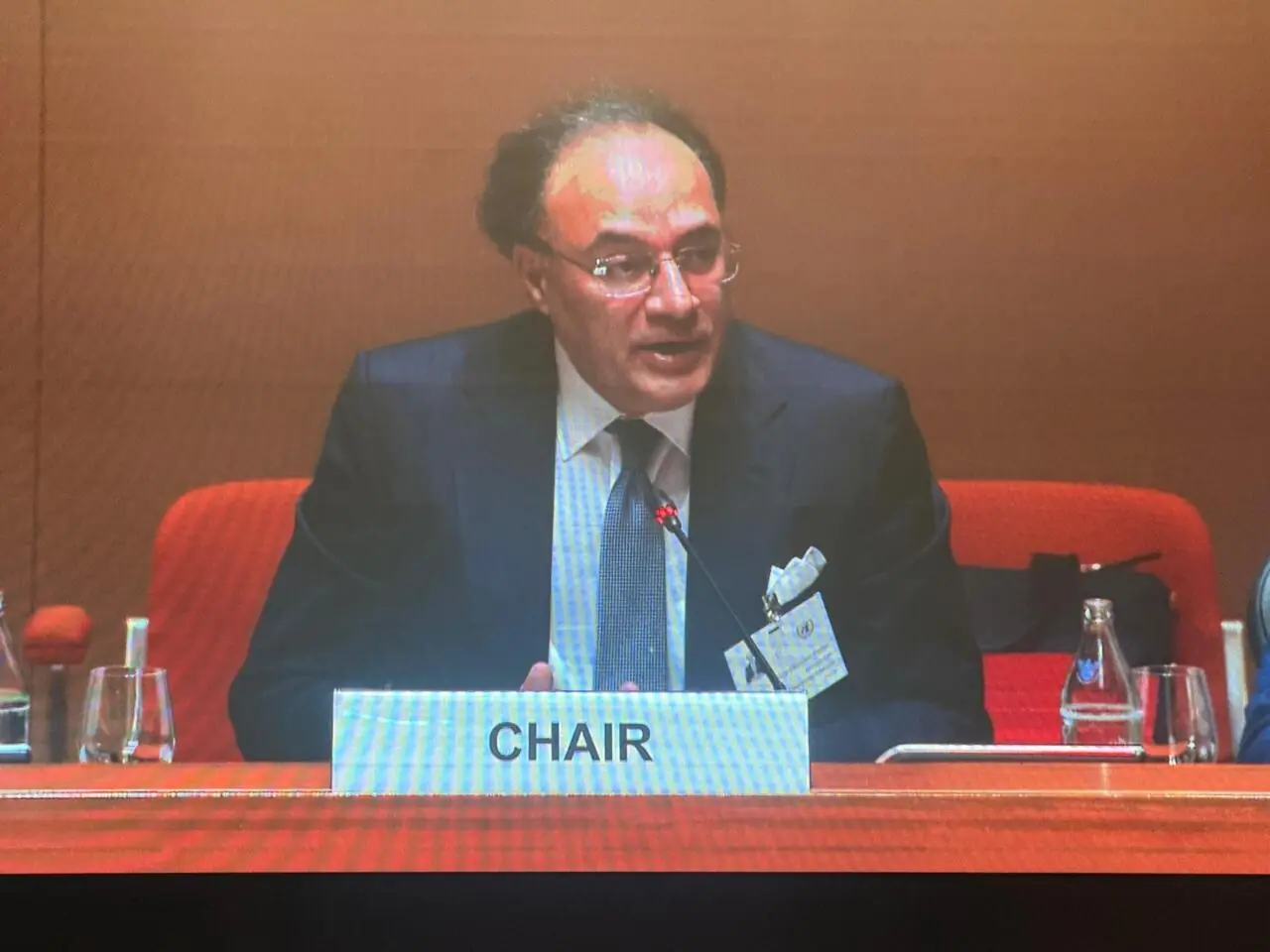
Finance Minister Muhammad Aurangzeb accepted the chairmanship of the Governing Council of the Borrowers’ Platform on behalf of Pakistan on the sidelines of the World Bank Group–IMF Annual Meetings 2026 in Bangkok, Thailand.

He acknowledged Egypt’s leadership and the contributions of member countries and the secretariat in operationalising the platform, read a statement on Monday.

The Borrowers’ Platform is an international, member state-led initiative that gives developing nations a dedicated space to coordinate, share knowledge, and speak with a collective voice on sovereign debt challenges.

The finance minister emphasised that the platform would promote mutual learning and technical cooperation rather than serve as a collective bargaining or crisis-management mechanism.

He outlined Pakistan’s priorities under the 2026–27 work plan, including strengthening debt-management practices, sharing reform experiences and exploring innovative development-financing instruments.

Pakistan to refinance short-term external debt to reduce rollover risks: Aurangzeb

He reaffirmed Pakistan’s commitment to practical implementation and measurable results, stressing that debt should remain an instrument for development rather than a constraint on it.

In his concluding remarks, Aurangzeb welcomed the rapid progress in establishing the platform’s institutional foundations, governance arrangements and shared work programme, as well as growing interest from prospective member countries. He also addressed a press conference following the session.

Meets IMF official

In a separate engagement, Finance Minister Muhammad Aurangzeb discussed macroeconomic stability, structural reforms and external challenges with Dan Katz, First Deputy Managing Director of the International Monetary Fund (IMF).

They discussed Pakistan’s macroeconomic stabilisation, progress under the IMF-supported programme and ongoing structural reforms.

The finance minister highlighted improved investor confidence, sovereign credit rating upgrades and renewed access to international capital markets.

He reaffirmed the government’s commitment to fiscal discipline, tax reforms, privatisation and sustainable economic growth.

Both sides welcomed the staff-level agreement and acknowledged improvements in fiscal performance, foreign exchange reserves, inflation and external sector stability.

Discussions also covered the impact of the Middle East conflict on energy prices and inflation, including targeted relief for vulnerable households within fiscal constraints. Both sides reaffirmed their commitment to continued cooperation and safeguarding macroeconomic stability against external challenges.

The finance minister departed for Bangkok, Thailand, last week to lead Pakistan’s delegation to the World Bank Group–IMF Annual Meetings 2026, scheduled to be held from October 12 to 18, 2026.

During the visit, the finance minister will represent Pakistan at key events of the International Monetary Fund (IMF) and the World Bank Group and undertake an extensive programme of over 60 high-level engagements with international financial institutions, finance ministers and policymakers, development partners, global investors, banks, credit rating agencies, think tanks and international media.

The visit comes as Pakistan continues its transition from macroeconomic stabilisation towards sustainable, investment- and export-led growth, while advancing structural reforms and strengthening engagement with international capital markets and development partners.

Business & Finance

Pakistan to refinance short-term external debt to reduce rollover risks: Aurangzeb

  • Pakistan is “not in a rush” to issue bonds this fiscal year, says finance minister
Published Updated
Photo: AFP
Photo: AFP

Pakistan plans to refinance some of its short-term external debt into longer maturities over the next two to three years to reduce rollover risks, while keeping its overall external debt, estimated at close to $100 billion, broadly unchanged, Finance Minister Muhammad Aurangzeb said to Bloomberg News on Monday.

“The way I was explaining to you earlier as well, this year, it is not a question that we absolutely need to cover the external financing gap, but for the next two to three years, what we do want to do is to see if some of our short-term external debt can be refinanced into longer tenors, longer maturities, so [the] country does not have to go into this rollover risk of short-term debt.

 “We want to keep the overall quantum of our external debt, which is close to $100 billion, but think about it mostly as replacement rates, as diversification and elongating maturities,” said Aurangzeb, while talking at Bloomberg: The China Show.

Talking about raising capital from the international markets, the finance minister said that the country is “not in a rush” to issue bonds this fiscal year.

“We have given a mandate for Islamic Sukuks and, for the first time, dollar-settled but rupee-denominated bonds. A lot of reverse inquiries are coming through on that as well.

“Going forward, we are going to issue RFPs for the remaining Panda bonds. For the first time, you are also going to see if we can go for tokenisation of our existing Eurobonds,” said Aurangzeb.

Pakistan sees growth above 4%, looks to raise more than $1 billion from privatisation

The finance minister departed for Bangkok, Thailand, last week to lead Pakistan’s delegation to the World Bank Group–IMF Annual Meetings 2026, scheduled to be held from October 12 to 18, 2026.

During the visit, the finance minister will represent Pakistan at key events of the International Monetary Fund (IMF) and the World Bank Group and undertake an extensive programme of over 60 high-level engagements with international financial institutions, finance ministers and policymakers, development partners, global investors, banks, credit rating agencies, think tanks and international media.

The visit comes as Pakistan continues its transition from macroeconomic stabilisation towards sustainable, investment- and export-led growth, while advancing structural reforms and strengthening engagement with international capital markets and development partners.

Business & Finance Print edition: 2026-10-12

ME war, high debt levels to dominate IMF-World Bank meetings

Published Updated
By

BANGKOK: Finance officials from around the world will gather in Bangkok this week under the shadow of a widening war in the Middle East, the biggest-ever energy supply shock and rising interest rates that together pose daunting risks to already-sluggish global economic growth.

The US-Israeli-led war with Iran, now in its eighth month, and its inflationary impact, will dominate the agenda and sideline conversations during the annual meetings of the International Monetary Fund and World Bank, being held outside of Washington for the first time in three years.

IMF Managing Director Kristalina Georgieva told Reuters during a tour of the 300,000 square-meter Queen Sirikit National Convention Center on Sunday evening that 18,000 people were registered to attend the meetings, 4,000 more than the last off-site meetings held in Morocco in October 2023.

Several finance ministers staying away

Notably absent will be US Treasury Secretary Scott Bessent, who dispatched two senior officials in his stead while he handles some “domestic engagements,” a US official said. Federal Reserve Board Chairman Kevin Warsh will attend and is slated to participate in a public event with Georgieva on October 16.

Several other finance ministers were also staying home due to domestic budget and election duties, but most central bankers would attend, Georgieva said.

Bessent’s decision to skip the high-profile gathering and a meeting of the Group of 20 major economies, which the US leads this year, may frustrate counterparts amid rising tensions over the Iran war, Ukraine’s battle against Russia’s invasion and the US move to impose sanctions on the International Criminal Court.

World Bank President Ajay Banga told Reuters that while global growth had held up better than feared when Iran closed the Strait of Hormuz, shutting off some 20% of the world’s oil, pressures were building again. Soaring prices for diesel, rising fertilizer prices and a looming “super” El Niño weather effect that experts say could lead to 450,000 heat-related deaths are all hitting at once.

Release of reserves

Group of Seven countries have agreed to release 100 million barrels of diesel and crude oil from emergency reserves under pressure from US President Donald Trump, who is keen to see lower gasoline prices before November elections that could see his Republican Party lose control of Congress.

Trump on Friday announced a deal with Russia that would provide even more diesel to global markets and a temporary waiver of US sanctions designed to deprive Moscow of revenues for its war on Ukraine. The move drew swift criticism from Ukrainian President Volodymyr Zelenskiy.

More than 1 billion barrels of oil have been released mainly from onshore commercial inventories since the start of the war on February 28, but industry executives say the amount of oil in storage that is accessible to the global market is running low, making the market more fragile and fueling pressure on prices.

Banga said the Bank was not revising down its global forecasts at the moment, but was keeping a close eye on developments. “The real thing is not just El Niño by itself; it’s the combination … What’s happening to fertilizer prices? What’s happening to energy costs? What’s happening to debt? It’s that put together that creates its own challenges,” he said. “And I think that will call upon all of us to be far more careful on what we prepare for in the coming months.”

Rising debt

IMF chief Georgieva issued a similar warning in her traditional curtain-raiser speech previewing the meetings last week, telling the audience: “Winter is coming.”

The IMF has signaled little change in its forecast for 3% global growth in 2026 and may edge its forecast for next year slightly higher. But some countries will see downgrades, including Ukraine, now in its fifth year of war against Russia’s invasion, and Gulf countries hit by Iranian strikes and sharply reduced energy exports.

IMF research released on Tuesday showed that sharp spikes in food and energy prices are an increasingly common source of crises that drive inflation expectations higher for longer, worsen poverty and threaten economic stability.

One huge headache for policymakers is the growing public debt burden that is sapping growth and adding inflationary pressures. The IMF says public debt is at the highest level since World War Two and will exceed 100% of GDP before 2030.

Advanced economies, led by the United States, have the highest debt-to-GDP ratios, but emerging markets and low-income countries are particularly vulnerable, given a perfect storm of challenges: capital outflows in search of higher US rates, El Niño, and lack of investment in AI, which has mitigated negative supply shocks in the US and other rich countries.

Emerging market concerns

Developing countries are particularly vulnerable given high public debt levels that will have to be renegotiated at higher interest rates. Together, they face $400 billion in debt payments to external creditors in 2026, and interest payments already exceed 10% of revenue on average.

Early in the COVID crisis, G20 leaders announced a suspension of debt service payments for the poorest countries, but there is little appetite for such action now, according to diplomats from G20 countries, who said high debt levels and political pressures posed bigger hurdles this time.

Many lower-income countries are worried about new IMF recommendations for loan programs that call for fewer, but deeper reforms as a condition for approving lending, a change that many fear will lead to painful austerity measures.

“Countries are already cutting their expenditures because their debt payments are going high and because of the IMF conditionality,” said Iolanda Fresnillo, who works on debt justice for Eurodad. “We fear that this review of conditionality policy is just going to make things worse.”

Kenya, she said, had avoided a debt restructuring by cutting public expenditures and trying to raise taxes, but the changes sparked significant protests, especially by the young.

The IMF risked losing credibility unless it acknowledged the severity of the crisis facing many developing countries.

“As long as they continue with the governance structure that they have, they are becoming less and less relevant,” she said.

Security and finance

Flight routes to Bangkok often route through the Middle East, posing immediate security challenges to global travelers descending on Thailand’s bustling capital city of 9 million residents following recent attacks on Saudi airports.

The last off-site annual meetings of the IMF and World Bank took place in Morocco just days after militants led by Hamas killed 1,200 people in Israel, followed by Israel’s bombardment of Gaza that killed more than 74,000 people and devastated cities throughout the Palestinian area.

Three years later, the linkage between national security and international finance is clear, although finance officials at the time had dismissed the Hamas attack as not being an economic issue, said Josh Lipsky, vice president of international economics at the Atlantic Council.

“Obviously there have been massive global ramifications,” he said. “What we’re currently experiencing with Iran and the closure of the Strait of Hormuz has a direct connection with what happened three years ago.”
Policymakers needed to become more agile in responding to geopolitical crises in an increasingly interconnected world, Lipsky said. “They have to be proactive and they have to recognize that they don’t live in the world they used to.”